Sign up with Google
 Sign in with Zoho

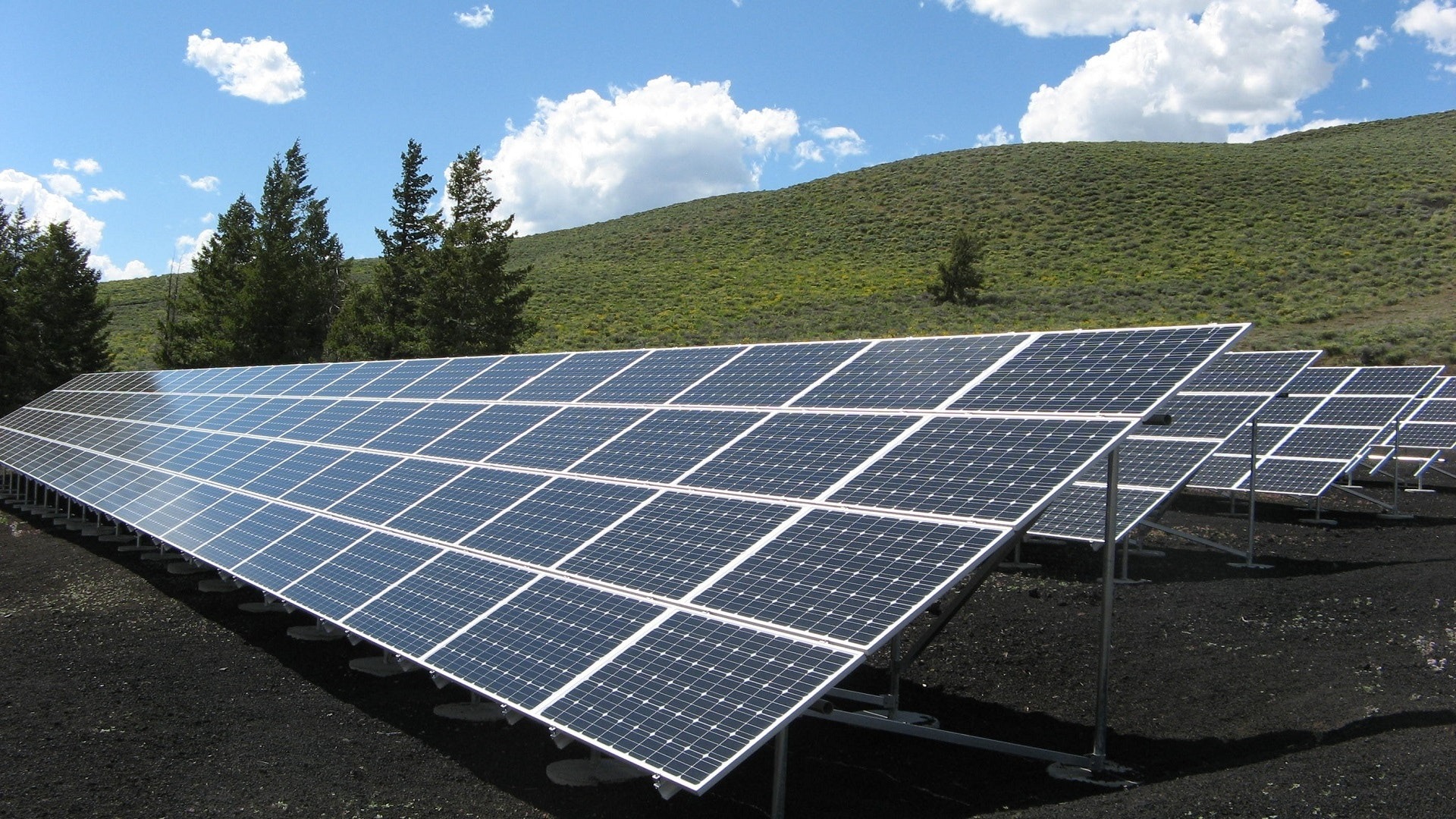
India is currently at the forefront of the global energy revolution, transitioning from a fossil-fuel-dependent grid to a solar-first ecosystem. For B2B leaders and institutional investors, the India solar energy market is no longer just a renewable alternative—it is the primary driver of the nation’s industrial and economic expansion.
According to a comprehensive market research report published by IMARC Group, the India solar energy market size reached a valuation of USD 30,032.78 Million in 2025. Driven by unprecedented policy support and declining photovoltaic (PV) costs, the market is projected to skyrocket to USD 5,38,913.68 Million by 2034. This represents a massive compound annual growth rate (CAGR) of 37.82% during the forecast period of 2026-2034.
Are your energy portfolios aligned with this exponential trajectory? Request a Business Sample Report for Procurement & Investment Evaluation to access granular historical data and predictive 2034 growth models.
Key 2025 Trends Reshaping the India Solar Energy Market
The year 2025 marks a decisive shift in how solar energy is generated and consumed in India. Three major trends are currently defining the market:
- The Rise of High-Efficiency Modules (TOPCon & Bifacial): There is a rapid transition from traditional p-type modules to high-efficiency n-type TOPCon (Tunnel Oxide Passivated Contact) and bifacial modules. These technologies are being prioritized in utility-scale projects to maximize energy yield per square meter, especially in land-constrained regions.
- PM Surya Ghar: Muft Bijli Yojana: On the decentralized front, government schemes have catalyzed over 1.9 million rooftop installations in 2025 alone. This is decentralizing the grid and creating a massive secondary market for inverters, mounting structures, and smart meters.
- Energy Storage Integration (BESS): As solar penetration increases, the focus has shifted toward "Round-the-Clock" (RTC) power. 2025 has seen a surge in tenders that combine solar PV with Battery Energy Storage Systems (BESS), ensuring grid stability and reliable dispatchable power.
Utility-Scale Solar: The Engine of India’s Grid
Utility-scale solar remains the bedrock of the Indian market, accounting for the lion's share of installed capacity. These massive ground-mounted solar parks are the primary vehicles for achieving the government’s 500 GW non-fossil fuel target by 2030.
- Regional Dominance: States like Rajasthan, Gujarat, and Karnataka continue to lead in utility-scale deployment due to high solar insolation and proactive land-banking policies.
- Grid Parity and Record Tariffs: Competitive auctions conducted by the Solar Energy Corporation of India (SECI) have pushed solar tariffs to record lows, making solar the cheapest source of new bulk electricity in the country.
- Bifacial Technology Adoption: Utility-scale developers are increasingly adopting bifacial panels that capture sunlight from both sides, increasing energy output by up to 15-20% without requiring additional land.
High-Value Investment Opportunities
For capital allocators, the India solar energy market offers diverse entry points with attractive internal rates of return (IRR):
- Domestic Manufacturing (PLI Scheme): Under the Production Linked Incentive (PLI) scheme, the government is incentivizing the localized manufacturing of high-efficiency solar cells and modules. Investing in the domestic supply chain is a strategic move to hedge against global supply chain volatility and import duties.
- C&I (Commercial & Industrial) Open Access: Corporate sustainability commitments are driving the C&I segment (which held a 36.1% share in 2025). Businesses are increasingly opting for "Open Access" solar to lock in long-term electricity savings and meet ESG goals.
- Hybrid & Storage Projects: There is a significant "first-mover advantage" for investors entering the solar-wind hybrid and solar-plus-storage space, as these projects command higher tariff premiums due to their reliability.
Competitive Landscape & Key Player Positioning
Covering an in-depth analysis of the competitive landscape, market structure, key player positioning, competitive dashboards, top winning strategies, and detailed profiles of all major industry participants—you will gain access to all these exclusive insights within the full research report.
Strategic Outlook: The Road to 2034
As the market expands at a 37.82% CAGR, the next decade will be characterized by the "Solarization" of the Indian economy. We anticipate a surge in Floating Solar Farms on reservoirs and Agri-PV (Solar-plus-farming) to optimize land use. Furthermore, the integration of Green Hydrogen—using solar power for electrolysis—will open up a multi-billion dollar industrial decarbonization market.
Strategic Action Point: Surface-level insights are insufficient for multi-million dollar infrastructure decisions. Equip your executive board with precise market sizing, tariff forecasting, and competitive benchmarking.
Click Here to Download the Comprehensive India Solar Energy Market Sample Report: https://www.imarcgroup.com/india-solar-energy-market/requestsample
Frequently Asked Questions (FAQs)
Q1: What is the projected real estate market size of India’s solar sector by 2034?
A: Based on IMARC Group data, the market is projected to reach a staggering USD 538,913.68 Million by 2034, growing from a 2025 base of USD 30,032.78 Million.
Q2: Which application segment dominates the India solar energy market?
A: The Commercial and Industrial (C&I) segment leads the application market with a 36.1% share in 2025, driven by corporate sustainability goals and high return on investment (ROI).
Q3: What is the current CAGR of the Indian solar industry?
A: The market is expected to exhibit an exceptional CAGR of 37.82% between 2026 and 2034, making it one of the fastest-growing renewable energy markets globally.
Q4: How are government schemes like PM Surya Ghar impacting the market?
A: These schemes are driving massive rooftop solar penetration (over 7.7 lakh households benefited in 2025), creating a localized demand for components and installation services.
Q5: What are the primary drivers for utility-scale solar growth?
A: Utility-scale growth is fueled by massive SECI tenders, the development of specialized solar parks, and the adoption of high-efficiency bifacial module technology.
Q6: Is it possible to get a list of the top companies and their market shares?
A: Yes. A complete analysis of the competitive landscape, including key player positioning and top winning strategies, is available in the full IMARC Group research report.