Sign up with Google
 Sign in with Zoho

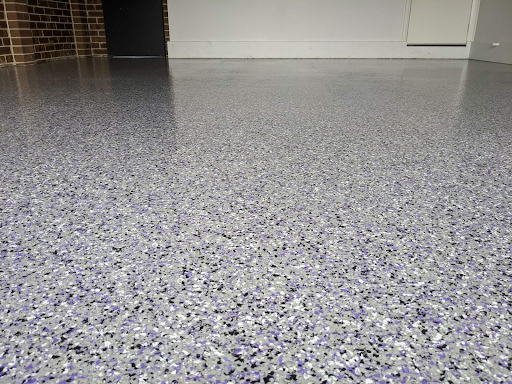
The floor looks dull again within hours. Dust shows up like it never left. A stain you thought was gone quietly returns under different lighting. It’s not dramatic, just persistent enough to be annoying.
That’s usually the point where people assume they’re missing something in their cleaning routine. They’re not. The issue sits deeper than that. Literally.
Concrete, by its nature, doesn’t behave like a cleanable surface. It only pretends to. And until that changes, no amount of effort really sticks. That’s where epoxy coating for concrete floors shifts things not by improving cleaning, but by removing the reason cleaning feels so difficult in the first place.
Let’s get into what’s actually going on.
What You See Isn’t What the Floor Is
Concrete looks flat, feels solid and seems simple. It isn’t. If you zoomed in, you’d see a network of tiny gaps, uneven textures, almost like a hardened sponge. Not something you notice casually, but it explains a lot.
Dust doesn’t just sit on top; it settles in. Liquids don’t wait to be wiped; they sink. Even after a proper mop, there’s always a bit left behind, tucked away where cloth or brush can’t really reach.
That’s why the floor never quite resets to “clean.” It just looks temporarily better.
The Dust Problem That Doesn’t Make Sense
This one confuses people the most. You clean today. Tomorrow, there’s dust again. Not a lot, but enough to notice. It’s easy to blame open windows or foot traffic. Sometimes that’s true. But often, the floor itself is part of the problem.
Concrete slowly sheds. Not in chunks, nothing visible like that, just fine particles breaking off over time. Add movement, friction, and dryness, and it speeds up.
So yes, you might be cleaning dust that didn’t come from outside at all. It came from the floor.
Stains Don’t Sit on Concrete. They Settle Into It
Spill something on the tile, you wipe it. Spill something on raw concrete, you’ve got a race you probably won’t win. Oil is the worst for this. It spreads, darkens, then disappears into the surface. Water seems harmless, but even that can leave marks if minerals or dirt come along with it.
And once it’s in, it’s not really a surface issue anymore. You can scrub. You can try stronger cleaners. At best, you lighten it. Rarely remove it. Because you’re cleaning the top of something that has already moved below.
Why “Cleaning Harder” Doesn’t Fix It
At some point, most people try to outwork the problem. Different mops. Stronger solutions. Maybe even pressure washing.
But here’s the thing: those methods don’t address porosity.
● Sweeping only handles what’s loose
● Mopping pushes moisture deeper than expected
● Pressure washing forces particles further inside
● Chemicals sometimes make the surface rougher over time
So instead of solving it, you end up cycling through effort.
The Smarter Shift: Change the Surface, Not the Routine
There’s a point where it stops making sense to optimise cleaning. The better move is to change what you’re cleaning. That’s exactly what epoxy coating for concrete floors does. It doesn’t “protect” in a light sense. It alters how the floor behaves.
Once applied and cured, you’re no longer dealing with porous concrete. You’re dealing with a sealed layer that doesn’t absorb, trap, or shed in the same way.
And that changes everything quietly.
What Actually Changes With Epoxy (In Practical Terms)
No dramatic claims here. Just real shifts you notice over time. First, dirt stops disappearing into the floor. It stays visible, which sounds like a downside until you realise it’s now removable.
Second, spills don’t rush inward anymore. They sit. You get time to deal with them.
Third, the surface evens out. Not perfectly glossy unless that’s the finish you choose, but smooth enough that cleaning tools finally do what they’re supposed to do.
It’s subtle at first. Then it becomes obvious.
Cleaning Starts Feeling Normal Again
That’s probably the easiest way to describe it. Not easier in a magical sense. Just predictable. You sweep, and it actually clears things. You mop, and the result holds longer than a few hours. You don’t feel like you’re chasing the same mess over and over.
A few noticeable differences:
● Dust stays on top instead of embedding
● Wiping works instead of smearing
● Stains don’t form instantly
● You spend less time repeating the same task
Nothing flashy. Just less friction.
Where This Makes the Biggest Difference
Some spaces benefit more simply because they deal with more stress. Garages, for example, oil, tyre marks, and constant movement. Raw concrete struggles there. Basements too. Moisture plus low airflow tends to exaggerate every flaw in the surface.
Workshops, storage areas, commercial floors, anywhere with repeated use, small messes, or heavier materials moving across the surface. In these places, epoxy coating for concrete floors doesn’t feel like an upgrade. It feels like a correction.
Outdoor Concrete Is a Different Problem Altogether
Indoors, you’re dealing with dust and stains. Outdoors, the list expands. Sun exposure, rain, temperature swings. Dirt that doesn’t politely stay in one place. Driveways especially take a beating, both from weather and vehicles.
Epoxy can work outside in some cases, but it’s not always the best fit. That’s where polyaspartic driveway coating in Palm Beach comes into the picture.
Why Polyaspartic Works Better Outside
Think of it as a version of protection that handles movement and exposure better. It cures faster, which matters more than people expect. It doesn’t react badly to sunlight over time. And it adjusts better when temperatures shift, expanding and contracting without cracking the way rigid surfaces sometimes do.
For driveways or open areas, especially in places with humidity or strong sun, polyaspartic driveway coating in Palm Beach tends to hold up longer without fading or weakening.
It’s less about preference, more about matching the material to the environment.
After the Coating: What People Actually Notice
Interestingly, it’s not the look. At least not after the first few days. What people notice is how the floor behaves. Cleaning becomes something you do and move on from.
Not something that lingers in your head because it never quite feels finished. The floor doesn’t seem to “fight back” anymore. And over time, that matters more than aesthetics.
A Few Things People Get Wrong About Epoxy
Some assumptions still float around, usually from older experiences or half-information. That it’s only decorative, not really true. The functional change is the bigger win. Whether it’s slippery depends on the finish. Additives can adjust that easily.
That it needs constant upkeep, actually, the opposite in most cases. And cost well, it’s fair to consider. But when you factor in reduced cleaning effort and fewer surface issues, it tends to balance out over time.
So, Is It Worth It?
Depends on what’s bothering you. If your floor already behaves well, maybe not urgent.
But if you’re dealing with recurring dust, stains that won’t lift, or that constant sense that the floor is never fully clean, then yes, epoxy coating for concrete floors changes the equation in a pretty practical way.
Not instantly life-changing. Just consistently better.
Final Thought
Concrete isn’t difficult because it’s tough. It’s difficult because it’s open to dust, to moisture, to wear. Once you close that surface, things settle down. That’s really what epoxy coating for concrete floors does. It removes the small, constant annoyances that build up over time. And if you’re dealing with outdoor areas, polyaspartic driveway coating in Palm Beach extends that same idea to harsher conditions.
You don’t end up cleaning more efficiently. You just stop needing to fight the surface in the first place. And that, honestly, is the bigger win.