
 Sign up with Google
 Sign in with Zoho

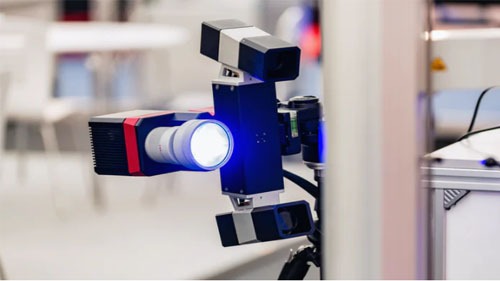
Understanding the India Robotic Sensors Market
The India robotic sensors market sits at the intersection of two of the country's most actively evolving industrial priorities manufacturing modernization and technology-led automation. Based on data published in a report by IMARC Group, the India robotic sensors market size reached USD 64.08 million in 2025 and is projected to reach USD 125.42 million by 2034, growing at a CAGR of 7.75% during 2026-2034.
While the absolute market size may appear modest relative to some other industrial technology segments, a near-doubling in market value over nine years reflects consistent underlying demand. The India robotic sensors market draws this demand from a broad base manufacturing sectors responding to labor cost pressures, government policy pushing domestic automation capabilities, and the steady integration of artificial intelligence with sensor hardware that is expanding the range of applications where robotic sensing is now technically and economically viable.
What makes this market particularly interesting to track is that growth is not concentrated in a single vertical. Expanding applications in emerging sectors including healthcare diagnostics, agricultural automation, logistics, and collaborative robotics are creating new revenue streams alongside the more established industrial manufacturing base, suggesting the India robotic sensors market is broadening its demand foundation rather than deepening a single one.
What Is Driving the India Robotic Sensors Market?
- Government Policy Creating a Structural Demand Floor
The most consistent driver behind the India robotic sensors market is the Indian government's sustained push toward domestic manufacturing modernization. As noted in the IMARC Group report, programs such as "Make in India" and Production Linked Incentive schemes are encouraging manufacturers across sectors to invest in advanced technologies, including robotics and sensor systems. The Draft National Strategy for Robotics, released by the Ministry of Electronics and Information Technology, aims to position India as a global leader in robotics by establishing comprehensive frameworks for manufacturing and autonomous technologies.
The financial commitment behind these policy frameworks is tangible. The government sanctioned INR 170 crore to IIT Delhi under the National Mission on Interdisciplinary Cyber-Physical Systems to establish the I-HUB Foundation for Cobotics, signaling that domestic capability building in robotics is being backed by real institutional investment. The practical on-ground impact of this policy environment was visible in a March 2025 development leading robotics solutions supplier IRTI-Robotics partnered with FANUC Robotics India to successfully install 135 industrial robots throughout India, demonstrating how policy-driven incentives are translating into actual automation deployments that require sensor systems.
- AI and Machine Learning Expanding Sensor Applications
The integration of artificial intelligence with robotic sensor hardware is one of the more structurally significant trends reshaping the India robotic sensors market. Based on the analysis in the IMARC Group report, AI-powered sensors enable robots to perform complex tasks with higher accuracy and adaptability, from autonomous navigation in dynamic environments to precision manufacturing with real-time quality control. The integration allows robots to learn from operational data, improve performance iteratively over time, and handle variable production environments without extensive reprogramming.
This AI-sensor convergence is doing something important for the India robotic sensors market specifically it is democratizing access. The declining costs of sensor components combined with advancements in AI-powered perception systems are democratizing access to robotic automation for small and medium enterprises. A development from June 2024 illustrates the technology direction: HIKROBOT unveiled machine vision photoelectric sensors in India to strengthen its portfolio of robot sensors, with these sensors helping upgrade machine vision capabilities, resistance to climatic factors, and long-range detection.
- Labor Cost Pressures Accelerating Automation Investment
A third driver shaping the India robotic sensors market is the economic case for automation that is becoming harder to ignore for manufacturers across sectors. As cited in the IMARC Group report, rising labor costs and skilled workforce shortages are compelling manufacturers to invest in sensor-equipped robotic systems for improved productivity, quality, and workplace safety. Industries including automotive, electronics, pharmaceuticals, food processing, and logistics are all deploying sensor-equipped robots for tasks spanning precision assembly, welding, material handling, packaging, and automated quality inspection. In February 2025, Delta Electronics revealed its D-Bot series Collaborative Robots in the Indian market 6-axis cobots featuring payload capacities reaching 30 kilograms and speeds of up to 200 degrees per second, intended to enhance industries with smarter production processes including packaging, electronics assembly, materials handling, and welding.
Looking for a detailed breakdown of the India robotic sensors market across sensor types, applications, robot types, and regions? The IMARC Group report covers historical data from 2020-2025 and forecasts through 2034 - Request a Business Sample Report for Procurement & Investment Evaluation
Segmentation: How the India Robotic Sensors Market Breaks Down
The IMARC Group report segments the India robotic sensors market across sensor type, application, robot type, and region.
By Sensor Type
The sensor type segmentation covers vision sensors and cameras, proximity sensors, ultrasonic sensors, force and torque sensors, inertial sensors, and others. Vision sensors and cameras are among the most actively growing categories within the India robotic sensors market, driven by the expanding adoption of AI-powered machine vision for quality inspection, object recognition, and defect detection in manufacturing. Force and torque sensors are gaining ground in collaborative robotics applications where human-robot interaction safety and precision manipulation are critical requirements.
By Application
The application breakdown spans object detection and recognition, navigation and mapping, collision avoidance, gripping and manipulation, environmental monitoring, and others. Object detection and recognition represents a significant application area, supported by the rise of vision-AI sensor systems across manufacturing and logistics. Navigation and mapping, and collision avoidance are particularly relevant to the mobile and service robot segments of the India robotic sensors market, where autonomous movement in dynamic environments requires multi-sensor fusion for reliable operation.
By Robot Type
The robot type segmentation includes industrial robots, service robots, mobile robots, agricultural robots, and others. Industrial robots currently represent the largest demand source for the India robotic sensors market, driven by automotive and electronics manufacturing deployments. Agricultural robots are an emerging category of particular relevance to India given the scale of the agricultural sector, with sensor-equipped systems increasingly being used for crop monitoring, precision spraying, and harvest automation. Service robots and mobile robots are growing categories as healthcare, logistics, and hospitality sectors explore sensor-enabled autonomous systems.
By Region
The India robotic sensors market is analyzed across North India, South India, East India, and West India. South India, anchored by Bengaluru's dense technology and manufacturing ecosystem, and West India, home to Maharashtra's automotive and electronics clusters, represent the most active regional markets. North India's defense and heavy manufacturing base contributes a meaningful share, while East India is at an earlier stage of robotic adoption but holds long-term potential as industrial activity expands.
Challenges Facing the India Robotic Sensors Market
Three structural challenges are worth understanding for anyone analyzing the India robotic sensors market, as identified in the IMARC Group report.
The first is cost and import dependency. A steep import levy of approximately 26.85% on robotic systems further inflates costs for potential buyers, and India's heavy reliance on imports for critical sensor components including actuators, motors, precision gearboxes, printed circuit boards, semiconductor chips, and advanced sensors creates supply chain vulnerabilities and increases overall system costs. Indigenous manufacturing of these sophisticated components remains in early developmental stages.
The second is the skills gap. The lack of skilled personnel capable of designing, deploying, programming, operating, and maintaining advanced robotic systems with sophisticated multi-sensor arrays represents a critical constraint on market growth. The pace of curriculum development and educator training lags significantly behind rapid technological advancements in robotics, artificial intelligence, and sensor fusion technologies.
The third is infrastructure and integration complexity. Infrastructure limitations including inconsistent power supply quality, unreliable internet connectivity for cloud-based services, and inadequate logistics networks hinder the deployment of robotic sensors, particularly in rural areas and tier-2/tier-3 manufacturing hubs. Interoperability challenges between sensors from different manufacturers, communication protocol incompatibilities, and lack of standardization in industrial IoT frameworks complicate system integration efforts.
Recent Development
One notable recent development in the India robotic sensors market came in October 2025, when Sona BLW Precision Forgings Ltd. (Sona Comstar) and NEURA Robotics GmbH entered a memorandum of understanding to jointly develop and commercialize cutting-edge robotics and humanoid technologies, reflecting the growing cross-border collaboration between Indian industrial players and global robotics innovators a trend that is likely to strengthen the sensor technology supply chain feeding into the India robotic sensors market over the coming years.
Frequently Asked Questions (FAQs)
1. What is the current size of the India robotic sensors market?
Based on data published by IMARC Group, the India robotic sensors market size reached USD 64.08 million in 2025 and is projected to reach USD 125.42 million by 2034.
2. At what rate is the India robotic sensors market expected to grow?
The India robotic sensors market is projected to grow at a CAGR of 7.75% from 2026 to 2034, driven by government automation initiatives, AI-sensor integration, and rising labor cost pressures across manufacturing sectors.
3. Which sensor types are most significant in the India robotic sensors market?
Vision sensors and cameras are among the most actively growing categories, driven by AI-powered machine vision adoption for quality inspection and object recognition. Force and torque sensors are gaining traction in collaborative robotics applications requiring precision manipulation.
4. Which application areas are driving demand in the India robotic sensors market?
Object detection and recognition, navigation and mapping, collision avoidance, and gripping and manipulation are the primary application areas, with environmental monitoring emerging as a relevant growth segment in agricultural and industrial monitoring contexts.
5. What are the key challenges facing the India robotic sensors market?
Key challenges include high import duties and dependence on foreign components increasing system costs, a shortage of skilled personnel for robotics deployment and maintenance, and infrastructure limitations including inconsistent power supply and interoperability issues between sensor systems from different manufacturers.






.webp)