Sign up with Google
 Sign in with Zoho

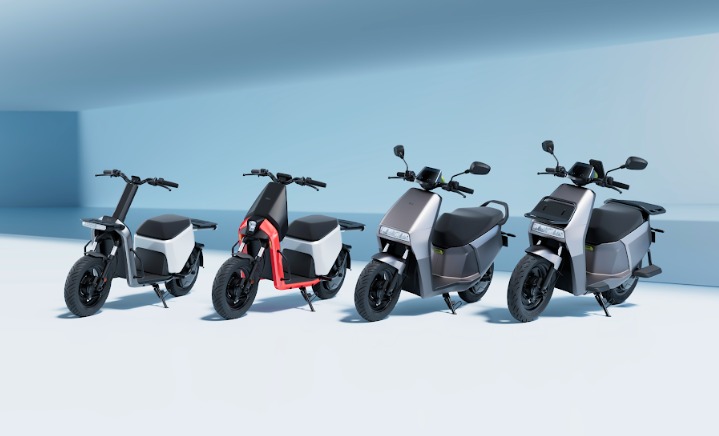
Source: IMARC Group | Category: Automotive
Report Introduction
According to IMARC Group’s latest report titled "India Electric Scooter Market Size, Share, Trends and Forecast by Drive, Battery, Product, Battery Fitting, End Use, and Region, 2026-2034", this study offers a granular analysis of the industry's shift towards sustainable mobility and battery innovation. The study offers a profound analysis of the industry, encompassing India Electric Scooter Market Research Report share, size, growth factors, key trends, and regional insights. The report covers critical market dynamics, including the impact of government schemes like PM E-DRIVE and FAME II, the rising adoption of SiC and GaN semiconductors, and the growing commercial viability of battery swapping ecosystems.
India Electric Scooter Market Overview
The India electric scooter market size reached USD 1.46 Billion in 2025. Looking forward, IMARC Group expects the market to reach USD 3.22 Billion by 2034, exhibiting a robust growth rate (CAGR) of 9.22% during 2026-2034.
The market is witnessing a structural shift, primarily driven by rising fuel prices and increasing environmental awareness, which are pushing urban commuters towards cleaner mobility solutions. The availability of government incentives, such as the PM E-DRIVE Scheme (financial outlay of INR 10,900 crore) and FAME II, has significantly lowered the upfront cost of electric scooters, bridging the price gap with internal combustion engine (ICE) vehicles. Advancements in Lithium-ion battery technology and the establishment of widespread charging infrastructure are addressing range anxiety, further accelerating adoption. Additionally, the market is seeing a rise in commercial usage, with last-mile delivery fleets transitioning to electric scooters to reduce operational costs.
India Electric Scooter Market Growth Factors (Drivers)
- Rising Fuel Prices Driving Shift to Electric Mobility: Increasing petrol prices are encouraging consumers to switch to electric scooters as a cost-effective alternative for daily commuting.
- Government Incentives and EV Promotion Policies: Subsidies under schemes such as FAME, PM E-DRIVE, and state-level incentives are reducing purchase costs and accelerating the mass adoption of electric scooters.
- Growing Demand for Affordable and Low-Maintenance Mobility: Electric scooters offer significantly lower running costs, minimal maintenance, and ease of use, making them highly attractive for daily commuters and delivery personnel.
- Expansion of Urban Commuting and Last-Mile Mobility Needs: Increasing urban congestion and the demand for efficient, agile short-distance travel solutions are supporting the rapid adoption of electric two-wheelers.
- Increasing Awareness of Environmental Sustainability: Rising concerns over air pollution and carbon emissions are encouraging consumers to adopt eco-friendly transportation alternatives to reduce their carbon footprint.
- Advancements in Battery Technology and Charging Infrastructure: Innovations in lithium-ion and the upcoming solid-state batteries, coupled with expanding fast-charging and battery-swapping networks, are effectively eliminating range anxiety among buyers.
- Rapid Integration into the B2B and E-commerce Delivery Sectors: E-commerce giants and food delivery platforms are rapidly transitioning their logistics fleets to electric scooters to achieve corporate sustainability goals and drastically lower operational costs.
- Favorable Financing and Easy Loan Approvals: Financial institutions and NBFCs are offering tailored, low-interest EV loans with easy EMIs, making it highly affordable for middle-class consumers and gig workers to purchase electric scooters.
Request a Business Sample Report for Procurement & Investment Evaluation
Market Segmentation
Analysis by Drive:
- Hub Motors (Widely used due to cost-efficiency and simplicity)
- Belt Drive
- Chain Drive
Hub motors dominate the market with a 68% share in 2025, driven by simpler drivetrain design, lower maintenance requirements, and widespread adoption in mass-market electric scooters for urban commuting.
Analysis by Battery:
- Lithium-Ion (Dominant segment due to higher energy density and longer life)
- Lead Acid
- Others
Lithium-ion batteries lead with an 85% market share in 2025, supported by higher energy density, lighter weight, faster charging, and declining costs.
Analysis by Product:
- Standard (Most popular for daily commuting)
- Folding
- Self-Balancing
- Maxi
- Three Wheeled
Standard models hold the largest share at 40% in 2025 reflecting strong demand for practical, affordable scooters that balance range, comfort, and daily usability.
Analysis by Battery Fitting:
- Fixed (Common in high-speed scooters)
- Detachable (Gaining popularity for convenience and swapping)
Fixed batteries account for 76% of the market in 2025, driven by integrated design, improved safety, and compatibility with home charging setups.
Analysis by End Use:
- Personal (Dominant segment driven by individual commuters)
- Commercial (Last-mile delivery fleets)
Personal use dominates with an 83% share in 2025, fueled by rising individual mobility needs, cost-conscious commuting, and growing environmental awareness.
Regional Insights:
- North India: Leading region driven by aggressive EV policies in Delhi and high adoption rates.
- South India
- West India
- East India
India Electric Scooter Market Recent Developments & News
- November 2025: The Government of India launched the PM E-DRIVE Scheme with a budget of INR 10,900 crore to incentivize over 24 lakh electric two-wheelers by 2026.
- May 2025: Ather Energy partnered with Infineon Technologies to develop advanced power semiconductor solutions for improved EV efficiency.
- March 2025: Kinetic Green launched an industry-first 'Assured Buy Back Offer' on its E-Luna scooters to enhance resale value assurance.
Why Buy This Report? (High-Value Insights)
- Granular Segmentation: Detailed analysis of Detachable vs. Fixed Battery preferences, helping manufacturers design user-centric models.
- Regional Hotspots: In-depth breakdown of demand in Bangalore vs. Delhi, identifying prime markets for charging infrastructure investment.
- Future-Ready Trends: Insights into the adoption of Solid-State Batteries, highlighting the next frontier of range extension.
Key Highlights of the Report
- Market Forecast (2026-2034): Quantitative data on market value and steady growth.
- Competitive Landscape: Comprehensive analysis of key players and their strategic partnerships.
- Strategic Analysis: Porter’s Five Forces analysis and value chain assessment.
- Technological Trends: Insights into advancements in regenerative braking systems.
Customization Note: If you require specific data we can provide it as part of our customization services.
About Us:
IMARC Group is a global management consulting firm that helps the world’s most ambitious changemakers to create a lasting impact. The company provide a comprehensive suite of market entry and expansion services.
IMARC offerings include thorough market assessment, feasibility studies, company incorporation assistance, factory setup support, regulatory approvals and licensing navigation, branding, marketing and sales strategies, competitive landscape and benchmarking analyses, pricing and cost research, and procurement research.
Contact Us:
IMARC Group
134 N 4th St. Brooklyn, NY 11249, USA
Email: [email protected]
Tel No:(D) +91 120 433 0800
United States: +1-202071-6302