Sign up with Google
 Sign in with Zoho

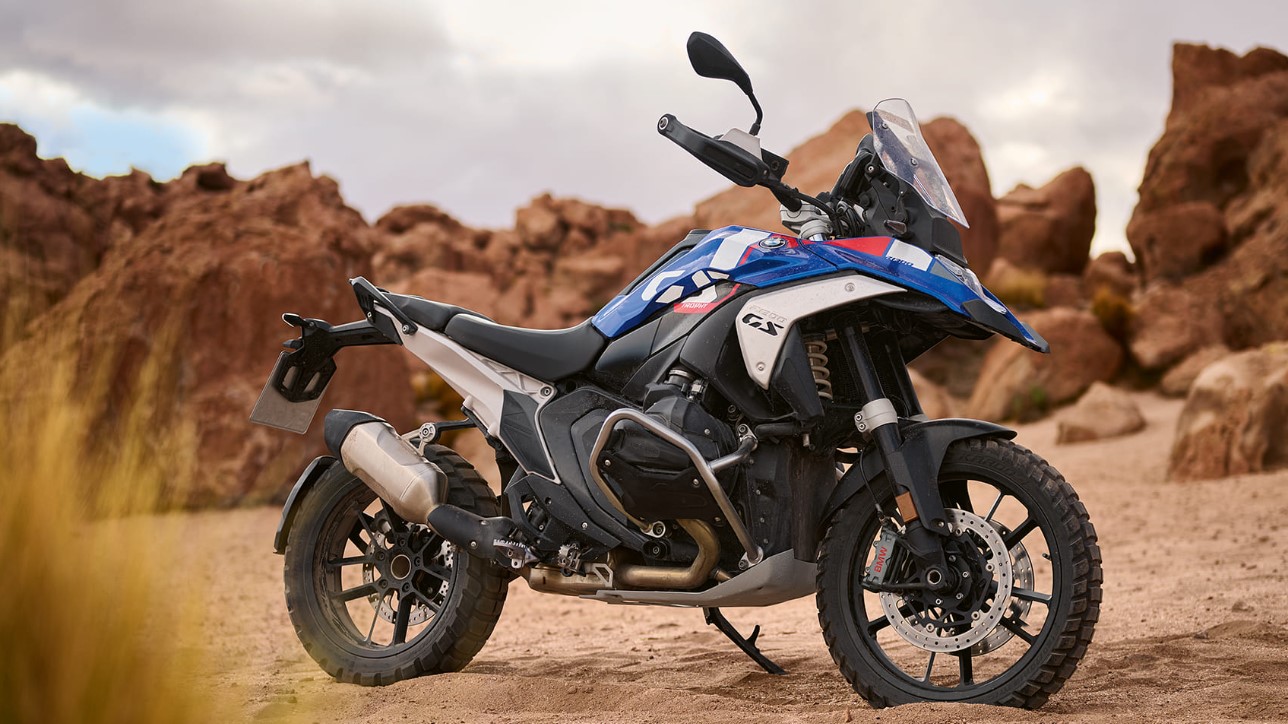
There are riders who slow down when the tarmac ends. And then there are riders who lean forward, stand up slightly on the pegs and keep going. For them, a highway is convenient, but a broken stretch of road is interesting.
This isn’t being reckless. To them, it’s more about curiosity. Some riders don’t test a journey by how fast they get to the destination, but by how much the road tests them. The harder route is more honest; it requires patience and attention.
The Rider Who Avoids Perfect Roads
The all-road rider trusts themselves to handle uncertain situations. They don’t run after chaos. A detour does not irritate, but rather excites them. These riders enjoy learning what their motorcycle can actually do. Not just how fast it goes, but how stable it feels on gravel. How controllable is it with traction change, how balanced it is when luggage is loaded, and the fuel tank is nearly full? All in all, you will often notice a few common traits:
- Comfortable with unpredictable terrain
- Curious about what lies beyond visible routes
- Patient when conditions slow them down
- More interested in capability than image
Why Rough Roads Demand Different Machines
Broken roads are not forgiving. They punish stiff suspension, low ground clearance and abrupt throttle response. That is why motorcycles built for mixed terrain follow a different engineering logic.
Long suspension travel absorbs uneven surfaces. Higher ground clearance prevents damage from rocks or deep potholes. Wider handlebars give leverage at slow speeds. Engines are tuned for accessible torque rather than peak revs.
Key mechanical priorities usually include:
- 19- or 21-inch front wheels for obstacle stability
- Upright ergonomics that allow standing control
- Protective elements such as bash plates
- Balanced weight distribution for slow manoeuvres
Indian Terrain Is Never One Thing
Riding in India means adapting constantly. One single route can have it all. Patched roads, loose gravel, water crossings and whatnot. In hills specifically, the steep inclines test low-end torque. In coastals, sand and humidity pose the challenge.
Motorcycles like the Royal Enfield Himalayan 450, KTM 390 Adventure, Triumph Tiger 900 and Suzuki V-Strom 800DE embody this adaptability. Each is available in India and built with a similar philosophy: suspension travel, manageable power delivery and a riding posture that supports long hours in the saddle. None of them are pure off-road machine. None of them is track-focused either. They exist in between, where versatility matters more than extremes.
What Long-Distance Riders Actually Prioritise
Speed figures sound impressive in conversation. But endurance riders think differently. They know that after four hours on the road, comfort and fuel planning matter more than acceleration.
What tends to matter most:
- Sufficient fuel range to avoid constant refuelling
- Wind protection that reduces fatigue
- Stable chassis behaviour at highway speeds
- Practical luggage mounting points
- Electronics that assist rather than interfere
Advanced traction control and selectable ABS modes are not luxuries. On loose or wet surfaces, they become safety tools. Adjustable suspension allows riders to adapt the bike for city use one day and loaded touring the next.
Capability, in this context, means predictability.
When Engineering Meets Exploration
As adventure motorcycles have evolved, larger-capacity machines have entered the segment with serious touring intent. One such example is the BMW R1300GS, built around a 1,300 cc boxer twin engine that produces strong torque across a wide rev range. Compared to its predecessor, it incorporates weight reduction strategies and a more compact engine design.
The boxer layout keeps mass low, aiding balance at slow speeds despite its size. The advanced electronic systems have dynamic suspension adjustment and multiple riding modes. This allows them to go from riding on a highway to going slightly off-road. All with minimum input. It’s an example of how high-capacity adventure bikes are not just meant to run the distance, but do it by adapting to different surfaces. Others in the segment are adventure models by Ducati, Triumph and Honda.
What Defines a True All-Road Machine
The idea of a BMW adventure bike is often associated with certain design philosophies: horizontally opposed engines, shaft drive systems and front suspension designs that separate braking forces from steering input. These engineering choices aim to enhance stability and reduce maintenance during long journeys.
However, the broader adventure segment in India is not defined by one configuration. Chain-driven bikes remain popular due to easier field repairs. Parallel twins offer compact packaging. Spoked wheels improve resilience on uneven terrain.
What truly defines this category is not branding or displacement. It is readiness. A willingness to handle imperfect surfaces without hesitation.
Choosing the Harder Road
Some riders will always prefer smooth highways and predictable routes. There is nothing wrong with that. But others will continue turning towards roads that look slightly uncertain.
They understand something simple: difficulty creates involvement. Involvement creates memory. And memory is why most people started riding in the first place.
A capable adventure motorcycle does not remove challenge. It manages it. It gives the rider the tools to face changing terrain without anxiety. That is why these machines continue to matter on Indian roads. Not because they promise perfection, but because they make imperfection rideable.