Sign up with Google
 Sign in with Zoho

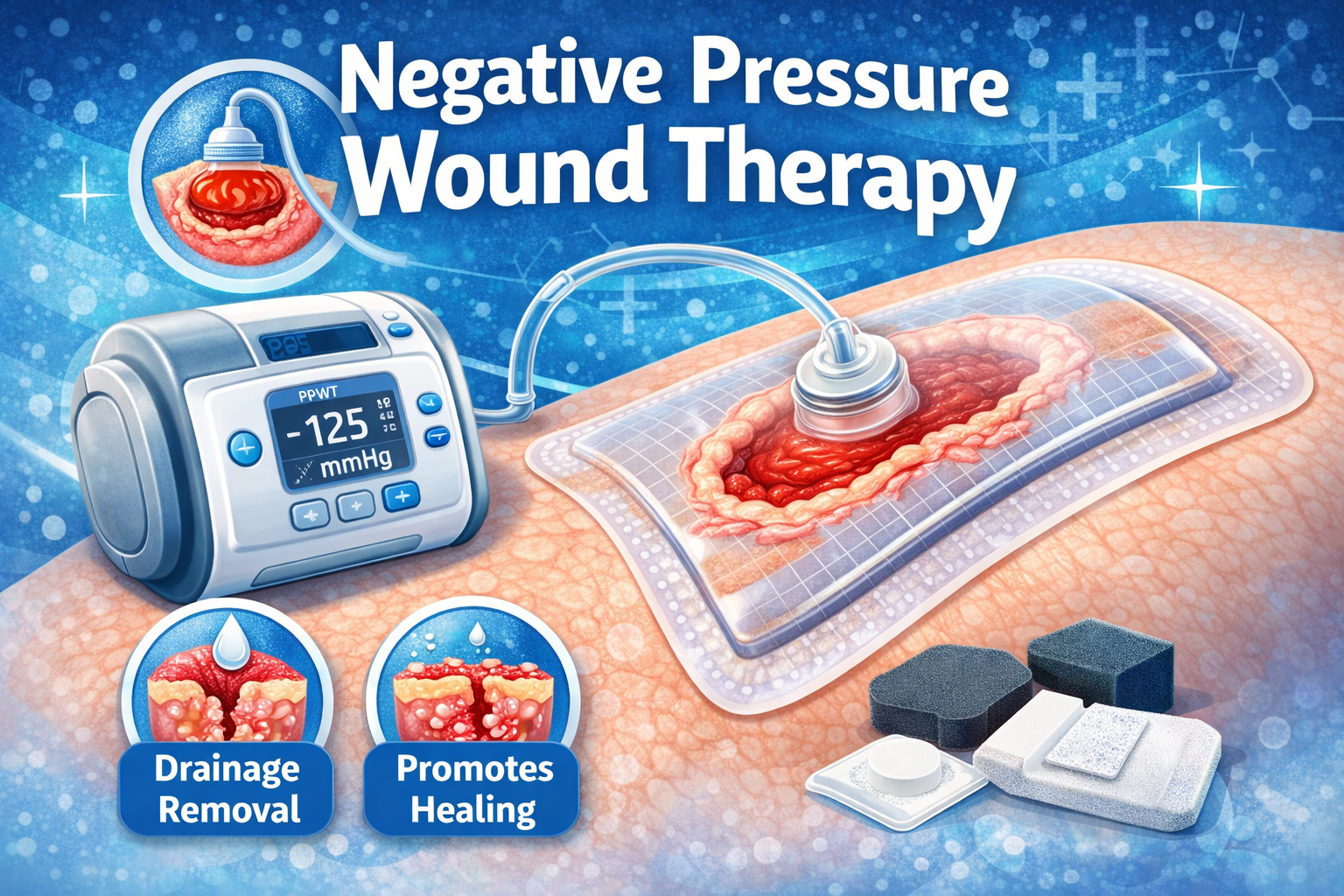
Wound care has evolved significantly with the integration of advanced therapeutic technologies aimed at improving healing outcomes and reducing complications. Among these innovations, Negative Pressure Wound Therapy (NPWT) has emerged as a clinically established approach for managing complex and chronic wounds. The growing burden of surgical procedures, diabetic ulcers, and trauma-related injuries has contributed to the increasing relevance of NPWT within healthcare systems globally.
What is Negative Pressure Wound Therapy?
According to MarkNtel Advisors, Negative Pressure Wound Therapy is a medical technique that applies controlled suction to a wound through a sealed dressing connected to a vacuum pump. This mechanism helps remove excess fluid, reduce edema, and promote blood flow to the affected area. By creating a controlled healing environment, NPWT supports tissue regeneration and lowers the risk of infection.
The therapy is commonly used for conditions such as diabetic foot ulcers, pressure ulcers, surgical wounds, and burn injuries. Its adaptability across various wound types has made it a widely accepted option in both hospital and outpatient care settings.
Key Factors Driving Market Expansion
The growth of the negative pressure wound therapy market is closely tied to broader healthcare trends. One of the primary drivers is the rising incidence of chronic diseases such as diabetes, which significantly increases the risk of non-healing wounds. As the global diabetic population continues to grow, the demand for effective wound management solutions has followed a similar trajectory.
In addition, the increasing number of surgical procedures worldwide has created a consistent need for post-operative wound care. NPWT is frequently utilized to manage surgical incisions, particularly in high-risk patients, due to its ability to reduce complications and improve healing efficiency.
Another important factor is the aging population. Older adults are more susceptible to chronic wounds and slower healing processes, making advanced therapies like NPWT an essential component of geriatric care.
Technological Advancements and Product Innovation
Technological innovation has played a central role in enhancing the effectiveness and accessibility of NPWT systems. Modern devices are increasingly portable, user-friendly, and designed for home care settings. This shift supports the broader healthcare trend toward outpatient treatment and reduced hospital stays.
Single-use NPWT systems, for instance, have gained attention due to their convenience and lower risk of cross-contamination. These systems are particularly beneficial in community healthcare environments where ease of use and infection control are critical considerations.
Furthermore, integration with digital monitoring tools is gradually transforming how wound healing is tracked. Advanced systems may include sensors or connectivity features that allow healthcare providers to monitor patient progress remotely, contributing to more personalized and efficient care.
Clinical Benefits Supporting Adoption
The adoption of NPWT is supported by its demonstrated clinical benefits. By maintaining a moist wound environment and removing exudate, the therapy accelerates the formation of granulation tissue, which is essential for healing. It also helps reduce bacterial load, thereby lowering infection risks.
Healthcare providers often consider NPWT for complex wounds that are difficult to manage with traditional dressings. Its ability to improve outcomes in such cases has reinforced its position as a valuable tool in wound care protocols.
Additionally, reduced healing times associated with NPWT can lead to shorter hospital stays and lower overall treatment costs, making it an economically relevant option for healthcare systems.
Regional Insights and Healthcare Infrastructure
The adoption of negative pressure wound therapy varies across regions, influenced by healthcare infrastructure, reimbursement policies, and awareness levels. Developed regions with advanced healthcare systems tend to demonstrate higher adoption rates due to better access to technology and trained professionals.
In emerging markets, increasing healthcare investments and growing awareness of advanced wound care solutions are contributing to gradual market expansion. However, challenges such as cost constraints and limited access to specialized care may affect the pace of adoption in these regions.
Challenges and Considerations
Despite its advantages, NPWT is not without limitations. The cost of devices and associated consumables can be a barrier, particularly in resource-constrained settings. Additionally, proper training is required to ensure correct application and monitoring, which may not always be readily available.
There are also clinical considerations, as NPWT may not be suitable for all types of wounds. Careful patient assessment is necessary to determine the appropriateness of the therapy, highlighting the importance of skilled healthcare professionals in its implementation.
A Gradual Shift Toward Advanced Wound Care
The broader shift toward advanced wound care solutions reflects a growing emphasis on improving patient outcomes and optimizing healthcare resources. Negative Pressure Wound Therapy represents a significant component of this transition, offering a combination of clinical effectiveness and technological innovation.
As healthcare systems continue to evolve, the role of NPWT is likely to expand further, supported by ongoing research and development efforts. While challenges remain, particularly in terms of accessibility and cost, the therapy’s contribution to modern wound management underscores its importance in addressing complex healthcare needs.