 Sign up with Google
 Sign in with Zoho


The Automation Imperative in Modern Procurement
Supply chain resilience has become a board-level priority. The organizations that responded most effectively to the disruptions of the past five years shared a common operational characteristic: they could activate alternative suppliers in days, not months. The organizations that struggled shared a different characteristic: their supplier onboarding process ran on email threads, spreadsheets, and sequential approval chains that compressed neither gracefully nor quickly under pressure.
The financial arithmetic of manual supplier onboarding is equally unforgiving in stable conditions. The Hackett Group estimates that organizations spend between $1,000 and $5,000 per supplier in manual onboarding administrative costs. For an enterprise onboarding 300 suppliers annually, that represents up to $1.5 million in administrative overhead — before accounting for the compliance exposure, data quality degradation, and strategic opportunity cost that manual processes generate alongside their direct labor burden.
Supplier onboarding automation addresses this problem comprehensively. A modern supplier onboarding platform that automates intake, compliance screening, approval workflows, and ERP provisioning does not simply reduce administrative cost — it transforms supplier activation from a procurement constraint into a supply chain competitive advantage. This article explains precisely how that transformation works, what it requires, and what procurement teams need to understand before making the investment.
What Is Supplier Onboarding Automation?
Supplier onboarding automation is the application of workflow automation, AI-powered compliance screening, and system integration technology to replace manual supplier integration processes with structured, self-executing digital workflows — enabling organizations to register, verify, approve, and provision new suppliers faster, more consistently, and with stronger compliance documentation than manual approaches can deliver.
The definition is deliberately broad because the automation opportunity spans the full onboarding lifecycle, not merely the document collection phase that most procurement teams address first. Genuine supplier onboarding automation encompasses pre-onboarding qualification, self-service supplier registration, multi-source compliance screening, parallel multi-stakeholder approval workflows, validated ERP provisioning, policy alignment delivery, and continuous post-onboarding compliance monitoring.
The Manual Process Baseline That Automation Replaces
Understanding what automation replaces is essential context for evaluating what it delivers. Manual supplier onboarding typically involves procurement coordinators sending document request emails and following up multiple times to receive responses. Supplier data is transcribed manually into ERP systems from PDF submissions and email attachments. Approval requests are routed sequentially — legal reviews before finance, finance before IT, IT before category management — with each handoff introducing delay and each reminder consuming procurement time. Compliance checks are conducted inconsistently, depending on the knowledge and diligence of individual team members. Documentation for audit purposes must be compiled manually when required.
The result is a process that averages three to eight weeks for standard supplier categories — a timeline that creates production delays, strains supplier relationships, and leaves compliance documentation with gaps that only become visible during regulatory scrutiny.
What Automation Does — and What It Does Not
A critical clarity for procurement teams evaluating automation investment: supplier onboarding automation eliminates administrative coordination burden, not procurement judgment. Automation orchestrates parallel workflows, validates data against external sources, screens suppliers across multiple compliance dimensions simultaneously, and provisions ERP records with validated data. It does not replace the strategic judgment required for complex supplier risk assessment, the legal expertise required for jurisdiction-specific compliance analysis, or the relationship management investment required for strategic supplier development.
The organizations that extract maximum value from supplier onboarding automation understand this distinction clearly — they use automation to eliminate administrative work so that procurement professionals can concentrate their expertise where human judgment genuinely adds value.
The True Cost of Manual Supplier Onboarding
Manual supplier onboarding creates compounding costs across four dimensions — administrative overhead, activation delays, compliance exposure, and ERP data quality degradation — that collectively represent a significant and largely avoidable drag on procurement efficiency, supply chain performance, and organizational risk management.
Procurement leaders who evaluate the automation investment case solely on administrative cost reduction consistently understate the ROI. The complete picture requires quantifying all four cost dimensions — and the compliance exposure dimension, in particular, frequently dwarfs the administrative savings that dominate most business cases.
Administrative Overhead: The Visible Cost
The direct labor cost of manual onboarding is calculable with reasonable precision. A procurement coordinator managing a standard supplier registration through email-based document collection, manual data entry, approval coordination, and documentation compilation typically invests eight to fifteen hours per supplier. At a fully-loaded cost of $65 per hour, each manually onboarded supplier costs between $520 and $975 in direct labor. For an organization onboarding 500 suppliers annually, that represents $260,000 to $487,500 in procurement labor allocated entirely to administrative tasks that automated workflows execute without human intervention.
The opportunity cost compounds this figure. Procurement professionals spending the majority of their time on onboarding administration are not conducting strategic supplier development, category innovation analysis, or supply base optimization — the activities that generate procurement's highest strategic value.
Activation Delays: The Strategic Cost
Every week that a supplier spends in an onboarding queue is a week during which that supplier's products or services are unavailable to the organization. For routine suppliers, this creates scheduling inconvenience. For critical category suppliers during supply disruption events, it creates production stoppages with direct revenue impact.
Aberdeen Group research establishes that organizations with best-in-class supplier onboarding achieve supplier activation 67% faster than average. Ardent Partners data connects this activation speed to supply chain performance: organizations with mature onboarding processes achieve 2.5 times greater supply chain performance outcomes than those with fragmented manual approaches. The activation timeline gap between manual and automated onboarding — typically three to eight weeks versus three to ten business days — is not a procurement administrative metric. It is a supply chain resilience metric.
Compliance Exposure: The Consequential Cost
Manual compliance verification creates two types of exposure that automated processes structurally prevent. The first is inconsistency: different procurement team members apply different levels of rigor to sanctions screening, financial risk assessment, and certification verification — creating compliance gaps that are invisible during normal operations and highly visible during regulatory audits. The second is temporal: point-in-time verification at onboarding without continuous monitoring allows compliance status changes — sanctions designations, certification lapses, financial distress events — to go undetected until they surface in audit findings or supply disruption events.
The financial consequences are not hypothetical. Supply chain due diligence legislation — including the EU Corporate Sustainability Due Diligence Directive, the German Supply Chain Act, and the UK Modern Slavery Act — creates structured compliance obligations with meaningful penalty exposure for organizations that cannot demonstrate systematic, documented due diligence. Regulatory audit remediation costs for procurement compliance failures typically range from $150,000 to $500,000, before legal defense costs and reputational remediation.
ERP Data Quality: The Persistent Cost
Manual data entry into ERP vendor master records introduces transcription errors that persist throughout the supplier relationship. Incorrect banking details cause misdirected payments. Missing tax classifications generate incorrect withholding and 1099 reporting errors. Duplicate vendor records create reconciliation complexity in accounts payable. The Institute of Finance and Management benchmarks AP payment exception processing at $25 to $100 per exception — a cost that organizations with poor supplier master data quality incur repeatedly, on every transaction with every affected supplier, until the underlying data quality problem is corrected at its source.
Automated supplier onboarding platforms address this at the point of origin: supplier data collected through structured digital intake, validated against third-party sources, and provisioned directly into ERP records produces measurably superior data quality — typically reducing supplier master data entry errors by 80 to 90% compared to manual transcription.
How a Smart Supplier Onboarding Platform Works
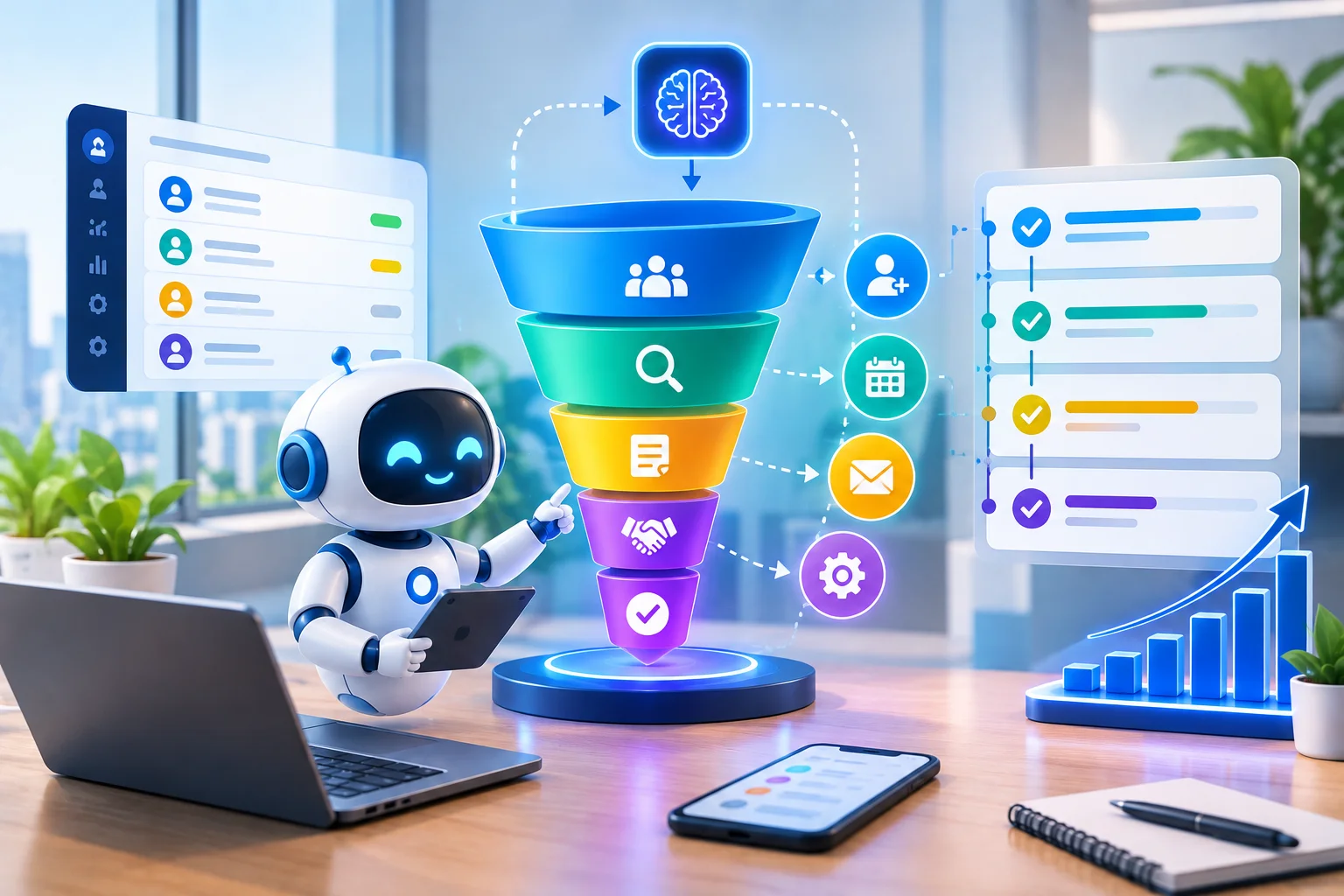
A smart supplier onboarding platform works through six interconnected automated stages — intelligent intake, parallel compliance screening, multi-stakeholder workflow orchestration, validated ERP provisioning, policy alignment delivery, and continuous post-onboarding monitoring — each executing with minimal human coordination while generating the documentation infrastructure that regulatory scrutiny requires.
The architecture reflects a fundamental design principle: automate what can be systematized, and route to human judgment what genuinely requires it. The result is a process that is simultaneously faster and more thorough than its manual equivalent — not because it applies less rigor, but because it applies rigor consistently, in parallel, and without the coordination overhead that makes manual rigor so expensive.
Stage 1 — Intelligent Supplier Intake
When a new supplier relationship is initiated — through a sourcing event, procurement request, or contract execution — the platform automatically triggers a structured digital intake process. Rather than sending a generic supplier questionnaire by email, the system generates a supplier-specific registration pathway based on preliminary classification data: supplier type, spend category, geographic location, and estimated risk tier.
AI-powered profile enrichment supplements supplier-provided data automatically. Commercial registry databases — Dun & Bradstreet, Companies House, SEC EDGAR — populate company information that suppliers would otherwise enter manually. Tax ID validation against government databases catches errors at point of entry. Corporate structure mapping initiates Ultimate Beneficial Owner identification for compliance purposes.
Conditional logic determines which compliance screening pathways and documentation requirements apply to each supplier before they begin registration — ensuring that a low-risk stationery supplier is not burdened with the same documentation requirements as a high-value IT services provider subject to cybersecurity risk assessment.
Stage 2 — Parallel Automated Compliance Screening
The compliance screening stage is where automated platforms deliver their most significant quality improvement over manual processes. Rather than conducting compliance checks sequentially — or selectively, based on individual reviewer judgment — the platform executes all applicable screening simultaneously upon supplier profile completion.
Sanctions and watchlist screening runs against OFAC, UN, EU, and relevant national lists. Financial risk assessment integrates commercial credit data from Dun & Bradstreet or Experian to generate supplier financial health scores and distress indicators. ESG due diligence incorporates sustainability ratings from platforms including EcoVadis and Sedex. Certification and license verification confirms current validity through primary source connections. Adverse media screening detects reputational risk signals that structured compliance databases might not capture.
The composite risk score generated from these simultaneous checks determines approval routing automatically: low-risk suppliers proceed through expedited pathways; medium-risk suppliers receive additional documentation requests; high-risk suppliers trigger senior procurement and legal review with enhanced due diligence requirements. Every screening result is documented automatically — creating the audit trail that demonstrates systematic due diligence to regulatory reviewers.
Stage 3 — Parallel Multi-Stakeholder Approval Orchestration
In manual onboarding environments, approvals are sequential: legal reviews before finance, finance before IT. Each handoff introduces delay. Each missed deadline requires manual chasing. Each approval depends on a single individual's availability rather than the organization's operational urgency.
Automated workflow orchestration eliminates sequential dependency for approval streams that do not technically require it. Legal, finance, IT security, risk and compliance, and category management receive simultaneous notification and work in parallel. Configurable deadlines with automated escalation eliminate the manual reminder cycles that consume procurement coordinator time. Delegation management ensures that individual approver absence does not halt the entire process.
The result is dramatic: a financial services firm that reduced its average supplier activation timeline from six weeks to nine business days attributed the improvement almost entirely to this single architectural change — parallel rather than sequential approval execution.
Stage 4 — Validated ERP Provisioning
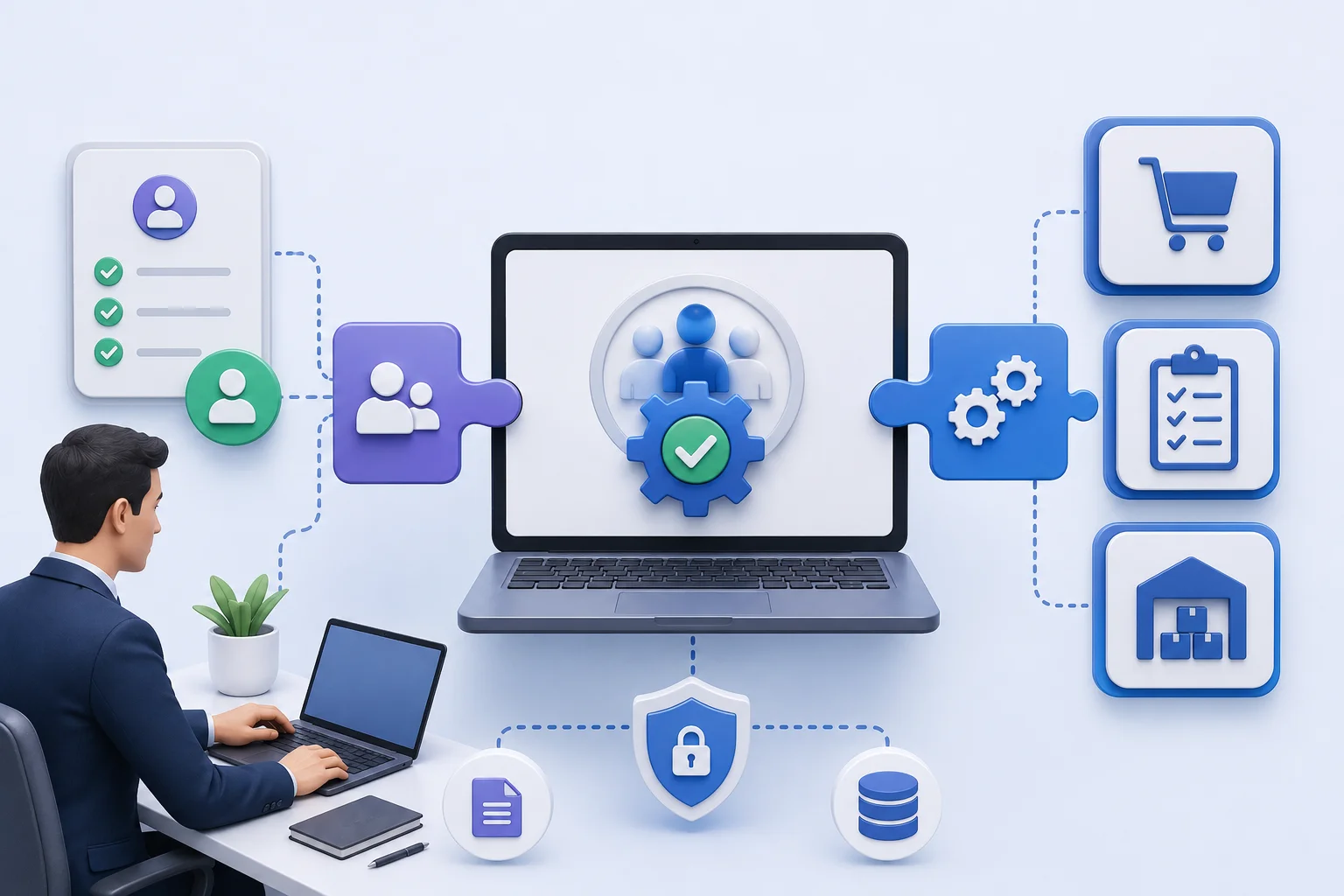
Upon final approval, the platform executes automated ERP vendor master record creation. Supplier data that has been collected through structured digital intake, enriched through third-party sources, and validated through automated compliance checks flows directly into ERP records — formatted, standardized, and verified before it enters the system.
Duplicate detection logic prevents the vendor record proliferation that plagues organizations with high-volume manual onboarding. Format standardization normalizes address, phone, tax ID, and banking detail entries. Mandatory field validation ensures that no vendor master record is created with the data gaps that cause downstream AP processing failures. The provisioning event is documented with timestamp and data source references, creating an auditable chain of custody for every data element in the supplier master record.
Stage 5 — Policy Alignment and Post-Onboarding Monitoring
Policy delivery — supplier code of conduct acknowledgment, invoicing requirements, ordering procedures, data protection obligations — is automated alongside provisioning, ensuring that every new supplier receives consistent, documented policy orientation regardless of which procurement team member manages the relationship.
Continuous compliance monitoring activates upon supplier approval, converting point-in-time verification into ongoing surveillance. Sanctions status updates, certification expiration dates, financial health deterioration signals, and ESG score changes are monitored automatically, with alert generation triggering remediation workflows when action is required. This post-onboarding monitoring capability is the feature most commonly absent in manual programs — and the most commonly cited gap in procurement regulatory audit findings.
Why Supplier Onboarding Automation Is Strategically Important
A supplier onboarding platform with full automation capability is strategically important because it directly determines the speed, compliance quality, data integrity, and scalability of every new supplier relationship — outcomes that compound across the full supplier lifecycle and influence procurement efficiency, supply chain resilience, and organizational risk exposure in ways that extend far beyond the onboarding event itself.
The strategic case has intensified as three megatrends have converged. Supply chain disruption has demonstrated that supplier activation speed is a resilience metric, not merely a procurement efficiency metric. Regulatory complexity has increased the compliance depth required at onboarding beyond what manual processes can consistently deliver. Digital transformation pressure has placed procurement automation on C-suite agendas where procurement efficiency arguments alone would not have reached.
The Scalability Advantage That Compounds Over Time
An organization managing 300 suppliers can sustain a manual onboarding process — inefficiently, expensively, and with inadequate compliance depth, but functionally. An organization managing 1,000 suppliers cannot. The scalability constraint of manual onboarding is structural: each additional supplier adds proportional administrative burden. Automated onboarding breaks this linear relationship. An e-commerce retailer that expanded its active supplier base from 300 to 1,200 vendors in 18 months achieved the growth with one additional procurement hire rather than seven — because the platform carried the administrative load that headcount would otherwise have borne.
Real-World Applications: Supplier Onboarding Automation in Practice
Global Manufacturer: Parallel Workflow Eliminating Activation Bottlenecks
A Tier 1 automotive components manufacturer with a 2,000-supplier global base was averaging eight weeks for new supplier activation — a timeline that created critical vulnerability when supply disruptions required rapid alternative supplier engagement. Implementation of parallel approval workflow automation reduced average activation to eleven business days. During a subsequent supply disruption event, the organization activated fourteen alternative suppliers within three weeks — a capability that would have been operationally impossible under the previous sequential manual process. The estimated avoided production downtime value exceeded $8 million in the first year following deployment.
Financial Services: Compliance Automation Meeting Regulatory Examination Standards
A global financial institution managing 3,500 active vendor relationships had received adverse findings in two consecutive regulatory examinations related to third-party onboarding documentation gaps. Manual compliance verification produced inconsistent results, and audit trail compilation required weeks of manual document assembly. Following deployment of automated multi-source compliance screening and continuous monitoring, the organization's subsequent regulatory examination found zero onboarding-related compliance deficiencies — and audit preparation time decreased from six weeks to four days.
Healthcare System: Credential Monitoring Preventing Accreditation Risk
A regional healthcare system managing 900 active suppliers discovered during accreditation review that two suppliers had been engaged with lapsed quality certifications — a finding that triggered remediation requirements and reputational concerns. Implementation of automated certification expiration monitoring with configurable 90-day, 60-day, and 30-day alert workflows produced zero lapsed certification incidents in the 24 months following deployment. The procurement team's time allocated to certification management decreased by 80%, redirected to supplier development activities with direct category value impact.
Challenges in Implementing Supplier Onboarding Automation
Despite compelling ROI evidence across multiple dimensions, supplier onboarding automation implementations encounter predictable challenges that procurement teams should anticipate explicitly. Legacy ERP integration complexity — connecting modern automation platforms to on-premise SAP or Oracle configurations with limited API capability — is the most technically demanding barrier and the one most likely to extend implementation timelines beyond initial estimates.
Organizational change management is equally consequential. Procurement professionals accustomed to relationship-led, email-based supplier management frequently resist systematic workflow automation — perceiving it as a reduction of their influence rather than an amplifier of their capacity. Successful implementations reframe this explicitly: automation eliminates the administrative tasks that consume procurement talent; it does not replace the strategic judgment that defines procurement's organizational value.
Supplier digital adoption variation creates implementation friction in self-service models. SMB suppliers with limited digital infrastructure, suppliers in regions with lower digital literacy, and suppliers accustomed to personal relationship-based interaction may resist or struggle with fully digital onboarding. Hybrid approaches — combining self-service digital workflows with human-assisted completion for complex cases — consistently outperform forced universal self-service adoption across heterogeneous supplier bases.
Data governance investment must precede automation deployment. Organizations that implement workflow automation without establishing supplier master data standards discover that automation accelerates the creation of the same data quality problems that plagued their manual process — only faster and at higher volume.
Future Trends in Supplier Onboarding Automation
The next generation of supplier onboarding automation will be defined by generative AI transforming supplier communication from generic questionnaires into personalized, pre-populated intake experiences; continuous compliance monitoring becoming a universal platform standard rather than a premium differentiating feature; blockchain-based portable supplier credentials enabling verified compliance records to travel with suppliers across customer relationships; and the convergence of onboarding automation with supply chain intelligence platforms that use onboarding-derived data to inform ongoing procurement decision-making.
ESG data collection is transitioning from a supplementary onboarding feature to a compliance requirement. Organizations subject to the EU Corporate Sustainability Due Diligence Directive and similar frameworks need carbon footprint data, labor practice assessments, and environmental compliance certifications embedded in their onboarding workflows — not bolted on through separate sustainability assessment processes that suppliers experience as redundant.
The ultimate trajectory is toward autonomous onboarding for standard supplier categories: AI-driven compliance determination, zero-touch ERP provisioning, and human procurement involvement reserved exclusively for strategic and complex supplier relationships where judgment genuinely adds value.
Key Takeaways
- Supplier onboarding automation replaces manual, email-based integration processes with structured digital workflows that execute compliance screening, approval orchestration, and ERP provisioning in parallel — delivering faster activation, stronger compliance documentation, and superior ERP data quality simultaneously.
- The complete ROI case for supplier onboarding automation spans four dimensions: administrative cost reduction of 60–75% per supplier, activation timeline compression of 50–75%, compliance cost avoidance through regulatory penalty prevention, and ERP data quality improvement reducing downstream AP processing exceptions by 80–90%.
- The six-stage automation architecture — intelligent intake, parallel compliance screening, multi-stakeholder workflow orchestration, validated ERP provisioning, policy alignment delivery, and continuous post-onboarding monitoring — addresses the full supplier onboarding lifecycle rather than merely the document collection phase.
- Continuous post-onboarding compliance monitoring is the capability most commonly absent in manual programs and most commonly cited in procurement regulatory audit findings — making it a non-negotiable feature in any supplier onboarding platform evaluation.
- The primary implementation challenges — legacy ERP integration complexity, organizational change management resistance, supplier digital adoption variation, and data governance gaps — are all predictable and addressable with structured implementation planning and appropriate investment in change management alongside technology deployment.
- The future of supplier onboarding automation lies in generative AI-powered supplier communication, blockchain-based portable credentials, ESG data collection as a compliance standard, and convergence with supply chain intelligence platforms — creating a continuous supplier intelligence infrastructure that extends far beyond the initial activation event.