Sign up with Google
 Sign in with Zoho

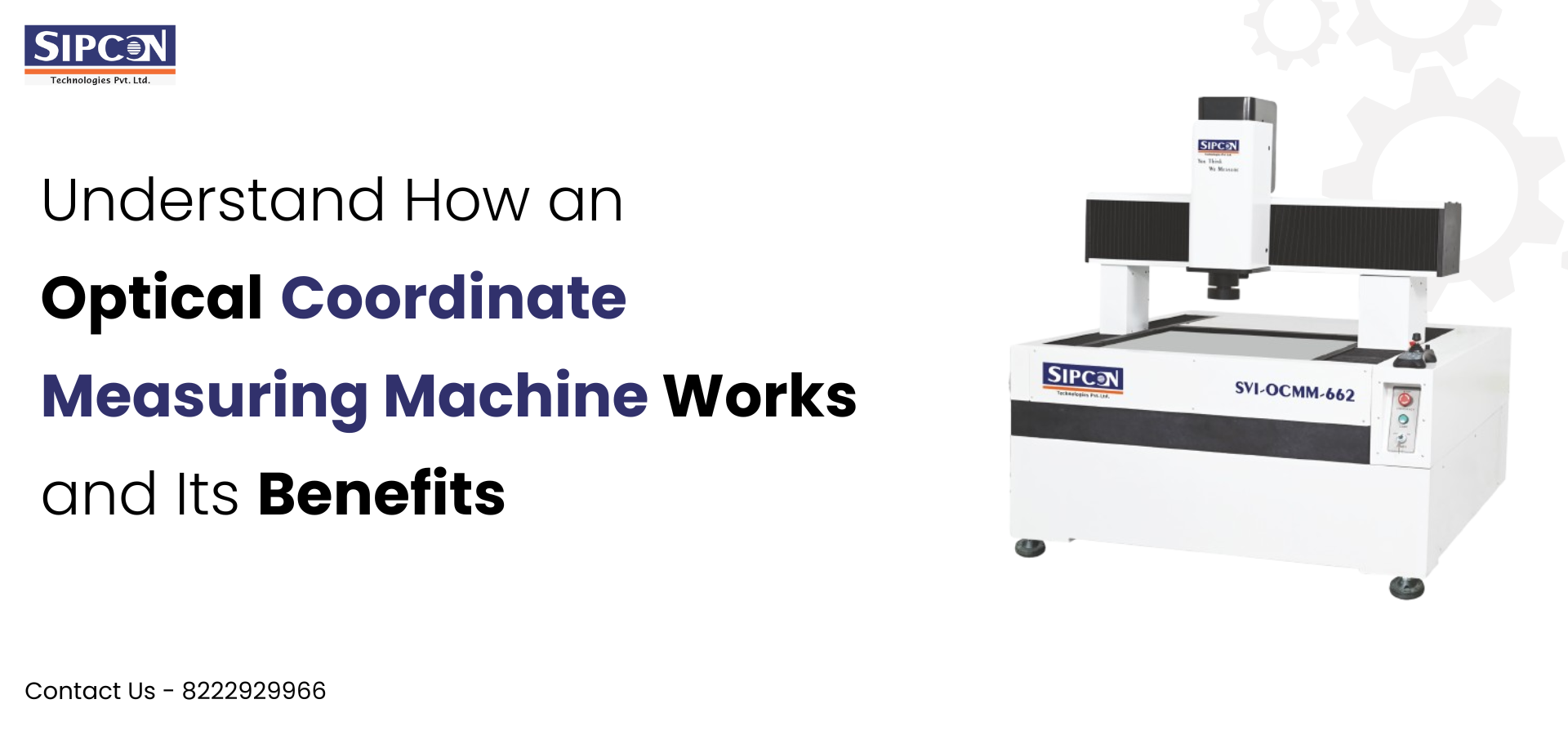
Precision inspection is no longer limited to aerospace labs or high-end automotive plants. Today, even mid-sized manufacturers are under pressure to measure parts faster, tighter, and with fewer operator-related errors. That shift is one of the biggest reasons companies across the USA are moving toward the optical CMM approach instead of relying only on traditional touch-probe systems.
For years, conventional CMMs handled most dimensional inspection jobs reasonably well. They still do in many applications. But production environments have changed. Components are getting smaller, tolerances tighter, and inspection speed matters more than ever. Waiting several minutes to inspect a single part is becoming difficult to justify on busy production lines.
This is where the optical coordinate measuring machine has started gaining serious attention.
What Is an Optical Coordinate Measuring Machine?
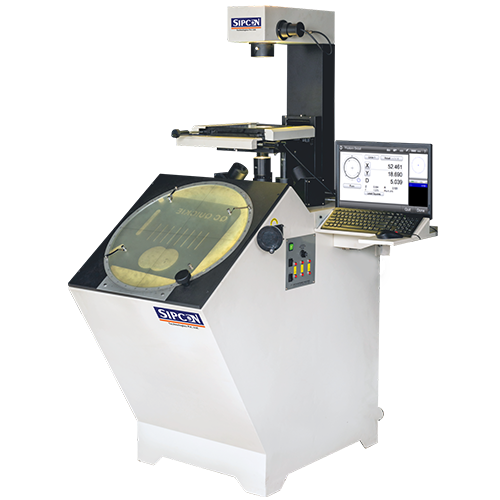
An optical coordinate measuring machine uses cameras, optics, advanced lighting, and software-driven image processing to measure dimensions without physically touching the part.
Instead of using a probe to contact the surface point by point, the machine captures high-resolution images and extracts measurement data from those images.
That sounds simple on paper. In practice, it changes inspection workflows quite a bit.
A traditional CMM might inspect one feature at a time. An optical system can often capture dozens or even hundreds of measurement points instantly. For manufacturers running large batches, that time difference adds up quickly.
And honestly, once production teams see how much inspection bottleneck disappears, it becomes hard to go back.
Why Traditional Contact Measurement Is Becoming Slower for Modern Production
A touch-probe CMM is extremely accurate, but there are situations where it creates unnecessary delays.
Think about tiny stamped parts, medical components, electronic connectors, or precision plastic molds. These parts may have:
- Very small geometries
- Delicate surfaces
- Thin walls
- Reflective finishes
- Flexible materials
Physical probing can sometimes deform the part slightly during measurement. Even tiny contact pressure can affect readings on softer materials.
Small deviations can ruin the results.
This is where many labs make mistakes. They assume measurement errors come from the machine itself, while the actual issue is part deformation during contact inspection.
An optical coordinate measuring machine avoids that problem because there is no physical contact involved.
Faster Inspection Is a Major Reason Manufacturers Are Switching
Speed is probably the biggest driver behind optical inspection adoption.
A standard CMM may require programmed probe paths, stylus changes, and slower movement between features. Optical systems can inspect many dimensions almost instantly using image capture.
That changes production flow dramatically.
For example:
- Injection molding plants can inspect parts immediately after molding
- Electronics manufacturers can verify connector geometry faster
- Medical device companies can inspect miniature parts without handling damage
- Tooling manufacturers can validate complex edges and profiles quickly
In high-volume environments, inspection speed directly affects profitability.
If your measurement room becomes the bottleneck, production teams start bypassing inspection steps. That’s when quality issues quietly begin showing up downstream.
Better for Delicate and Miniature Components
Some components simply should not be touched repeatedly during inspection.
Thin plastic parts, micro-machined components, soft rubber materials, and polished surfaces are common examples.
An optical CMM works especially well for:
- Miniature holes
- Edge measurements
- Radius verification
- Thread profile analysis
- Fine contour inspection
- Thin-wall geometry
And there’s another practical advantage people don’t always mention.
Operators usually need less fixturing pressure because the machine isn’t physically probing the component. That reduces setup distortion.
Don’t rush this part during implementation. Poor fixturing can still create alignment errors even in non-contact systems.
Reduced Operator Dependency
Older inspection processes often depended heavily on operator skill.
Probe alignment, stylus calibration, touch pressure, and measurement path programming all required experience. Skilled CMM programmers are still valuable, but manufacturers are trying to simplify inspection wherever possible.
Modern optical systems often include:
- Automatic edge detection
- AI-assisted feature recognition
- Smart autofocus systems
- Automated comparison against CAD files
- Batch measurement routines
That reduces manual intervention.
It also helps manufacturers maintain consistency across shifts. Night-shift inspection should not produce different results from day-shift inspection, but it happens more often than companies admit.
Optical Systems Help With Inline Inspection
More manufacturers now want inspection directly near production instead of isolated quality labs.
That’s another reason the optical coordinate measuring machine market is growing.
Traditional CMMs often require vibration-controlled rooms and slower environments. Optical systems can sometimes integrate closer to the manufacturing floor, especially when cycle time matters.
Inline inspection helps manufacturers:
- Catch defects earlier
- Reduce scrap
- Prevent large batch failures
- Improve SPC monitoring
- Adjust machining offsets faster
If defects are discovered too late, the cost multiplies fast.
A machining error detected after 5 parts is manageable. After 5,000 parts, it becomes expensive very quickly.
Complex Geometries Are Easier to Analyze
Modern products are not getting simpler.
Manufacturers now deal with intricate contours, organic shapes, micro-features, and extremely detailed profiles. Measuring those geometries manually can become painfully slow.
Optical systems are often better suited for:
- Contour scanning
- 2D geometry analysis
- Surface comparison
- Profile measurement
- Multi-feature inspection
Some advanced systems combine optical measurement with laser scanning or tactile probing in hybrid setups.
That flexibility matters because no single measurement technology solves every inspection challenge perfectly.
Lower Risk of Surface Damage
This matters more than many purchasing teams initially realize.
Polished surfaces, coated parts, precision optics, and delicate medical components can be damaged during repeated contact inspection.
Even microscopic scratches can create functional problems in some industries.
An optical CMM removes that contact risk entirely.
That’s especially important for:
- Semiconductor parts
- Medical implants
- Precision tooling
- Cosmetic components
- High-finish mold surfaces
Data Reporting Has Improved Significantly
Older inspection reports were often difficult for production teams to interpret.
Modern optical systems now provide:
- Visual overlays
- Color deviation mapping
- Real-time CAD comparison
- Automated pass/fail analysis
- Statistical trend monitoring
Production engineers usually respond faster when they can visually see the problem area instead of reading long dimensional tables.
And honestly, clearer reporting reduces arguments between production and quality departments. Anyone who has worked in manufacturing long enough knows exactly what that means.
Are Optical Coordinate Measuring Machines Replacing Traditional CMMs Completely?
Not really.
This part is important.
Traditional tactile CMMs still remain essential for many high-precision 3D applications, especially where deep internal geometries or extremely tight volumetric tolerances are involved.
Optical systems are not automatically better for every job.
For example:
- Deep bore measurements may still require probing
- Some reflective materials need careful lighting adjustment
- Transparent components can create imaging challenges
- Calibration quality still matters heavily
This is where many buyers overspend. They assume a faster system solves every inspection problem.
It doesn’t.
The smarter approach is understanding which measurement technology fits the actual production requirement.
In many facilities, hybrid inspection setups now make the most sense.
What Manufacturers Should Check Before Buying an Optical CMM
Before investing in an inspection system, manufacturers should evaluate:
Part Size Range
Some systems are optimized for micro-components while others handle larger parts.
Material Type
Reflective, transparent, or dark materials may require specialized lighting.
Required Accuracy
Inspection tolerance should match machine capability realistically.
Software Compatibility
CAD integration and reporting flexibility matter more than people expect.
Production Volume
Higher production environments benefit most from rapid optical measurement.
Operator Training
Even advanced automation still requires proper setup knowledge.
Skipping training is expensive later.
The Shift Toward Smarter Quality Control
Manufacturing quality control is moving toward faster feedback loops, higher automation, and lower inspection delays.
That shift is pushing more facilities toward optical coordinate measuring machine technology, especially where speed and delicate part handling matter.
Many companies are not replacing every traditional CMM overnight. Instead, they are adding optical systems where they solve specific production challenges more efficiently.
That approach usually works better.
Manufacturers that take time to evaluate actual inspection pain points tend to make smarter investments than companies chasing trends blindly.
For businesses exploring advanced dimensional inspection solutions, Sipcon Technologies Pvt. Ltd offers a range of precision measurement and testing systems designed for industrial quality applications in the USA market.
For technical discussions or application support:
- Phone: +1 (262) 391-4785
- Email: [email protected]
At the end of the day, the goal is not simply faster measurement. It’s reducing inspection delays without sacrificing accuracy. The manufacturers getting this balance right are usually the ones seeing fewer rejects, better process control, and less friction between production and quality teams.




.webp)