Sign up with Google
 Sign in with Zoho

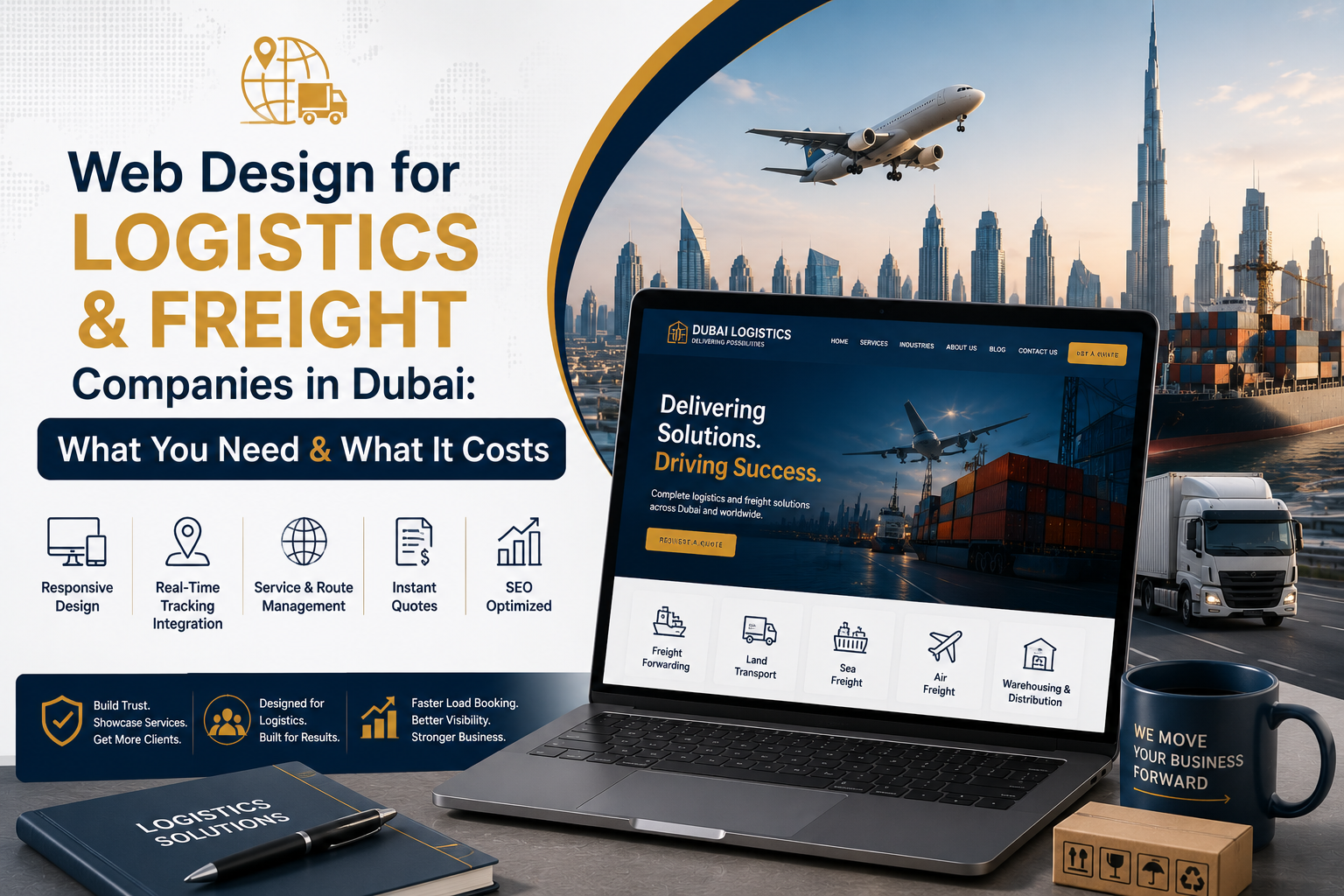
Dubai is one of the world's busiest logistics hubs. Jebel Ali Port is the largest port in the Middle East. Dubai International Airport is among the top cargo airports globally. Thousands of freight forwarders, shipping companies, and logistics providers operate here, all competing for the same contracts.
So here is the question: when a procurement manager, a supply chain director, or a business owner in Dubai needs a logistics partner and searches online, does your company show up? And when they land on your website, does it give them enough confidence to make contact?
For most logistics companies in Dubai, the honest answer to both questions is no.
This guide shows you exactly what a logistics or freight company website needs to do, what it costs, and how to build one that actually wins you new business.
What a Logistics Website Needs to Do
A logistics company website is not like a retail website or a restaurant website. You are not trying to get casual browsers. You are trying to win B2B contracts, and the people evaluating you are professionals who know exactly what they are looking for.
Your website needs to:
- Show what services you offer, clearly and specifically, not in vague industry jargon
- Prove you are credible licences, certifications, years in business, client names where permitted
- Make it easy to get a quote a simple, well-designed quote request form that collects the right information
- Help you appear on Google when potential clients search for logistics or freight services in Dubai
That is it. Keep it focused. A logistics website does not need to be fancy; it needs to be professional, clear, and easy to navigate.
Web Design Cost in Dubai for Logistics Companies
Most logistics and freight companies in Dubai, especially small to mid-size operators, find that a website in the AED 12,000–28,000 range gives them everything they need to look professional, communicate their services clearly, and generate genuine business enquiries.
For a full picture of web design pricing across all business types in the UAE, this guide on Website Design cost in Dubai gives you clear, current market rates.
Features That Matter Most for a Logistics Website
Clear Service Pages
This is where most logistics websites go wrong. They list a wall of services, air freight, sea freight, road freight, customs clearance, warehousing, and last-mile delivery, with no explanation of what any of it means for the client.
Fix this by giving each service its own dedicated page. Write it from the client's point of view. Not "we provide FCL and LCL solutions" but "we handle full container and part-container sea shipments between Dubai and any major global port." Plain language. Clear benefit. Specific scope.
A client searching for "customs clearance Dubai" or "sea freight from Dubai to UK" needs to land on a page that speaks directly to that need, not a generic services overview that makes them dig for the information they want.
A Simple Quote Request Form
This is the most important conversion feature on a logistics website.
A potential client who wants a quote should be able to fill in a short form, shipment type, origin, destination, weight or volume, timeline, and submit it in under two minutes. The simpler and faster this process is, the more quote requests you receive.
Do not make clients call to start the conversation. Many logistics buyers, especially those managing multiple supplier relationships, prefer to initiate contact through a form. Capture them there.
Certifications and Licences — Displayed Clearly
In logistics, credentials are everything. Your FIATA membership, your Dubai Customs approvals, your IATA accreditation (for air freight), your ISO certification, and your dangerous goods handling certification, these are trust signals that serious clients look for before shortlisting a provider.
Display them prominently. Put them on your homepage and on your services pages. Do not bury them in a PDF that nobody will download. If a client can see at a glance that you are licensed, certified, and accredited, you have already cleared the first hurdle.
Your Coverage and Network
Clients want to know where you operate. A clear map or list of your service routes, ports, airports, countries, and trade lanes immediately tells a potential client whether you can handle their specific shipment requirements.
If you have agent networks or partnerships in specific regions, mention them. A Dubai logistics company with confirmed agents in Rotterdam, Shanghai, and Mumbai is more credible than one making vague claims about "global coverage."
Fleet and Warehouse Information
If you have your own trucks, vans, or warehouse space, show them. Photos of your actual fleet, not stock photos of generic trucks, and real images of your warehouse facility build immediate credibility.
Clients who are trusting you with their cargo want to know that you have real infrastructure behind your service promise. Showing it is far more persuasive than describing it.
Client Testimonials or Case Studies
A logistics client who is choosing between two freight companies they found online is going to go with the one that has evidence of doing the job well for others. A short case study, "we moved 200 tonnes of medical equipment from Frankfurt to Dubai in 72 hours for a UAE hospital group," is worth more than any marketing claim.
Where clients give permission, use their name or their industry. Specific is credible. Vague is forgettable.
What Most Logistics Companies Get Wrong Online
Too much jargon, not enough clarity. The logistics industry is full of acronyms: FCL, LCL, RO-RO, AWB, B/L, POD. Your clients may know some of these. They may not know all of them. Write your website for the client who is a supply chain manager, not a logistics veteran. Clear language wins more business than insider terminology.
No quote request form: If a potential client has to call to even start a conversation, many of them will not bother, especially if they are comparing multiple providers. A simple quote request form captures these leads automatically.
Generic stock photos: Photos of cargo planes, container ships, and warehouses that could belong to any company in the world do not differentiate you. Use real photos of your actual operations wherever possible.
No mobile optimisation: Logistics professionals are busy people who often research suppliers on their phones during travel or between meetings. A website that is difficult to use on mobile creates a poor first impression at a critical moment.
No SEO setup: Many logistics companies in Dubai have websites that Google cannot find, because they were built without any SEO foundation. If your website does not appear when someone searches "freight forwarder Dubai" or "customs clearance UAE," it is not working for your business.
A Word on B2B Logistics SEO in Dubai
B2B SEO in logistics is different from consumer SEO. The search volumes are lower, but the value of each enquiry is much higher. A company that ranks on the first page of Google for "cold chain logistics Dubai" or "air freight forwarder Jebel Ali" gets a steady stream of highly qualified, high-value enquiries, without paying for advertising.
The key is dedicated service pages written in the language your clients actually search. Not one generic "logistics services" page, but individual pages for customs clearance, air freight, sea freight, warehousing, and any specialist services you offer, each optimised for the specific terms buyers use when they search.
FAQs
Q1. How much does a logistics company website cost in Dubai?
A small freight or courier company website costs AED 5,000–12,000. A mid-size logistics company with service pages and a quote system costs AED 12,000–28,000. A full logistics platform with tracking integration and Arabic support costs AED 25,000–55,000. Large 3PL groups start at AED 50,000.
Q2. Do logistics companies in Dubai really get business through their website?
Yes, especially from clients who are new to Dubai, sourcing suppliers for the first time, or evaluating multiple providers simultaneously. A professional website with clear services and an easy quote request form consistently generates enquiries from clients who would otherwise have gone to a competitor they found more easily online.
Q3. Should my logistics website have a shipment tracking tool?
If you have your own tracking system, integrating it into your website is worth doing, it adds genuine value for existing clients and differentiates you from competitors. If you use a third-party carrier tracking system, a simple link to that platform is sufficient and much less expensive to implement.
Q4. How do I get my logistics company to appear in Google searches in Dubai?
Build dedicated service pages for each service you offer, written in plain language with the keywords your clients actually search. Make sure your Google Business Profile is complete and accurate. Get listed on relevant UAE business directories. Publish occasional case studies or freight market updates; these create content that Google indexes and ranks over time.
Q5. Does my logistics website need to be in Arabic?
If your clients include UAE government entities, local businesses, or Arabic-speaking importers and exporters, which is likely in Dubai, yes. Arabic language support broadens your reach significantly, particularly in the SME and local business segments of the market.
Q6. What is the single most important thing to get right on a logistics website?
The quote request form. It is the primary conversion point, the moment a visitor becomes a potential client. Make it simple, make it fast, and make sure it sends you an immediate notification when someone submits it. A form that goes unchecked for 24 hours loses the enquiry to whoever responds first.
The Bottom Line
A logistics or freight company website in Dubai does not need to be impressive. It needs to be clear, credible, and easy to use. Show your services plainly. Display your credentials prominently. Make it simple to request a quote. And build it on a foundation that Google can find.
Do those four things well, and your website becomes a steady source of new business enquiries, running in the background while your operations team focuses on moving cargo.