Sign up with Google
 Sign in with Zoho

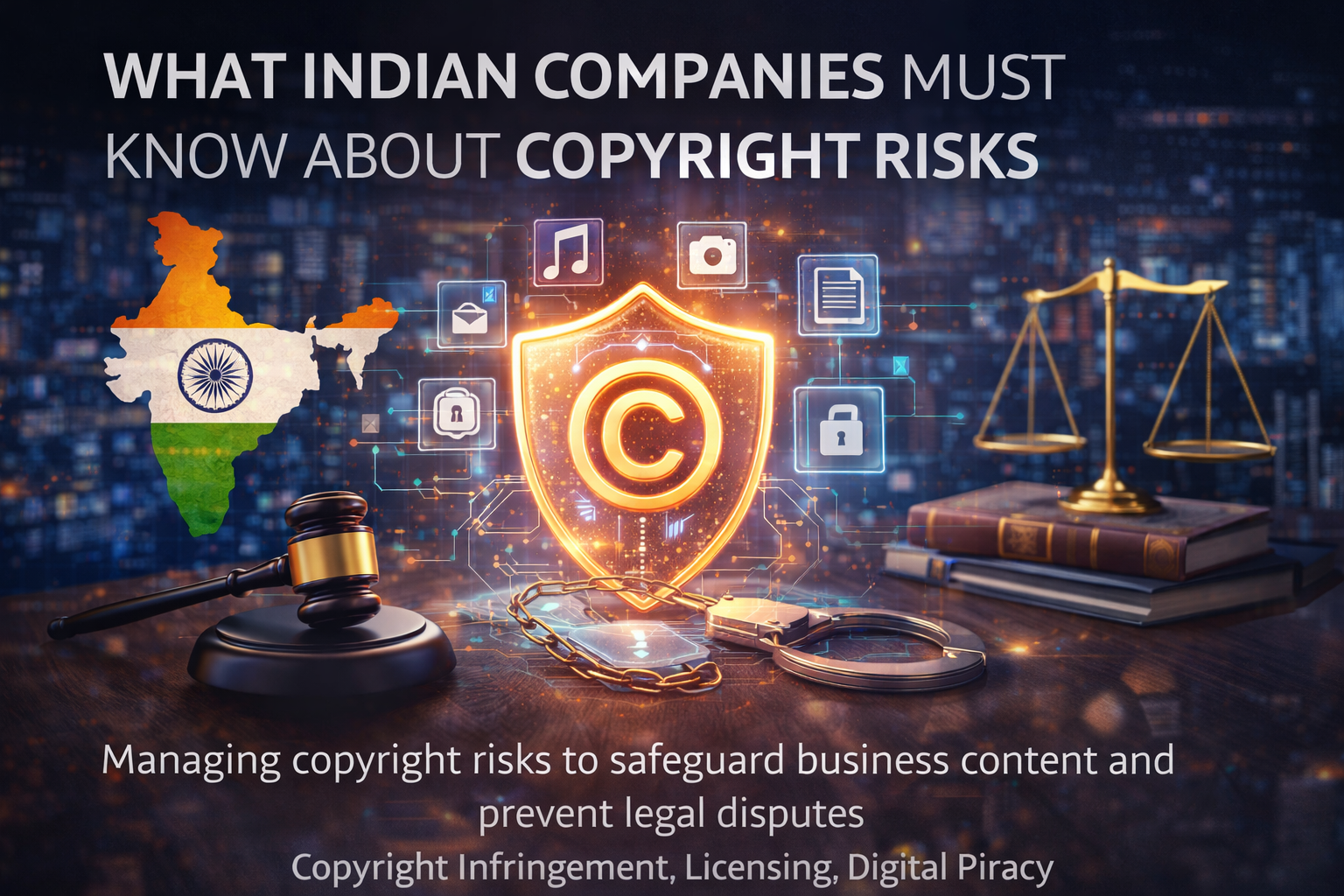
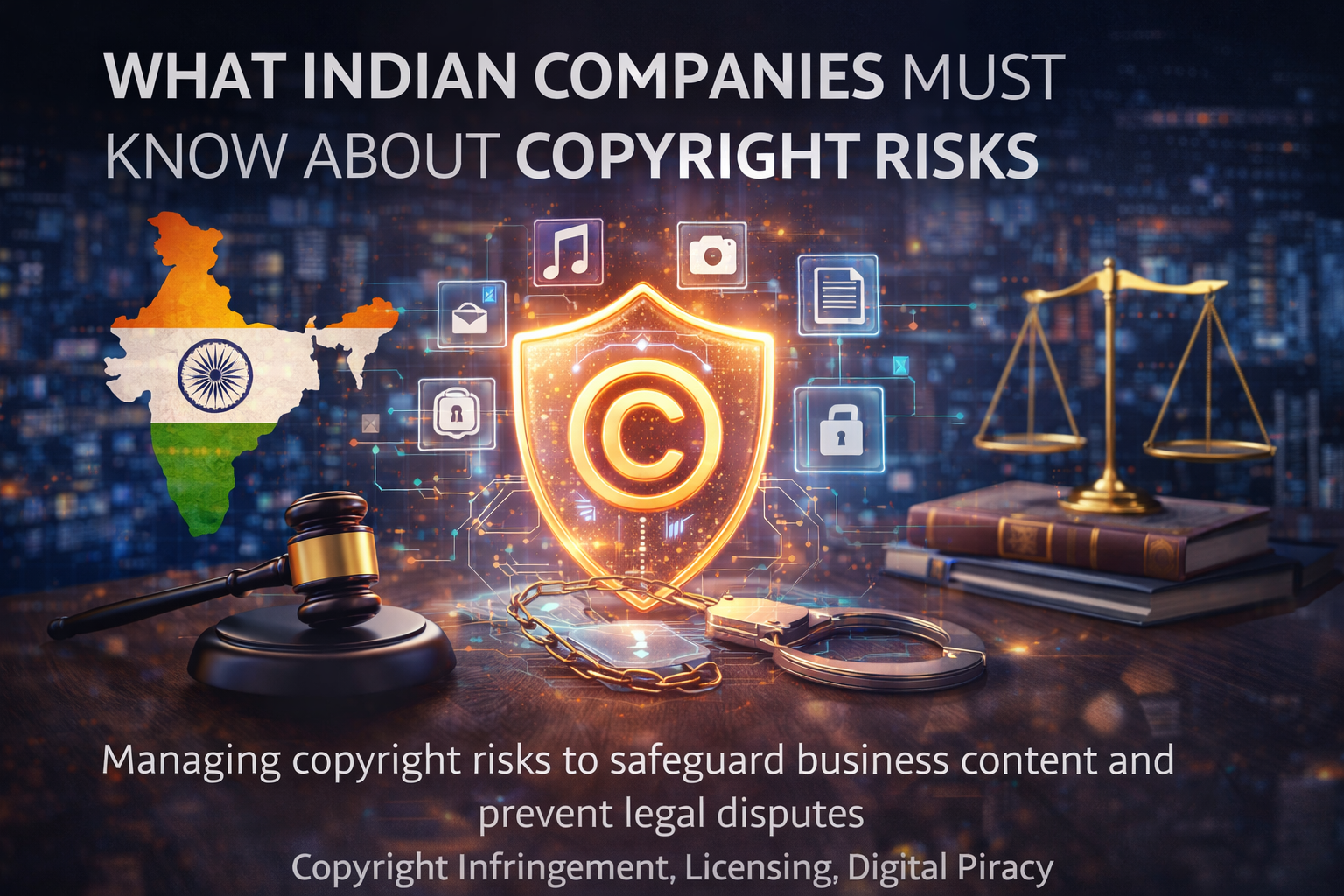
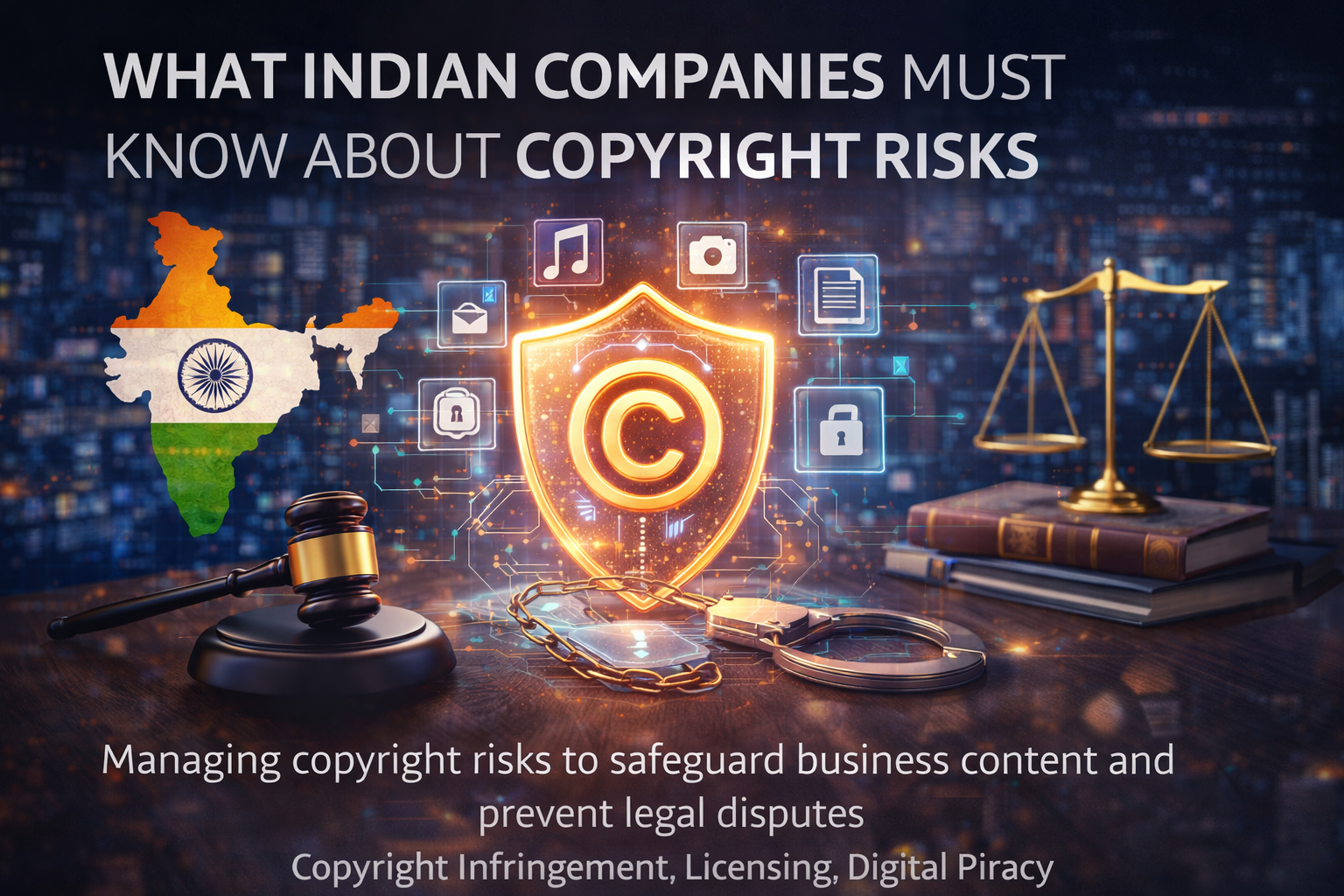
Copyright risks have become a serious concern for Indian companies operating in a digital and content driven economy. Businesses today rely on websites, marketing campaigns, software, training material, and social media content to engage customers and build brand value. While these assets create opportunity, they also expose companies to legal risks.
Copyright law in India offers strong protection for original work. However, lack of awareness and improper practices often lead to infringement issues. Understanding these risks is essential for businesses seeking to operate safely and maintain credibility.
Understanding Copyright in a Business Context
Copyright protects original literary, artistic, musical, and digital works. For companies, this includes website content, advertisements, videos, software code, and internal documents.
Protection arises automatically upon creation. However, enforcement depends on proper documentation and legal awareness.
Many companies assume copyright applies only to creative industries. In reality, almost every business deals with copyrighted material in some form.
Unintentional Infringement Risks
One of the most common risks is unintentional infringement. Companies often use images, music, or written content without verifying ownership or licensing.
For example, using images from the internet for marketing campaigns may seem harmless. However, if the content is copyrighted, it can lead to legal action.
Employees and marketing teams may unknowingly reuse content from third party sources. This creates liability for the company.
Proper checks and clear internal policies are necessary to prevent such risks.
Risks in Digital Marketing and Social Media
Digital marketing involves constant creation and sharing of content. Social media platforms encourage rapid posting, which increases the chance of oversight.
Reposting content, using background music, or adapting third party material can result in infringement if not authorised.
Even user generated content can create issues. Companies must ensure they have permission before using content created by customers or followers.
Monitoring and reviewing content before publication is essential for compliance.
Software and Technology Related Risks
Companies dealing with software face specific copyright challenges. Using unlicensed software or copying code without permission can lead to serious consequences.
Open source software also requires careful handling. Each licence comes with conditions which must be followed.
Failure to comply with licence terms may result in infringement claims. Businesses must maintain clear records of software usage and licensing.
Ownership Issues Within Organisations
Ownership disputes can arise within companies. Employees, freelancers, and external agencies often contribute to content creation.
Without clear agreements, ownership of such work may remain uncertain. This becomes problematic when disputes arise or when businesses seek to commercialise their content.
Indian law generally recognises employer ownership for work created during employment. However, this does not apply automatically to independent contractors.
Contracts must clearly define ownership and assignment of rights.
Risks in Licensing and Content Use
Licensing allows companies to use third party content legally. However, misuse of licensed content is a common risk.
Using content beyond permitted scope or duration can result in infringement. For example, using licensed material for commercial purposes when only personal use is allowed.
Companies must review licence terms carefully and ensure compliance. Clear documentation helps avoid misunderstandings.
Growing Threat of Digital Piracy
Digital piracy remains a major concern for businesses. Original content can be copied and distributed without permission across platforms.
Companies may find their marketing material, software, or publications being used by competitors or unknown entities.
While legal remedies exist, enforcement can be challenging. Early detection and prompt action are crucial.
Seeking assistance from a copyright infringement attorney in India can help companies take effective steps against misuse.
Cross Border Copyright Challenges
The internet has removed geographical barriers. Content created in India can be accessed and used globally.
This creates cross border risks. Enforcing rights against entities located in other countries can be complex.
Companies must consider international protection strategies if they operate globally. Legal guidance is essential in such cases.
Integrating Copyright with Broader IP Strategy
Copyright is one part of a larger intellectual property framework. Businesses often deal with patents, trademarks, and designs alongside copyright.
For example, a technology company may have software protected by copyright and innovation protected by patents.
Coordinating these elements ensures comprehensive protection. Consulting a patent agent in Mumbai can help align copyright with broader intellectual property planning.
This integrated approach strengthens overall protection.
Importance of Preventive Measures
Preventing copyright risks is more effective than dealing with disputes later. Companies must adopt proactive measures.
This includes conducting audits of content, verifying ownership, and maintaining records. Employee training also plays a key role in reducing risk.
Establishing internal guidelines for content use ensures consistency and compliance.
Role of Legal Expertise
Legal expertise is essential in managing copyright risks. Professionals provide guidance on compliance, licensing, and enforcement.
They help companies identify potential risks and develop strategies to address them. Legal advice is particularly important in complex situations such as cross border disputes or digital infringement.
Engaging experts early can prevent costly litigation and protect business interests.
Conclusion
Copyright risks are an integral part of the modern business environment in India. As companies rely more on digital content and technology, exposure to infringement has increased.
Understanding these risks is essential for maintaining legal compliance and protecting business assets. Unintentional use of content, licensing errors, and ownership disputes can lead to serious consequences.
By adopting preventive measures, seeking legal guidance, and integrating copyright into overall strategy, companies can manage risks effectively. In a competitive and digital driven market, strong awareness and proactive protection are key to long term success.