Sign up with Google
 Sign in with Zoho

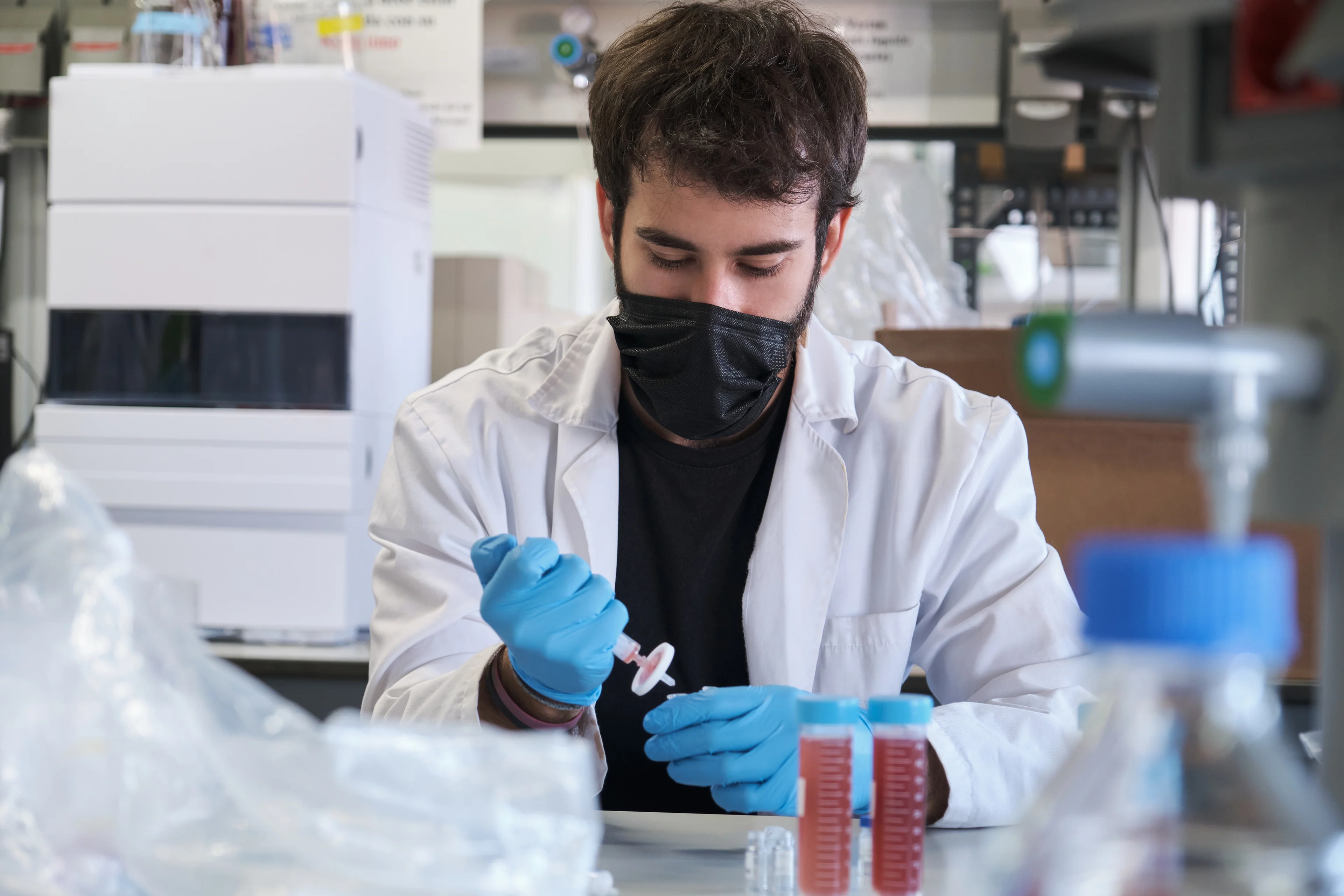
Modern laboratories rely on precision lab equipment, high-quality laboratory supplies, and dependable scientific equipment to ensure accurate results.
At the center of nearly every chemistry, pharmaceutical, environmental, and research workflow is one essential process:
Laboratory filtration
From cellulose filter paper and glass fiber filters to syringe filters, in line filters, and Buchner funnels, filtration directly affects:
- Sample purity
- Instrument protection
- Analytical accuracy
- Workflow efficiency
This guide explains how laboratory filtration works, the different types of laboratory filters, and how LabExact® supports modern labs with high-performance solutions backed by U.S. manufacturing expertise.
What is Laboratory Filtration?
Laboratory filtration is the process of separating solid particles from liquids or gases using a porous filtration medium.
The filter allows fluid to pass while retaining unwanted particles.
Quick Definition (Featured Snippet Ready):
Laboratory filtration removes impurities from a sample by passing it through a filter material such as filter paper, glass microfiber, or membrane filters.
Why Filtration Is Critical in Chemistry Lab Equipment
Filtration:
- Prevents contamination
- Protects analytical instruments like HPLC systems
- Ensures accurate measurements
- Supports compliance in regulated industries
Without proper filtration, even advanced chemistry lab equipment cannot deliver reliable data.
Types of Laboratory Filters
Different applications require specific laboratory filtration materials.
1. Cellulose Filter Paper
Cellulose filter paper is one of the most commonly used laboratory supplies for routine filtration tasks.
Common Types:
- Qualitative filter paper
- Quantitative filter paper
- Standard lab filter paper
Applications:
- Particle separation
- Precipitate collection
- Educational chemistry labs
- Environmental sample testing
Why Choose Cellulose?
- Cost-effective
- Easy to use
- Reliable for general lab work
2. Glass Fiber Filters (Glass Microfiber Filters)
Glass fiber filters, also called microfiber filters, are designed for higher-performance filtration.
Made from borosilicate glass microfibers, they provide:
- Faster flow rates
- Higher particle retention
- Excellent wet strength
- Greater temperature resistance
Ideal For:
- Air monitoring
- Water testing
- Gravimetric analysis
- High particulate loading
Cellulose vs Glass Fiber Filters
Short Answer:
Use cellulose filter paper for routine filtration. Use glass microfiber filters when higher retention, strength, or speed is required.
3. Syringe Filters
Syringe filters are essential for small-volume sample preparation before analysis.
They are widely used in:
- HPLC sample prep
- GC analysis
- Pharmaceutical research
- Biological testing
View LabExact® syringe filters for laboratory use:
How Syringe Filters Work:
- Liquid sample is drawn into a syringe
- Filter attaches to the syringe tip
- Pressure pushes liquid through the membrane
- Clean filtrate exits
This protects sensitive analytical instruments and ensures sample clarity.
Nano syringe applications are particularly useful in precision analytical environments.
4. In Line Filters
In line filters are integrated directly into fluid or gas systems for continuous filtration.
Benefits:
- Continuous protection
- Reduced contamination risk
- Improved system longevity
They are ideal for laboratory automation and high-throughput systems.
Essential Filtration Equipment
Filtration is not just about filter media - proper equipment is equally important.
Filtration Funnels
A filtration funnel supports filter paper during gravity filtration.
Used in:
- Chemistry lab equipment setups
- Routine lab filtration
- Sample clarification
Buchner Funnel
A Buchner funnel is used for vacuum filtration, significantly speeding up solid-liquid separation.
What Is a Buchner Funnel Used For?
A Buchner funnel uses vacuum pressure to rapidly separate solids from liquids, commonly in chemical synthesis and laboratory research.
Weighing Paper & Lab Safety Equipment
Essential laboratory supplies also include:
- Weighing paper for powder handling
- Absorbent pads
- Moisture pads
- Protective lab safety equipment
These consumables support safe and contamination-free workflows.
How to Choose the Right Laboratory Filter
Selecting the correct laboratory filtration product depends on:
1. Particle Size
Choose a filter with appropriate micron retention.
2. Flow Rate Requirements
Faster filtration → glass fiber filtersControlled filtration → cellulose filter paper
3. Chemical Compatibility
Ensure the filter material resists acids, solvents, or biological materials.
4. Application Type
How LabExact® Compares to Other Laboratory Filtration Suppliers
Many suppliers offer laboratory filters, but not all provide consistent material quality.
Why Labs Choose LabExact®:
- High-purity cellulose and glass microfiber media
- Backed by I.W. Tremont (U.S.-based manufacturer)
- Broad range of laboratory filtration solutions
- Reliable performance in analytical environments
- Focused on modern chemistry lab equipment needs
Unlike generic suppliers, LabExact® emphasizes material integrity and filtration precision.
Optimizing Your Laboratory Filtration Workflow
Combining the right:
- Filter media
- Syringe filters
- In line filters
- Filtration funnels
- Lab safety equipment
Can improve:
- Sample accuracy
- Lab efficiency
- Equipment lifespan
- Regulatory compliance
Well-planned filtration reduces downtime and enhances productivity.
FAQs
What is laboratory filtration?
Laboratory filtration is the process of separating solids from liquids or gases using a porous filter medium such as filter paper or glass fiber filters.
What is filter paper used for?
Filter paper is used in laboratories to separate solids from liquids during chemical analysis, sample preparation, and routine filtration tasks.
What is the difference between cellulose and glass fiber filters?
Cellulose filters are suitable for routine filtration, while glass fiber filters provide higher flow rates, stronger wet strength, and better particle retention.
How do syringe filters work?
Syringe filters attach to a syringe and filter liquid samples as they are pushed through a membrane, removing particles before analytical testing.
What is a Buchner funnel used for?
A Buchner funnel is used for vacuum filtration to quickly separate solids from liquids in laboratory applications.
Final Thoughts
Laboratory filtration is foundational to accurate scientific results.
From cellulose filter paper and glass fiber filters to syringe filters, in line filters, and Buchner funnels, selecting the right laboratory supplies and scientific equipment ensures precision and efficiency.
With high-purity materials and trusted U.S.-backed manufacturing support, LabExact® delivers filtration solutions modern laboratories can depend on.