Sign up with Google
 Sign in with Zoho

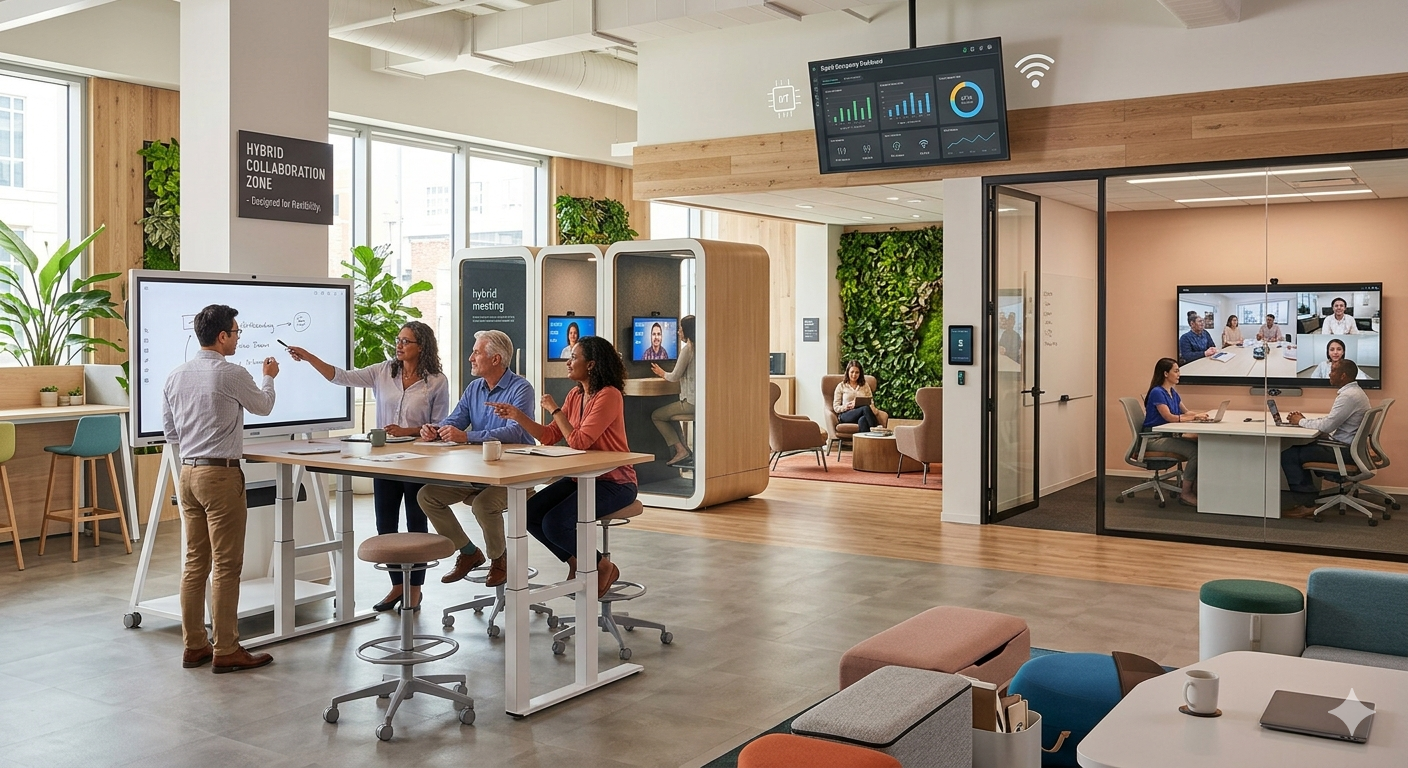
As we navigate through 2026, the traditional office layout has officially moved from a "place of work" to a "destination for collaboration." With nearly half of the Indian workforce now operating under hybrid models, the pressure is on facility managers and business leaders to create spaces that justify the commute. Simply providing a desk and an internet connection is no longer enough. To stay competitive and maintain productivity, companies are partnering with the Best Facility Management Services in India to fundamentally rethink how physical square footage serves a distributed team.
1. Transitioning from "Me Space" to "We Space"
In a half-remote world, employees stay home for "deep work" and come to the office to connect. This necessitates a shift in floor planning:
- The Death of the Fixed Desk: Replace assigned cubicles with "hot-desking" or "neighborhood" zones. This reduces the footprint of unused desks on days when staff are remote.
- Collaboration Hubs: Expand the size and variety of meeting areas.Think beyond the formal boardroom—incorporate lounge-style brainstorm zones, huddle rooms, and "stand-up" project corners.
- Agile Furniture: Use modular desks and moveable partitions. In 2026, a space that is a training room in the morning should be able to transform into a social lounge by the afternoon.
2. Investing in "Zoom-Friendly" Physical Design
One of the biggest frustrations in a hybrid setup is the "hybrid meeting" where remote participants feel left out. Redesigning for technical inclusivity is key:
- Acoustic Pods: Open-plan offices are notorious for noise.Soundproof phone booths or "focus pods" are essential for hybrid employees who need to take video calls without disturbing the floor.
- Equitable Tech: Ensure meeting rooms are equipped with 360-degree cameras and high-fidelity spatial audio. When the tech is seamless, the distance between the home office and the corporate headquarters disappears.
3. Wellness and "Hotelization" of the Office
To compete with the comfort of home, the office must offer amenities that a living room cannot. This trend, known as "hotelization," focuses on the high-end employee experience:
- Biophilic Design: Integrating living walls, natural light, and indoor gardens isn't just about aesthetics; it significantly boosts mental clarity and air quality.
- Premium Soft Services: From professional butler services in the pantry to specialized concierge desks, these touches make the office a place where employees feel valued and cared for.
4. Data-Driven Space Management
You cannot manage what you do not measure. Modern facility management now relies on IoT Sensors to track occupancy in real-time.
- Occupancy Analytics: Sensors can tell you which zones are overcrowded and which are "dead zones."
- Smart HVAC: Why cool an entire floor if only 20% is occupied? Smart systems adjust lighting and temperature based on actual usage, leading to massive energy savings.
Conclusion: A Living Organism
A hybrid office is not a static environment; it is a living organism that must adapt to the rhythm of its people. Redesigning for a half-remote workforce requires a blend of smart technology, empathetic design, and operational excellence. By focusing on flexibility and employee experience, businesses can transform their real estate from a sunk cost into a strategic asset. To ensure these complex environments run flawlessly, many organizations rely on the Best Facility Management Services in India to bridge the gap between physical infrastructure and human productivity.