Sign up with Google
 Sign in with Zoho

Introduction
When you design or maintain fluid control systems, choosing the right solenoid valve is essential for safety, performance, and efficiency. A water solenoid valve and a gas solenoid valve may appear similar in structure, but they are engineered for completely different operating conditions.
In industrial automation systems, precision solutions from Aira Euro Automation Pvt. Ltd. are widely associated with reliable flow control performance across both liquid and gas applications.
Understanding these differences helps you avoid system failure, improve safety compliance, and ensure long-term operational stability.
What is a Solenoid Valve?
A solenoid valve is an electromechanical device that controls the flow of liquids or gases using an electromagnetic coil. When electrical current passes through the coil, it generates a magnetic field that opens or closes the valve.
These valves are widely used for:
- Automated fluid control systems
- Safety shut-off mechanisms
- Industrial process regulation
- HVAC and manufacturing systems
Water Solenoid Valve Explained
A water solenoid valve is specifically designed for controlling water and compatible liquids. It ensures stable flow regulation without leakage or pressure instability.
Key features:
- Designed for liquid-based systems
- Corrosion-resistant materials like brass or stainless steel
- Suitable for moderate pressure environments
- Used in irrigation, cooling systems, and industrial water lines
Water valves are selected when fluid purity and corrosion resistance are key requirements.
Gas Solenoid Valve Explained
A gas solenoid valve is engineered for controlling gases such as LPG, natural gas, and compressed air. Since gas systems involve higher safety risks, these valves are designed with strict sealing and leakage control standards.
Key features:
- High-integrity sealing system
- Zero-leak safety design focus
- Suitable for combustible and non-combustible gases
- Used in burners, boilers, and industrial gas pipelines
Gas solenoid valves prioritise safety above all else due to the hazardous nature of gas flow.
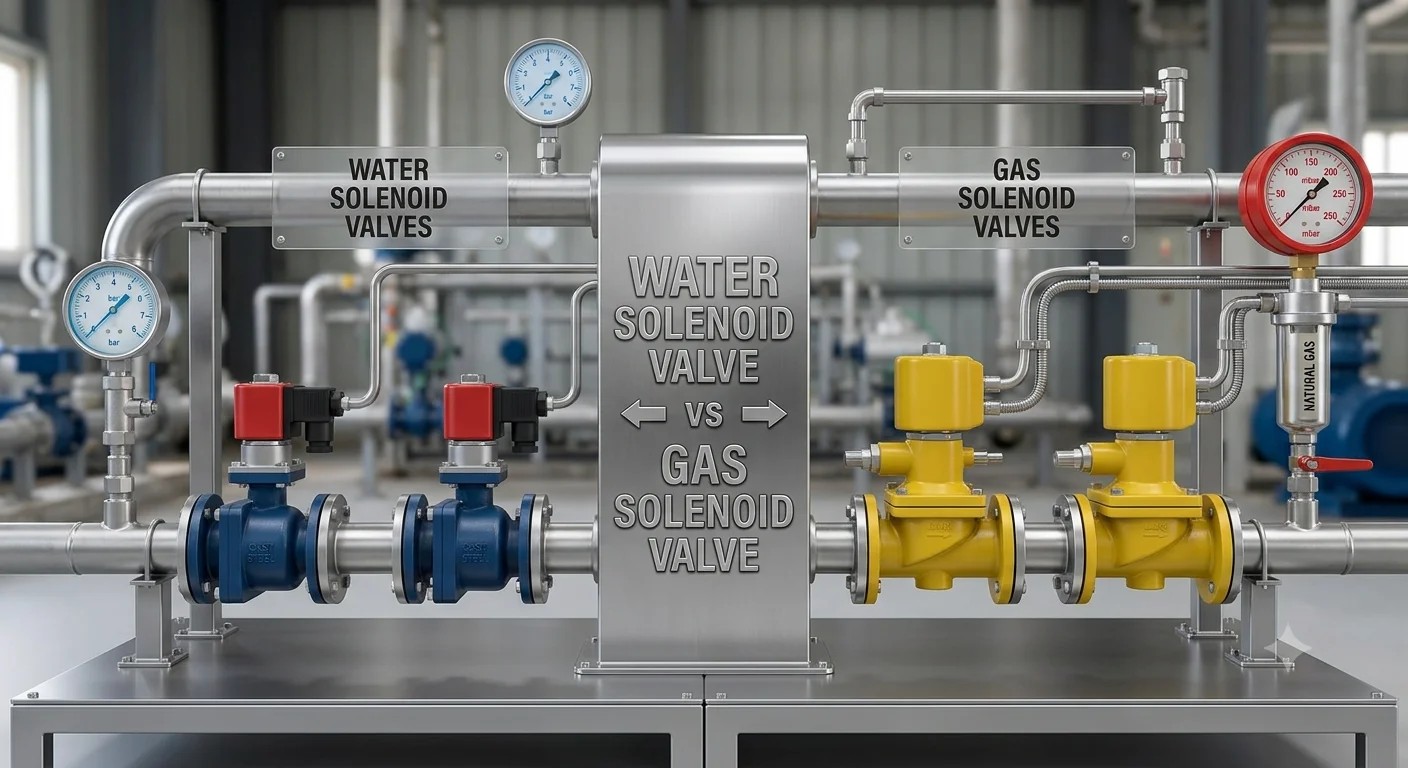
Key Differences Between Water and Gas Solenoid Valves
1. Safety Design
Gas solenoid valves require extremely tight sealing to prevent leakage, while water valves operate under less critical safety conditions.
2. Material Construction
- Water valves focus on corrosion resistance
- Gas valves focus on gas-tight sealing and safety-grade materials
3. Leakage Tolerance
- Water system: minimal leakage may be acceptable in non-critical use
- Gas system: zero leakage tolerance is mandatory
4. Application Environment
- Water solenoid valve: irrigation, cooling, cleaning systems
- Gas solenoid valve: heating systems, industrial burners, gas pipelines
5. Performance Standards
Gas valves follow stricter industrial safety norms compared to water valves.
12V Solenoid Valve in Modern Systems
A 12v solenoid valve is a low-voltage valve commonly used in automated systems where safety and energy efficiency are important.
Benefits:
- Safe low-voltage operation
- Easy integration with control circuits
- Suitable for compact automation systems
Depending on design, a 12v solenoid valve can be used in both water and gas applications when properly rated.
What is a 3 Way Solenoid Valve?
A 3 way solenoid valve allows flow control between three ports, enabling switching or mixing of fluids.
Working principle:
- One inlet can be directed to two outlets
- Or two inlets can be combined into one outlet
Applications:
- Pneumatic systems
- Fluid diversion systems
- Industrial automation processes
This type of valve is widely used where directional control is required.
How Aira Euro Automation Pvt. Ltd. Supports Industrial Flow Control
Aira Euro Automation Pvt. Ltd. is recognised in industrial automation sectors for delivering engineered solutions in flow control systems. Their valve solutions are aligned with application-specific requirements such as:
- Water distribution systems
- Gas safety shut-off systems
- Automated industrial machinery
- Process control environments
By focusing on precision engineering, they support industries that rely on consistent and safe valve performance.
How to Choose the Right Solenoid Valve
To select the correct valve, you should always consider:
- Type of fluid (water or gas)
- Pressure and temperature conditions
- Voltage compatibility (such as 12v solenoid valve systems)
- Required flow direction (2 way or 3 way solenoid valve)
- Safety compliance requirements
Common Mistakes to Avoid
Avoid these errors when selecting a solenoid valve:
- Using a water solenoid valve for gas systems
- Ignoring pressure rating limits
- Selecting incorrect voltage specifications
- Overlooking safety requirements for gas applications
Conclusion
The difference between a water solenoid valve and a gas solenoid valve is not just technical — it is critical for system safety and efficiency. While both operate on the same electromagnetic principle, their design standards, sealing requirements, and applications differ significantly.
With solutions supported by Aira Euro Automation Pvt. Ltd., industries can ensure safer and more efficient fluid control across both water and gas systems.