Sign up with Google
 Sign in with Zoho

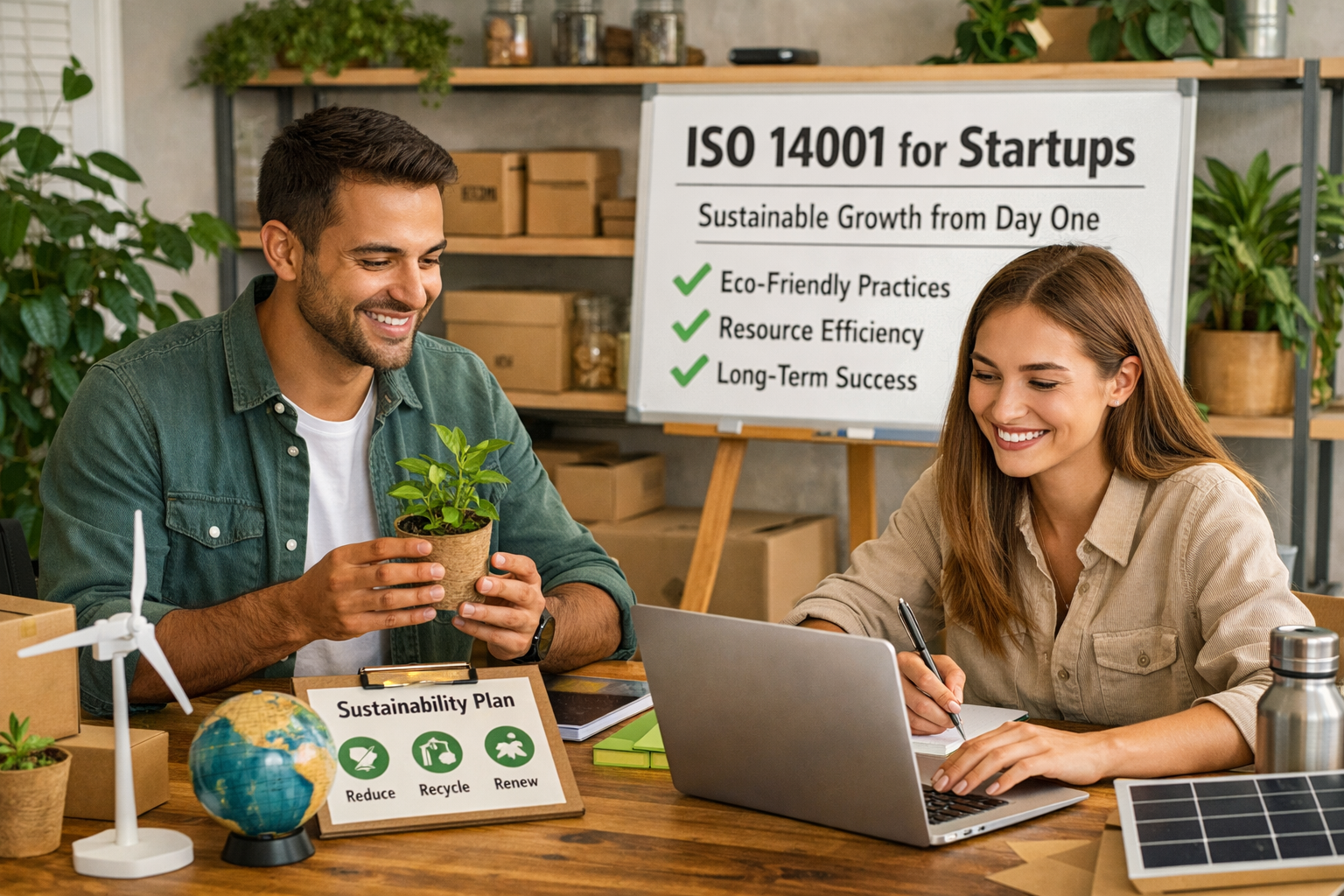
Starting a business is exciting, but it comes with many responsibilities. One of the biggest challenges for new startups is balancing growth with sustainability. Environmental concerns are no longer optional—they are expected by customers, investors, and regulators. This is where ISO 14001, the international standard for environmental management systems, can make a real difference.
Implementing ISO 14001 from the beginning helps startups set up sustainable practices, avoid environmental risks, and build a strong reputation. Let’s explore why it matters and how startups can benefit.
Why Startups Need ISO 14001
Many startups focus solely on product development and revenue, overlooking environmental responsibilities. However, ignoring these can lead to problems later, such as:
- Regulatory fines: Not following environmental laws can be costly.
- Resource wastage: Inefficient processes increase costs and harm the environment.
- Reputation risk: Customers and investors increasingly prefer eco-conscious businesses.
ISO 14001 helps startups avoid these issues by providing a structured approach to managing environmental responsibilities. It is not just about compliance—it’s about creating long-term value for the company and the community.
Benefits of ISO 14001 for Startups
- Structured Environmental Management ISO 14001 helps startups create policies and procedures to manage environmental impacts. This includes energy use, waste management, and pollution control. Having a structured system ensures that environmental practices are consistent and measurable.
- Cost Savings Efficient resource management often reduces costs. For example, optimizing energy use, reducing waste, and recycling materials can save money while benefiting the planet. Startups with lean budgets can especially benefit from these efficiencies.
- Better Reputation and Trust Sustainability is increasingly important to consumers and partners. Startups that demonstrate environmental responsibility can attract more customers, investors, and business opportunities. ISO 14001 certification signals commitment to these values.
- Risk Management Identifying and controlling environmental risks early helps prevent accidents, legal issues, and business interruptions. This proactive approach is easier to integrate at the startup stage rather than retrofitting systems later.
- Competitive Advantage Many industries prefer suppliers or partners with certified environmental management systems. Startups with ISO 14001 can stand out in competitive markets and access opportunities they might otherwise miss.
How Startups Can Implement ISO 14001
Implementing ISO 14001 does not have to be overwhelming. Startups can follow these steps:
- Commitment from Leadership The startup’s founders and leadership team must be committed to environmental responsibility. This commitment sets the tone and ensures resources are allocated to support the system.
- Assess Environmental Impacts Identify how your business affects the environment. This can include energy use, emissions, waste, water consumption, or materials sourcing. Understanding these impacts is the first step in managing them.
- Set Objectives and Policies Establish clear environmental goals and a policy that guides daily operations. Goals should be realistic, measurable, and aligned with your startup’s capabilities.
- Implement Procedures Create processes that reduce environmental risks. Examples include recycling programs, energy-saving initiatives, and safe waste disposal methods. Even small changes can make a big difference.
- Train Your Team Employees should understand the system and their role in maintaining it. Training ensures everyone contributes to environmental goals, from daily habits to decision-making.
- Monitor and Improve ISO 14001 emphasizes continuous improvement. Track progress, review performance, and adjust strategies as needed. This iterative approach helps startups grow sustainably and efficiently.
Common Challenges for Startups
Startups may face some challenges while implementing ISO 14001:
- Limited resources: Budget and staff constraints can make implementation harder. Start with small, achievable goals.
- Lack of experience: New founders may not be familiar with environmental management. Hiring a consultant or using online resources can help.
- Balancing priorities: Product development and market growth often take priority. Remember that environmental responsibility can actually support long-term success.
Real-Life Examples
Startups that adopt ISO 14001 early often see tangible benefits:
- A small manufacturing startup reduced energy costs by 20% within the first year.
- A tech startup attracted investors by highlighting sustainable office operations and e-waste management.
- A food delivery startup improved its brand reputation by implementing eco-friendly packaging and waste reduction.
Getting ISO 14001 Certification
For startups in Oman, obtaining ISO 14001 Certification in Oman can provide credibility and open doors to partnerships, government projects, and international clients. Certification demonstrates that your startup is serious about environmental responsibility and growth.
Conclusion
Sustainable growth is no longer optional—it's essential for startups that want to thrive in the modern market. ISO 14001 provides a roadmap for managing environmental impacts, reducing costs, and building trust. By integrating environmental responsibility from day one, startups can grow smarter, safer, and more sustainably.
Starting early with ISO 14001 is an investment in the future—one that benefits both your startup and the planet.