 Sign up with Google
 Sign in with Zoho

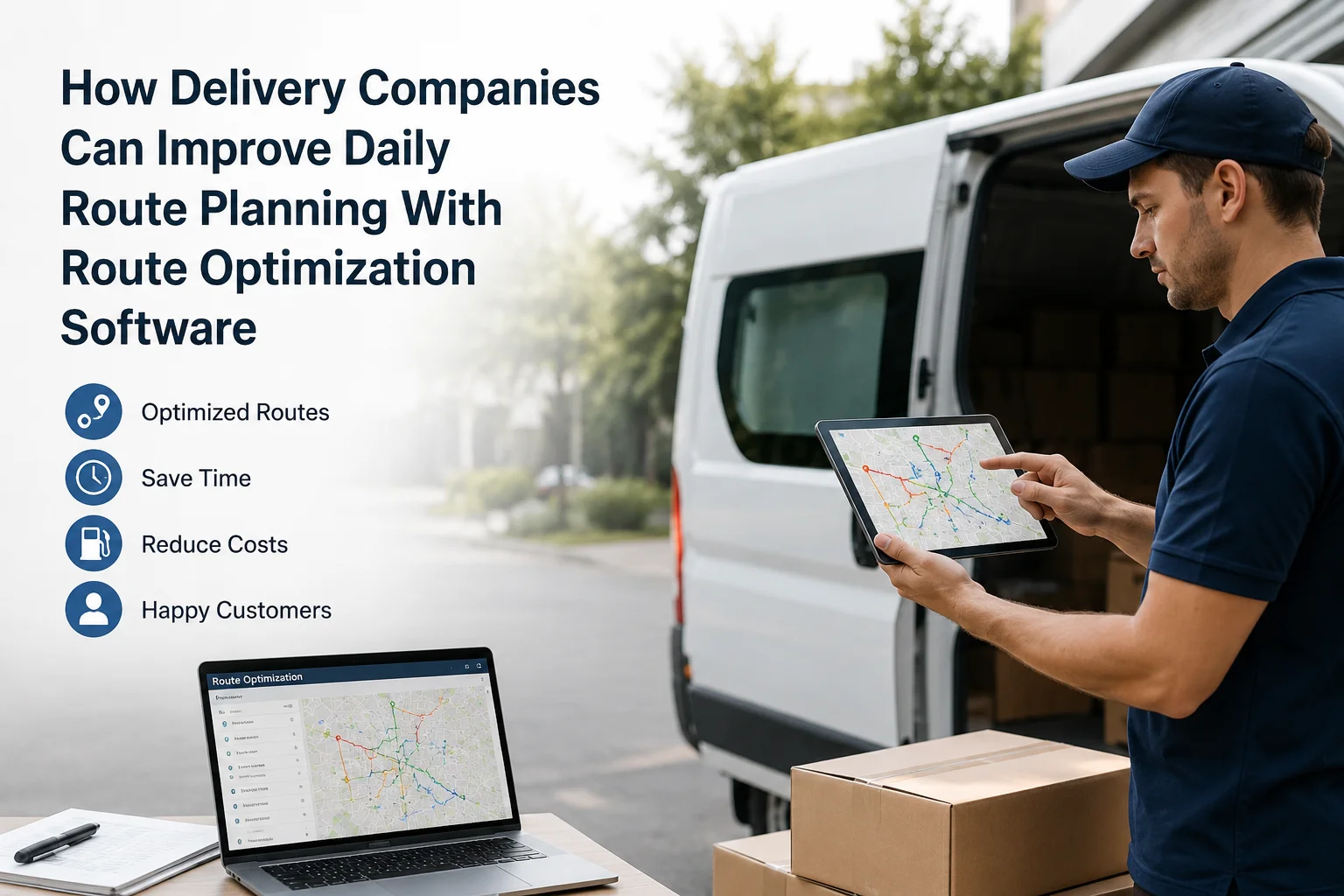
Delivery companies manage more than just moving goods from one place to another. Every working day involves new bookings, driver schedules, delivery windows, route changes, customer questions, failed attempts, and proof of delivery requirements.
For small delivery teams, manual route planning may feel manageable at first. A dispatcher can check addresses, call drivers, prepare a route, and update customers manually. But as delivery volume grows, the process becomes harder to control.
More deliveries mean more stops. More stops mean more driver decisions, more customer expectations, more ETA questions, and more pressure on dispatchers. This is where delivery businesses start to need a better routing process.
Instead of relying only on manual planning, courier and logistics businesses can use route optimization software to plan delivery routes, calculate ETAs, manage multi-stop routes, track progress, and improve delivery visibility from dispatch to completion.
Why Manual Route Planning Becomes Difficult
Manual route planning often depends on dispatcher experience, local route knowledge, spreadsheets, mapping tools, phone calls, and driver updates. This can work when a delivery company handles a limited number of jobs each day.
The challenge starts when operations become more active.
A same-day courier business may receive urgent delivery requests throughout the day. A parcel delivery company may need to manage multiple drivers across different zones. A last-mile delivery team may need to balance customer time windows, failed attempts, and live delivery updates.
When all of this is handled manually, several problems can appear:
1. Routes take longer to plan
2. Drivers may receive inefficient stop sequences
3. Delivery ETAs may be unclear
4. Customers may call for updates
5. Dispatchers may need to contact drivers repeatedly
6. Urgent jobs may disrupt planned routes
7. Proof of delivery may be harder to connect with the job
8. Managers may not have a clear view of route progress
These issues do not always happen because the team is careless. They happen because manual route planning is not designed for fast-moving delivery operations.
The Role of Route Planning in Delivery Operations
Route planning is not only about finding the shortest road. For delivery companies, route planning affects the full delivery workflow.
A strong route plan should help answer important operational questions:
- Which driver should take the route?
- Where should the route start?
- Where should the route end?
- What stops should be grouped together?
- What is the best stop sequence?
- What is the estimated arrival time for each delivery?
- How long will the route take?
- How many miles will the driver travel?
- Can the driver complete the route within the required delivery window?
- Will the customer receive clear updates?
When these questions are answered before the route begins, delivery teams can work with more control. When they are not answered clearly, dispatchers and drivers may spend the day reacting to problems instead of managing the operation smoothly.
Why ETAs Matter So Much
Customers expect delivery updates. They want to know when the driver will arrive and whether the delivery is still on schedule.
Without accurate ETAs, customer service teams often receive more calls. Customers may ask where the driver is, whether the delivery has been collected, or why the estimated time has changed.
For same-day and last-mile delivery operations, ETA accuracy is especially important because the delivery window is often short. A delay in one route can affect several other deliveries.
Better ETA planning helps:
- Set customer expectations
- Reduce update calls
- Improve dispatcher visibility
- Help drivers follow a clearer route
- Support better delivery communication
- Reduce missed delivery windows
A route plan without ETA visibility can create uncertainty. A route plan with ETA support gives the business a clearer view of how the delivery day is likely to progress.
Multi-Stop Deliveries Need More Structure
Many courier and delivery businesses do not manage one delivery at a time. They manage multi-stop routes with several pickup and delivery points.
Multi-stop delivery planning becomes difficult when dispatchers need to consider:
- Customer addresses
- Collection points
- Driver location
- Vehicle capacity
- Urgent jobs
- Service areas
- Route start time
- Route end time
- Failed delivery attempts
- Driver availability
Manual planning may lead to drivers crossing over each other’s areas or travelling more miles than necessary. This increases delivery time and can reduce driver productivity.
A structured routing workflow helps delivery companies group stops better and manage multi-stop work more efficiently.
Route Optimization and Driver Visibility
Planning the route is only the first part of the delivery workflow. Once a driver starts the route, dispatchers still need to know what is happening.
Driver visibility helps operations teams understand:
- Which route is active
- Which stops are completed
- Which deliveries are pending
- Whether the driver is delayed
- Whether a failed attempt has occurred
- Whether the route needs adjustment
- Whether the customer should be updated
When dispatchers do not have visibility, they may need to call drivers for updates. This takes time and creates unnecessary communication during the delivery day.
With better route visibility, dispatchers can spend less time chasing updates and more time managing exceptions.
How Route Planning Supports Customer Communication
Customer communication is one of the biggest challenges in delivery operations. Customers may not care how complex route planning is. They simply want to know when the delivery will arrive.
If delivery teams cannot provide clear updates, customers are more likely to contact the business. This creates more work for dispatchers and customer support teams.
A more connected routing process supports customer communication by helping the business provide:
- Estimated arrival times
- Delivery tracking updates
- Status notifications
- Delay updates.
- Delivery confirmation
- Proof of delivery records
This improves customer confidence and reduces uncertainty.
Why Route Optimization Is Useful for Different Delivery Teams
Route optimization is useful across many types of delivery operations.
- Courier companies can use it to manage local courier jobs, same-day deliveries, and multi-drop routes.
- Last-mile delivery teams can use it to improve final-mile route planning, customer updates, and delivery completion visibility.
- Parcel delivery businesses can use it to handle high-volume routes with multiple stops.
- E-commerce delivery teams can use it to improve customer delivery communication and route planning.
- Logistics fleets can use it to manage multiple drivers, routes, vehicles, and delivery windows.
- The main value is not just shorter routes. The value is better operational control.
Signs a Delivery Business Needs Better Route Planning
A delivery company may need better route planning if:
- Dispatchers spend too much time arranging routes manually
- Drivers frequently call for route updates
- Customers keep asking for ETAs
- Routes change often during the day
- Urgent jobs disrupt the schedule
- Drivers travel unnecessary miles
- Failed deliveries are increasing
- Proof of delivery records are hard to find
- Managers lack visibility over delivery progress
- Delivery costs are rising
If several of these signs appear, the business may have outgrown basic manual route planning.
Final Thoughts
Delivery companies need speed, visibility, and control. Manual route planning may work at the beginning, but it becomes harder as order volume, customer expectations, and driver activity increase.
Route optimization helps delivery teams plan routes with more structure, calculate ETAs, improve driver visibility, keep customers updated, and manage multi-stop deliveries more effectively.
For courier, logistics, same-day, parcel, and last-mile delivery businesses, the goal is not only to find the shortest route. The goal is to create a delivery workflow that is easier to plan, easier to track, and easier to complete.

.webp)