Sign up with Google
 Sign in with Zoho
Most people with knee pain spend years cycling through the same tired options. Painkillers. Physio. Injections that work for six weeks and then stop. And somewhere down the line, a surgeon mentions knee replacement and suddenly the conversation gets very serious, very fast.
Nobody wants that at 48.
Or 55. Or even 65, if they're otherwise fit and active and just want to walk without wincing.
The thing is — there's a procedure that sits right in that gap. It's not new, exactly, but it hasn't made it into mainstream conversation yet. It's called genicular artery embolization. And depending on your situation, it might be the option you've been waiting for.
The Problem With an Arthritic Knee Isn't Just Wear and Tear
Here's something most patients don't get told. The pain in an osteoarthritic knee isn't only about cartilage breaking down. That's part of it. But a huge driver of the chronic, daily ache is inflammation happening inside the joint lining — an area called the synovium.
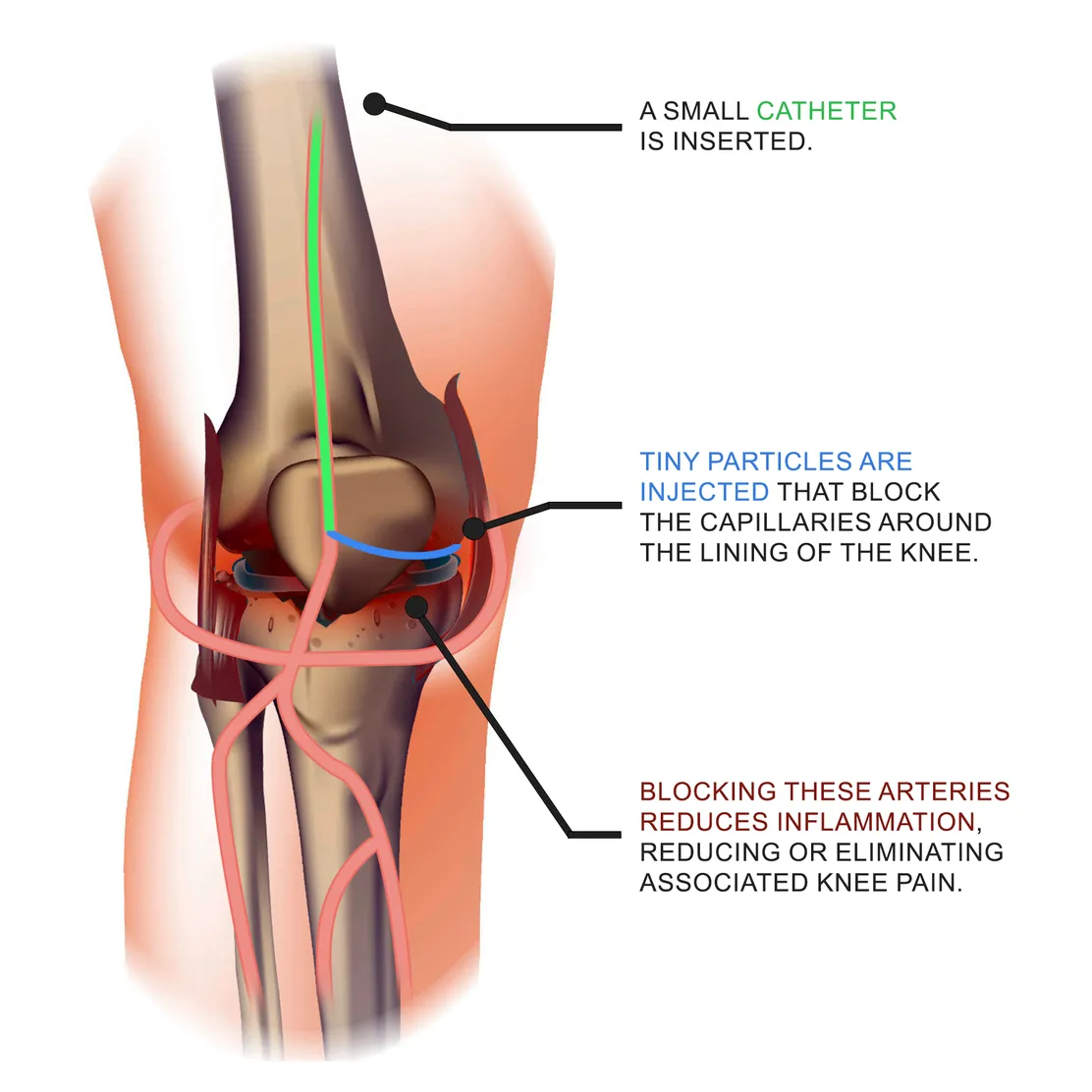
When that tissue gets chronically inflamed, the body starts growing new blood vessels through it. Tiny, abnormal ones. And those vessels drag pain-carrying nerve fibres right along with them. So the more inflamed the joint gets, the more sensitised it becomes, and the harder it is to get on top of the pain through conventional means.
What GAE Actually Involves
Dr. Sandeep Sharma, who performs this procedure as part of his interventional radiology practice, describes it simply: "We're going after the abnormal blood supply feeding the inflammation — not the knee joint itself."
The entry point is a small puncture, usually at the wrist or the groin. A thin catheter is guided through the arterial system using live X-ray imaging. Once in position, microscopic particles are released into the specific arteries supplying that inflamed synovial tissue. Blood flow to those abnormal vessels drops. The inflammation settles. The nerves that were firing constantly start to quiet down.
No cuts across the knee. No general anaesthetic. No implants.
Most patients are home by early evening.
Who Is This Actually For?
Honest answer — not everyone.
GAE works best when there's still reasonable joint structure remaining. Mild to moderate arthritis. Bone isn't grinding directly on bone yet. If you're at the severe end, replacement surgery is probably the more appropriate conversation.
But if you're somewhere in the middle — real pain, real impact on daily life, but the joint hasn't fully deteriorated — then this is worth knowing about. Especially if steroid injections have helped you in the past but stopped lasting. That pattern, according to Dr. Sandeep Sharma, is actually a reasonable indicator that Genicular Artery Embolizationcould work well. The inflammation is clearly responding to treatment. GAE just addresses it at a deeper, more durable level.
The Recovery Is Nothing Like Surgery
Most people notice something shifting within two to three weeks. The full result tends to show up around the six to eight week mark. And when it works — it genuinely works. Studies have reported meaningful pain relief lasting 12 months or more in a large proportion of patients treated.
One of Dr. Sandeep Sharma's patients put it plainly after the procedure: "I kept waiting for the hard part. It didn't really come.








 (1) (1).webp)