 Sign up with Google
 Sign in with Zoho

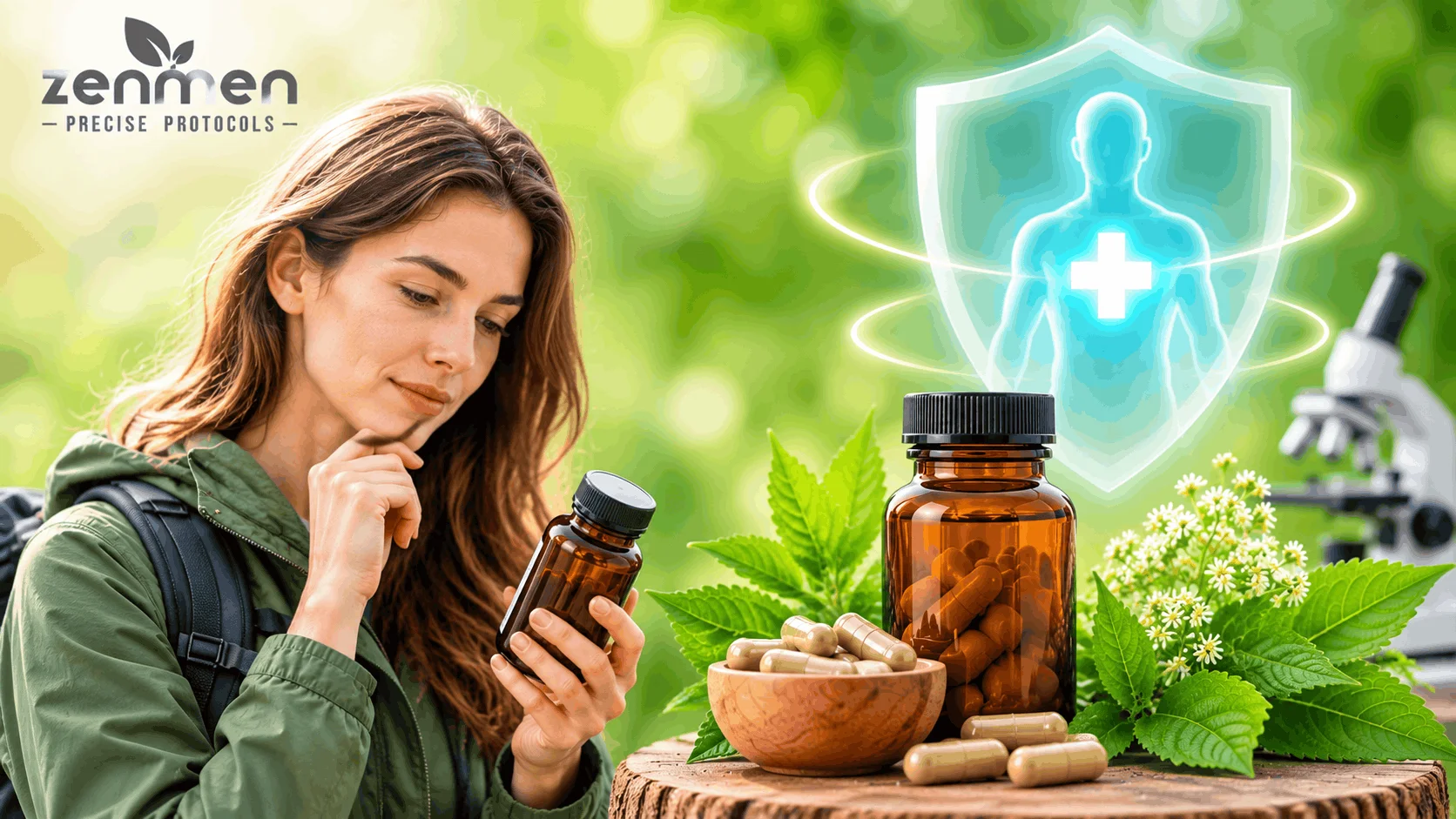
Open any shopping page for tick-season capsules and you'll see the same promises in slightly different fonts. Strong. Pure. Potent. None of those words tells you what's inside the bottle. So how do you choose between tick immune support supplements without guessing?
Check four things. Read the ingredient list for Latin names, plant parts and doses. Look at the extract ratio. Confirm the manufacturing standards. Then find a lab certificate tied to your bottle's lot number. If a brand skips any of the four, move on. And if you came searching for Lyme disease supplements, know up front that no supplement treats an infection, so this guide also covers what a label can honestly claim.
What these formulas are meant to do
1. A daily wellness product, not a treatment
These are herbal capsules meant to support normal immune function in people who spend time outdoors. They don't remove ticks or clear bacteria, and the FDA statement on any honest label says the product isn't intended to diagnose, treat, cure or prevent disease. Lyme disease supplements can't change that rule. Just found a tick? Remove it with fine-tipped tweezers and call a clinician within 72 hours. A capsule comes after that, never before.
2. Who gets the most from one
Hikers, gardeners, hunters, dog owners near woods and parents of kids who live outside in summer get the most out of a formula built around tick season. If you rarely leave a city apartment, save your money for food and sleep.
Reading the ingredient label
1. Latin names and plant parts
"Cat's claw" on a label isn't enough. Look for the botanical name, Uncaria tomentosa for cat's claw and Polygonum cuspidatum or Reynoutria japonica for Japanese knotweed, plus the plant part: root, bark, leaf or hull. Different parts carry different compounds, and similar-looking species get swapped in cheap products. A vague label hides that. A specific one invites checking.
2. Extract ratio versus standardized markers
A ratio describes concentration. A standardized marker describes a measured amount of a specific compound. Reading both gives you a fuller picture than either alone.
What 20:1 tells you and what it doesn't
A 20:1 extract generally means about twenty parts of raw herb went into one part of finished extract. It tells you the formula is concentrated. It doesn't tell you how much of any active compound ended up in the capsule, and a bigger number doesn't mean a stronger effect. Think of it like orange juice concentrate: the ratio says how it was made, and only a lab test says what's in the glass.
3. Dose per serving, not per bottle
Marketing loves the big number on the front, like 90 capsules. Flip the bottle and check the serving size, then divide. A bottle with a small serving and a long supply can look cheap and deliver very little per day. Compare cost and dose per serving, never per bottle.
Quality markers that matter
1. Manufacturing standards
Look for a cGMP certified facility. Current good manufacturing practice rules require a maker to verify identity, purity, strength and composition. Zenmen makes its supplements in a cGMP certified facility in the USA, and a "made in USA" line alone doesn't prove any of that, so look for the certification itself.
2. Where the herbs come from
Sourcing shapes quality, and honest brands say where plants are grown. Zenmen says it sources primarily from Montana Certified Organic farms, with the rest from USDA Organic suppliers. Organic doesn't equal more effective, but it does mean fewer synthetic pesticide worries.
3. A clean label
Be wary of Lyme disease supplements marketed as cures, of labels that hide doses inside proprietary blends and of long lists of fillers. A good label lists every active at its exact amount. Zenmen uses no proprietary blends, and its capsules are vegan, gluten-free and non-GMO.
Testing is what separates brands
1. A certificate tied to a lot number
Anyone can print "third-party tested" on a bottle. A certificate of analysis names a specific lot, so the report belongs to the exact capsules in your hand. No lot number, no proof.
What a good certificate lists
Five checks cover the basics: identity (is it the right herb?), potency (does it meet its specification?), heavy metals such as lead, arsenic, cadmium and mercury, microbial contamination, and pesticide or residual solvent residue. A report that covers only one or two of those leaves gaps.
2. Independent lab versus in-house
A lab that doesn't work for the brand has no reason to flatter the results. In-house testing has its place for quality control, but it doesn't replace an outside check. Tick immune support supplements are a crowded category with big claims, and the independent report is the cheapest way to cut through them. The same goes for the whole Lyme disease supplements shelf.
3. Try the lookup yourself
Zenmen lets you search certificates by lot number. The posted report for lot ZM-2416, tested by an independent lab in June 2026, shows herb identity conforming, potency meeting spec, heavy metals and microbes below limits, and pesticides and residual solvents not detected. Do this with any brand you're considering. If you can't find a report, ask support for one. A brand that hesitates has told you what you need to know.
Safety checks before you buy
1. Medications and health conditions
Herbs act on the body, which is the point and also the risk. Cat's claw gets flagged for people with autoimmune conditions or on immune-suppressing drugs. Resveratrol-rich herbs like knotweed get flagged for people on blood thinners. Before starting tick immune support supplements, hand your full medication list to a pharmacist.
Pregnancy and nursing
Many herbs lack safety data for pregnancy and nursing, so the standard advice is to ask a clinician first. Zenmen's own label says the same. Don't treat that line as boilerplate.
2. Spacing with doxycycline
If a clinician has put you on doxycycline, calcium, iron, magnesium, zinc and antacids can reduce how well it absorbs. Ask your pharmacist how far apart to take any supplement.
Price, trial period and fair expectations
1. Do the per-day math
As of November 2026, a one-time bottle of Zenmen's foundation capsule costs $39.56, or $35.60 on a monthly subscription, which comes to about $1.19 a day. Divide any brand's price by days of supply and compare apples to apples. Cheap per bottle often means expensive per dose.
2. Judge it fairly
Give a formula four to six weeks of steady daily use before deciding, and add one product at a time so you can tell what's doing what. Zenmen backs its formulas with a 90-day money-back guarantee, even on an empty bottle. A trial window like that tells you the brand expects to be tested.
Conclusion
Choosing well comes down to proof you can check. A specific label, a standardized and concentrated extract, a cGMP facility and an independent certificate with your lot number beat any slogan. Tick immune support supplements can sit on top of sleep, food and a clinician's care, and Lyme disease supplements can never replace antibiotics when an infection needs them. The research behind herbs like knotweed and cat's claw is mostly lab work and traditional use, not large human trials, so be skeptical of any label that sounds certain. Whether a concentrated extract truly outperforms a plain powder is still an open question for most plants. This guide is general information, not medical advice.
FAQs
1. What should I look for in tick immune support supplements?
Look for botanical names and plant parts, exact doses with no proprietary blends, a cGMP facility and an independent certificate tied to your lot number.
2. Are Lyme disease supplements regulated by the FDA?
Not before sale. The FDA doesn't approve dietary supplements before they reach shelves, so quality depends on the brand's manufacturing and testing. The FDA does require labels to avoid claims of treating or curing disease.
3. What does third-party tested actually mean?
An outside lab, not the seller, checked the product. A trustworthy brand publishes the report and ties it to a lot number you can search.
4. Is a higher extract ratio better?
Not necessarily. A 20:1 ratio tells you how concentrated the extract is, not how much of any active compound it holds. Potency testing answers that.
5. Can I take these with prescription medication?
Sometimes, but not always. Cat's claw and resveratrol-rich herbs can interact with certain drugs, so ask a pharmacist to review your list before you start.







.webp)