Sign up with Google
 Sign in with Zoho
.webp)
My first proper introduction to the Dubai fit-out world was watching a friend lose about AED 180,000 on a café that never opened.
Not because the concept was bad. Not because the location was wrong. Because he tried to manage the whole build himself — hired a designer separately, hired a contractor separately, sourced materials through some guy he met at a networking event — and the whole thing collapsed into a mess of finger-pointing and delays that eventually killed the lease.
I think about that a lot when someone asks me whether turnkey fit-out is "worth it."
Why Dubai Makes Everything More Complicated Than You'd Expect
The short answer is yes. But I don't want to give you the short answer because I think it flattens something that's actually more nuanced than the contractors' websites make it sound.
Here's the thing about Dubai specifically — and I say this having watched a lot of projects go wrong and a decent number go right — the city has this way of punishing people who underestimate it. Not maliciously. Just structurally. The regulatory environment alone is genuinely complicated. Civil Defence approvals, DM submissions, DEWA clearances, and if you're in a free zone you've got a whole separate authority to deal with. Trakhees, JAFZA, TECOM — each with their own forms, their own timelines, their own quirks.
I know someone who submitted the same drawing package four times because the title block format wasn't matching the authority's current template. Four times. Weeks of delay on something administrative.
A contractor who's been working in this city for ten years has already paid that tuition. You're benefiting from their scar tissue, essentially.
What Turnkey Actually Means — and What It Doesn't
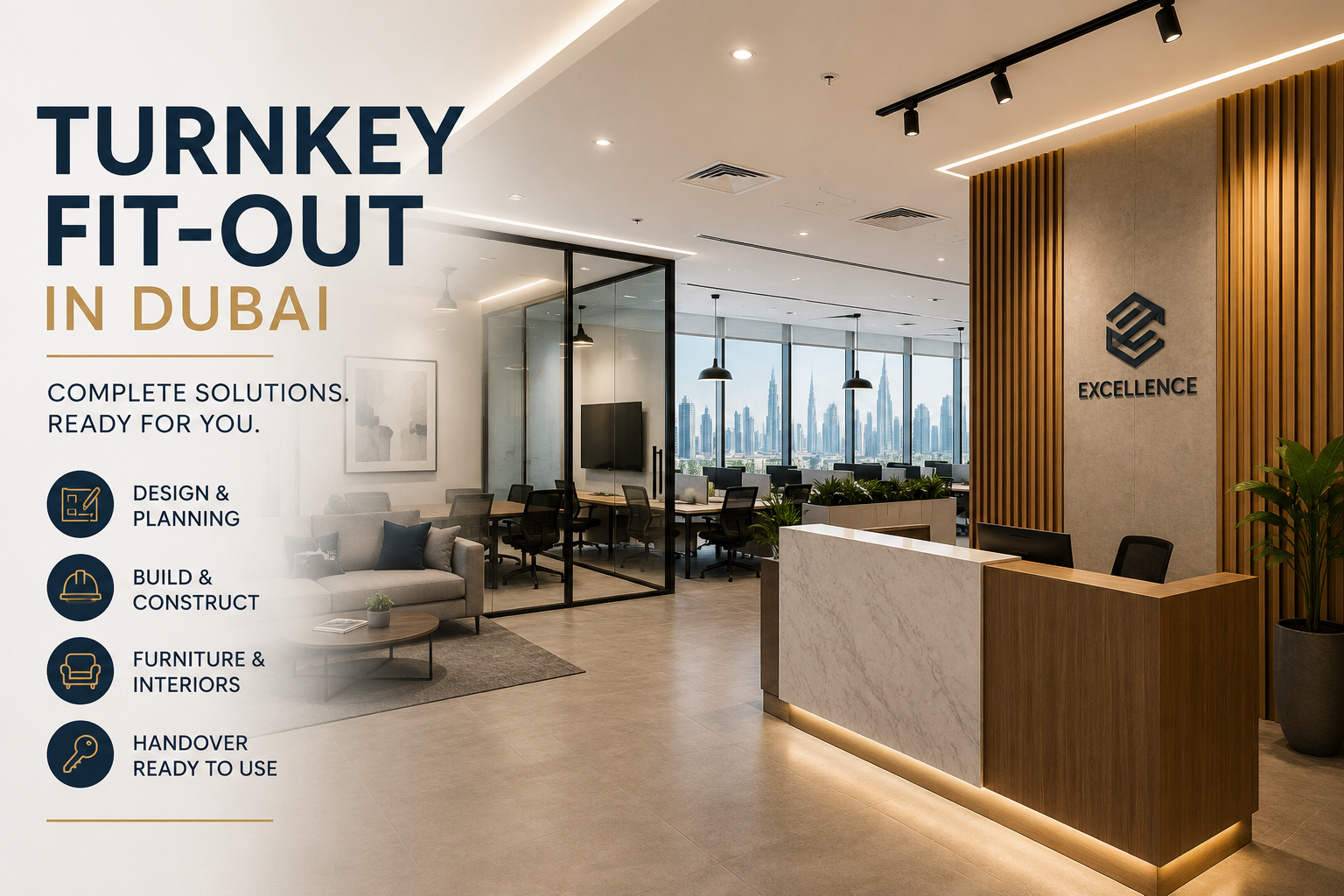
Turnkey, if you don't know the term, just means one company does everything. Design, build, fit-out, handover. You don't manage multiple teams. You don't wake up at 7am to a message saying the electrician can't come because the false ceiling isn't up yet and the false ceiling isn't up because nobody ordered the grid on time.
The appeal is obvious.
What's less obvious — and this is where I think people get confused — is that "turnkey" isn't a quality standard. It's a delivery model. And the quality of what you get under that model varies enormously depending on who you hire.
I've seen Turnkey Fit-Out in Dubai that genuinely made me stop and look twice because the craftsmanship was that good. Joinery that fit like it had been grown into the space. Lighting that made you feel something without knowing why. Floors that were level. (Sounds basic. Isn't always.)
I've also seen turnkey projects that were, to be blunt, just a thin veneer over chaos. The contractor had good salespeople and mediocre subcontractors and the client didn't know the difference until they were living with the result.
So before I get into the practical stuff, that's the thing I want to land: go see their completed projects. Not renders. Not the Instagram grid. Actually walk into something they built and look at it with the lights on.
The Cost Conversation Nobody Wants to Have Honestly
The cost conversation is one that makes people uncomfortable because nobody wants to feel like they're being overcharged for convenience.
Here's my honest take.
If you have industry connections, time, and experience managing construction projects, you can probably pull off a cheaper build by coordinating it yourself. Probably. With some luck.
If you don't have those things — and most people opening their first restaurant or clinic or retail store in Dubai don't — the "savings" from going direct to individual contractors tend to disappear quickly. The rework. The delays. The miscommunication between trades that results in someone having to redo three days of work. These things cost money and time and, eventually, motivation.
Turnkey contractors are also buying materials at a volume that you're not. That gap in procurement pricing often absorbs a good chunk of any coordination premium. Not always. But often enough that the math is closer than people assume.
The Landlord Fit-Out Guide Problem (That Nobody Warns You About)
There's a particular thing that happens in Dubai fit-outs that I haven't seen talked about much, which is the landlord fit-out guide problem.
If you're taking a unit in a mall — and Dubai has an extraordinary number of malls — you're going to get a document from the leasing team that tells you exactly what you can and can't do with the space. Approved materials. Height restrictions. Fire rating requirements. Load-bearing limitations.
That document can be fifty pages long.
A contractor who has worked in that specific mall before already understands what's negotiable and what will get your drawings rejected. That's not a small thing when you're trying to get approvals and open on a deadline.
Which Projects Actually Benefit Most From Going Turnkey
Food and beverage is the most obvious. The pressure in F&B is extreme — you're paying rent from day one and every delayed week is money that doesn't come back. Turnkey gives you the best shot at hitting your opening date with a space that's actually finished, not almost finished.
Clinics and medical fit-outs have their own regulatory layer on top of everything else — DHA or HAAD requirements depending on where you are — and you really want someone who knows that landscape.
Offices, especially for companies coming from outside the UAE who have a team arriving on a certain date and a lease starting the same week. There's no margin for delay in that situation.
Residential is growing. A lot of apartments in Dubai are owned by people who don't live in Dubai. They need someone they can trust to execute a design without them being on site every day. Turnkey is almost the only model that works for that situation.
A Few Things I'd Tell Anyone Starting This Process
The brief you write at the beginning is more important than you think. The more specific you are about how the space needs to function — not just how it should look, but how people will actually move through it, where the bottlenecks are, what happens during peak hours — the better the outcome. Designers work with information. Give them good information.
Don't rush the snagging. When the contractor says the project is done and walks you through for handover, slow down. Check everything. Open every door. Turn on every tap. Look at every corner where materials meet. Snags that get signed off at handover tend to stay forever.
And if something feels off with the company during early conversations — if timelines keep shifting, if questions get vague answers, if the enthusiasm cools when you ask about references — trust that instinct. In a market with as many options as Dubai, you don't have to work with people who make you nervous.
The Bottom Line
My friend eventually did open his café. Different space, two years later, proper turnkey contractor, opened on time. It's still running.
He doesn't talk about the first one much. But when he does, he's pretty clear about what he'd do differently.
Start with the right people. Everything else is easier after that.