Sign up with Google
 Sign in with Zoho

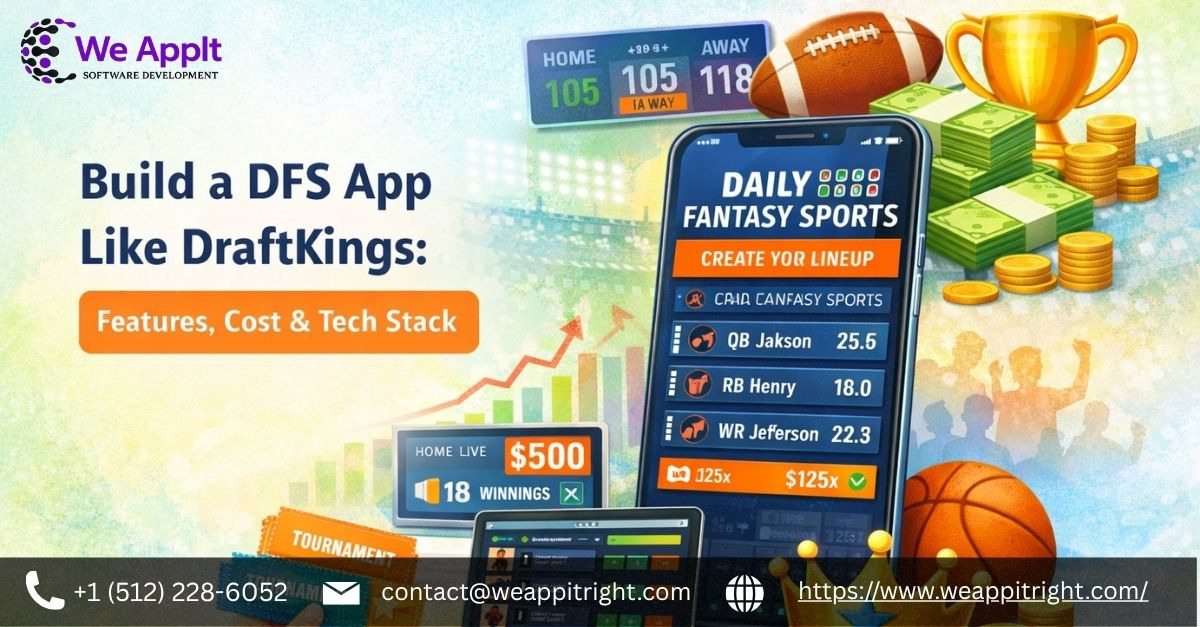
DraftKings built one of the most recognizable brands in sports technology by creating a platform that millions of users trust with their time and money every single week. If you are thinking about building something similar, you are looking at a real business opportunity. This guide covers everything you need to know — the features that make these platforms work, the technology behind them, and what it realistically costs to build a competitive DFS app in 2026.
What Makes DraftKings So Successful?
DraftKings did not win the market by accident. It combined a clean user experience, a wide variety of contest formats, reliable real-time performance, and aggressive marketing to build a loyal user base. Understanding what works on their platform gives you a blueprint for what your own app needs to deliver.
The core of their success comes down to three things: speed, trust, and variety. Users can build a lineup in under two minutes, trust that their money is safe, and choose from dozens of contest types across multiple sports. Any Daily Fantasy Sports app company aiming to compete needs to match or improve on all three.
Must-Have Features to Build a DFS App Like DraftKings
Features are where your platform earns user trust every day. Here is a breakdown of the core functionality your app must include to be taken seriously in the market.
a. User Registration and Profile Management
A fast, secure onboarding flow is the first thing users experience. This includes social login options, email verification, identity verification (KYC), and a clean profile dashboard where users can manage their account, payment methods, and contest history.
b. Contest Lobby
The contest lobby is the homepage of the DFS experience. Users browse available contests filtered by sport, entry fee, prize pool size, and contest type — head-to-head, 50/50, GPP (guaranteed prize pool), and single-entry tournaments. A well-organized lobby directly impacts how long users stay on your platform.
c. Lineup Builder with Salary Cap
This is the most-used feature on any Daily Fantasy Sports platform. Users draft a team by selecting players within a salary cap budget. The builder must show real-time salary data, player stats, injury tags, ownership projections, and remaining cap space — all updating live as the user makes selections.
d. Live Scoring Dashboard
Once contests start, users want to watch their scores update in real time. A live leaderboard showing rank, points, and prize position — refreshing every few seconds — is essential for keeping users engaged throughout game days.
e. Wallet, Deposits, and Withdrawals
A seamless, trustworthy payment experience is non-negotiable. Users need to deposit funds quickly, see their balance accurately, and withdraw winnings without friction. This section must be built with PCI-DSS compliance and support multiple payment methods including cards, PayPal, and ACH bank transfers.
f. Push Notifications and Alerts
Timely notifications drive re-engagement. Users should receive alerts for lineup lock times, injury updates on their players, contest results, and promotional offers. Getting this right increases daily active usage significantly.
g. Responsible Gaming and Compliance Tools
For the U.S. market, state-level compliance is a legal requirement. Your platform needs geolocation enforcement to block restricted states, deposit limits, self-exclusion tools, and age verification. These are not optional extras — they are part of operating legally.
h. Admin Panel and Analytics Dashboard
Behind the scenes, your team needs full control. A robust admin panel lets you manage contests, monitor transactions, review user accounts, adjust platform settings, and track revenue and retention metrics in real time.
Tech Stack: What Powers a Platform Like DraftKings?
The technology choices you make early will determine how your platform performs at scale. Here is the stack that modern Daily Fantasy Sports Platforms are built on:
a. Frontend and Mobile
- React Native or Flutter — Cross-platform mobile development for iOS and Android from a single codebase
- React.js — For a fast, responsive web application
- Redux or Zustand — State management to handle complex, real-time UI updates
b. Backend
- Node.js or Django - High-performance backend services capable of handling thousands of concurrent users
- GraphQL or REST APIs - For flexible, efficient communication between frontend and backend
- WebSockets - For real-time score updates and live contest data without page refreshes
c. Database
- PostgreSQL - Relational database for user accounts, contest data, and financial records
- Redis - In-memory caching for real-time leaderboard updates and session management
- MongoDB - Flexible document storage for player stats and historical data
d. Cloud and Infrastructure
- AWS or Google Cloud — Scalable cloud hosting with auto-scaling during peak game-day traffic
- CloudFront or Cloudflare — CDN for fast global content delivery
- Docker and Kubernetes — Containerization for reliable, portable deployments
e. Third-Party Integrations
- Sportradar or Stats Perform - Live sports data feeds for player stats and game scores
- Stripe or Braintree - Payment processing and wallet management
- Persona or Jumio - KYC and identity verification
- Firebase or OneSignal - Push notification delivery
- MaxMind or ipstack - Geolocation enforcement for state compliance
How Much Does It Cost to Build a DFS App Like DraftKings?
Cost is one of the most searched questions in this space, and for good reason. Building a DFS app is a significant investment, but the range is wide depending on what you are building and who you hire.
1. White Label DFS Platform
A white label setup typically costs between $15,000 and $40,000 for licensing, setup, and initial customization. Ongoing monthly fees for hosting, support, and platform updates generally run $1,500 to $4,000 per month. This is the fastest and most affordable way to enter the market.
2. Custom MVP (Minimum Viable Product)
A custom-built MVP with core features — contest lobby, lineup builder, live scoring, wallet, and admin panel — typically costs between $50,000 and $100,000. Development timelines range from four to eight months depending on team size and feature complexity.
3. Full-Featured DFS Platform
A fully featured platform with multi-sport support, advanced contest types, referral systems, detailed analytics, and a polished mobile experience will generally cost between $100,000 and $250,000 or more. This is the investment range for businesses serious about competing with established Daily Fantasy Sports Apps at scale.
4. Ongoing Operational Costs
- Sports data API - $1,000 to $6,000 per month depending on sports coverage and data volume
- Cloud hosting - $500 to $3,000 per month based on traffic and storage requirements
- Payment processing - Typically 2.5% to 3.5% per transaction
- Maintenance and updates - Budget 15% to 20% of your build cost annually for ongoing development
How Long Does It Take to Build?
The timeline depends on the scope and the team. Here is a realistic breakdown:
- Discovery and design - 4 to 6 weeks for product planning, wireframes, and UI design
- Core development (MVP) - 3 to 5 months for backend, frontend, and primary feature set
- Integration and testing - 4 to 6 weeks for API integrations, QA, and load testing
- Launch preparation - 2 to 3 weeks for compliance review, app store submission, and soft launch
In total, expect six to nine months from kickoff to a live product for a solid MVP. A full-featured platform comparable to what DraftKings offers today would take twelve to eighteen months to build properly.
Final Thoughts
Building a DFS app like DraftKings is absolutely achievable but it requires the right team, the right technology decisions, and a clear understanding of what users expect from a platform that handles their money and their passion for sports. At We AppIT, we have helped businesses across the USA plan, build, and launch high-performance DFS platforms that are built to scale. If you are ready to turn your idea into a real product, our team is ready to help.