
 Sign up with Google
 Sign in with Zoho

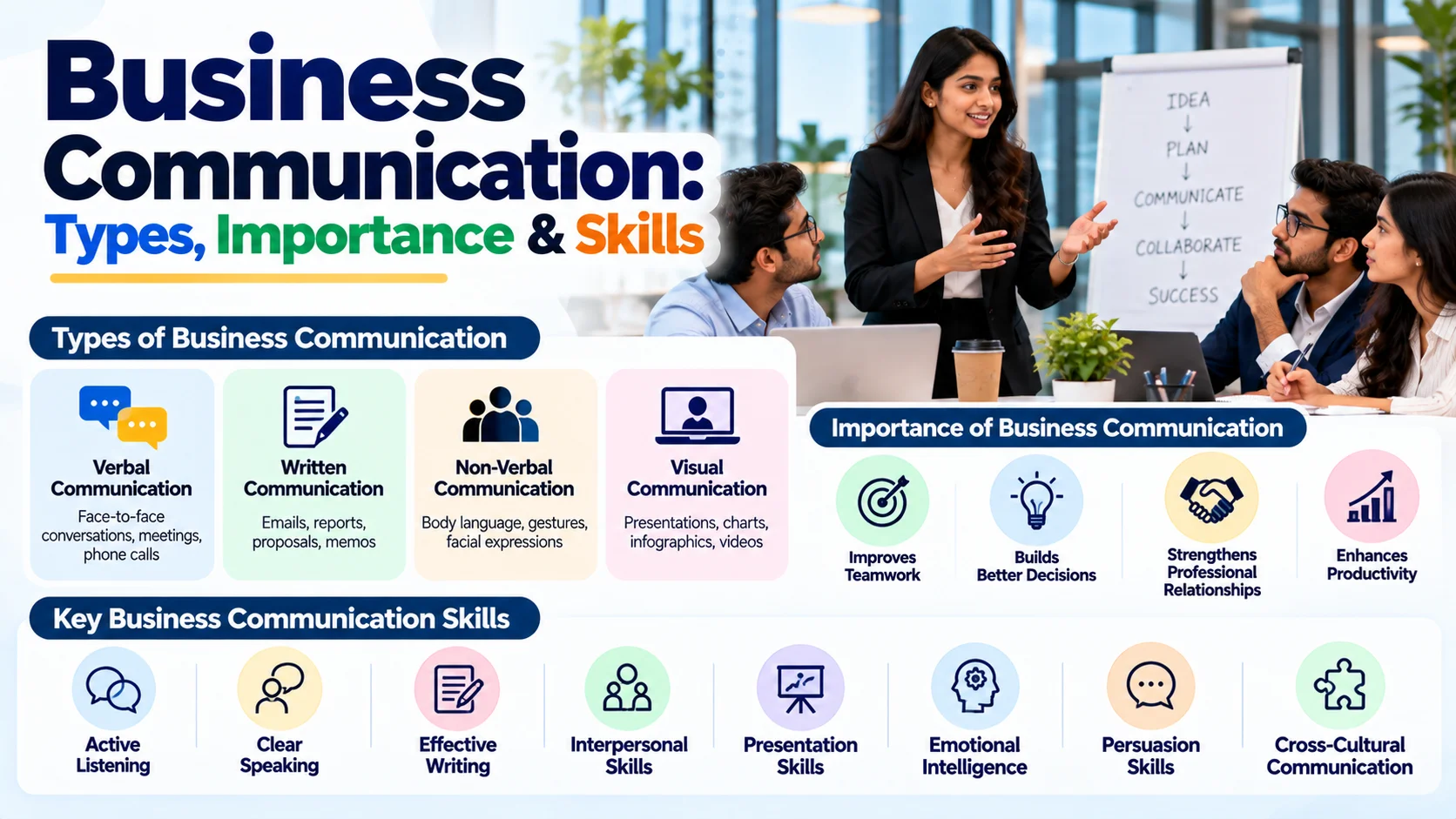
Nearly every workplace problem — missed deadlines, misaligned expectations, failed negotiations, disengaged teams — traces back, in some form, to a communication breakdown. Business communication isn't simply about talking or writing clearly; it's a structured discipline with distinct types, purposes, and skill requirements that directly affect organisational effectiveness. This blog breaks down what business communication actually involves, why it matters, and how to build genuine competency in it.
What Is Business Communication?
Business communication refers to the exchange of information, ideas, and messages within and outside an organisation, aimed at achieving specific organisational objectives — whether that's coordinating internal operations, building client relationships, or conveying strategic direction to stakeholders. Unlike casual personal communication, business communication is typically more structured, purposeful, and accountable to specific professional outcomes.
Types of Business Communication by Direction
Internal Communication
Communication that occurs within an organisation, among employees, teams, and departments. This further breaks down into:
- Upward communication: Information flowing from employees to management — status updates, feedback, and concerns raised to supervisors or leadership.
- Downward communication: Information flowing from management to employees — instructions, policy updates, and strategic direction communicated down the organisational hierarchy.
- Horizontal (lateral) communication: Information exchanged between colleagues or departments at similar organisational levels, essential for cross-functional coordination and collaboration.
External Communication
Communication directed toward parties outside the organisation — clients, vendors, investors, regulators, media, and the general public. This includes marketing communications, client correspondence, investor relations, and public relations activities.
Types of Business Communication by Format
- Verbal communication: Face-to-face conversations, meetings, presentations, and phone/video calls — allowing for immediate feedback and nuanced, real-time exchange.
- Written communication: Emails, reports, memos, and formal documentation — providing a permanent record and allowing for more careful, considered message construction.
- Non-verbal communication: Body language, tone of voice, facial expressions, and other non-verbal cues that significantly influence how a message is received, often carrying as much or more weight than the literal verbal content.
- Visual communication: Charts, graphs, presentations, and infographics — particularly valuable for conveying complex data or concepts more intuitively than text alone.
- Digital communication: Instant messaging platforms, video conferencing, and collaborative digital tools — increasingly central to modern business communication, particularly in distributed and hybrid work environments.
Why Business Communication Matters
- Operational efficiency: Clear communication reduces misunderstandings, rework, and delays, directly supporting smoother day-to-day operations.
- Employee engagement and morale: Transparent, consistent communication from leadership supports stronger employee trust, engagement, and organisational commitment.
- Decision-making quality: Effective communication ensures decision-makers have access to accurate, timely information, supporting better-informed strategic and operational decisions.
- External relationship management: Strong communication with clients, investors, and other external stakeholders directly supports business development, client retention, and organisational reputation.
- Crisis and change management: During periods of organisational change or crisis, clear, consistent communication is essential for maintaining stakeholder confidence and organisational stability.
Core Business Communication Skills
Clarity and Conciseness
The ability to convey ideas clearly and efficiently, without unnecessary complexity or ambiguity — a skill particularly valued given the significant volume of communication most professionals must process daily.
Active Listening
Genuinely understanding and processing what others communicate, rather than simply waiting for your turn to speak — essential for accurate understanding and building stronger professional relationships.
Written Communication Proficiency
The ability to write clear, well-structured emails, reports, and documents appropriate to their specific audience and purpose — a foundational skill given how much modern business communication occurs in written form.
Presentation Skills
The ability to structure and deliver information effectively to an audience, whether in formal presentations or informal team updates, combining clear content structure with engaging delivery.
Emotional Intelligence
Understanding and appropriately responding to the emotional dynamics within communication — recognising when a message might land poorly, adjusting tone and approach based on the audience, and navigating difficult conversations with sensitivity.
Cross-Cultural Communication Competency
Particularly important in increasingly global, diverse workplaces — understanding how communication norms, directness, and context vary across different cultural backgrounds, and adapting communication style accordingly.
Digital Communication Literacy
Proficiency with the growing range of digital communication tools and platforms, along with an understanding of appropriate etiquette and effectiveness within each specific digital format.
Common Barriers to Effective Business Communication
- Information overload: Excessive volume of communication (emails, messages, meetings) can lead to important information being missed or deprioritised.
- Cultural and language differences: In diverse or global organisations, differing communication norms and language proficiency can create misunderstandings if not actively managed.
- Organisational hierarchy and silos: Rigid hierarchical structures or departmental silos can restrict information flow and create communication gaps between different parts of an organisation.
- Poor channel selection: Using an inappropriate communication channel for a specific message (for instance, delivering sensitive feedback via a brief written message rather than a conversation) can significantly undermine communication effectiveness.
How to Improve Business Communication Skills
- Practice structured writing: Before sending important written communication, take a moment to organise your key points logically, ensuring the core message is clear and prioritised appropriately.
- Seek feedback actively: Regularly ask colleagues and supervisors for feedback on your communication effectiveness, and genuinely incorporate that feedback into how you communicate going forward.
- Match channel to message: Develop judgement around which communication format (email, call, in-person conversation) best suits different types of messages, particularly for sensitive or complex topics.
- Invest in presentation and public speaking practice: Since these skills often feel uncomfortable initially, deliberate practice — through workshops, Toastmasters-style groups, or simply seeking more presentation opportunities — meaningfully builds confidence and competence over time.
Final Thoughts
Business communication is a genuinely foundational professional skill set, spanning internal coordination, external relationship management, and everything from clear written correspondence to confident presentation delivery. Investing deliberately in developing these skills — rather than assuming communication ability is fixed or unteachable — pays dividends across nearly every dimension of professional effectiveness and career growth.
To explore more detailed guidance on business communication types and skill-building strategies, refer to the business communication guide for complete, updated information.
Frequently Asked Questions
What are the main types of business communication?
Internal communication (upward, downward, horizontal) and external communication, delivered through verbal, written, non-verbal, visual, or digital formats.
Why is business communication important for organisations?
It supports operational efficiency, employee engagement, better decision-making, stronger external relationships, and effective crisis or change management.
What are the most important business communication skills to develop?
Clarity and conciseness, active listening, written communication proficiency, presentation skills, emotional intelligence, and digital communication literacy.
What are common barriers to effective business communication?
Information overload, cultural and language differences, organisational hierarchy or silos, and poor channel selection for specific messages.