 Sign up with Google
 Sign in with Zoho


Most of the time, the choice between Django and Node.js for a SaaS product comes down to three things. What your team already knows. What your product needs to do in year one. And how soon you need an admin panel.
That last one sounds silly. It isn't. We'll come back to it.
Here is a situation our team sees a lot. A startup arrives with a half-built Node.js backend, a deadline in six weeks and a nagging doubt. Someone on the team read that Django would have been faster, and now they want to know if they should start over.
Our answer is almost always no. Rewriting a working backend six weeks before launch is how good startups miss their window. The better question is what you should choose for the next product, or the next big service. That is what this post is about.
The short version
Pick Django if your SaaS is data heavy, needs a solid admin from day one, or will lean on Python for AI and analytics later.
Pick Node.js if your product is real time at its core, like chat, live dashboards or collaborative editing. Or if your team already writes JavaScript everywhere.
If neither is clearly true, pick the one your best engineer knows best. Honestly, that matters more than anything else in this article.
Why Django keeps winning for B2B SaaS
Django comes with a lot built in. Authentication, an ORM, database migrations, form handling and sensible security defaults are all there on day one. You spend your first weeks on your product, not on plumbing.
And then there's the admin panel. This is the part founders underrate. Django gives you a working back office almost for free. Your support or ops team can look up a customer, fix a record or check a subscription without asking an engineer.
For an early SaaS team, that can save weeks. It also saves your engineers from a steady stream of "can you just change this one thing in the database" messages.
Python is the other big reason. If your roadmap mentions AI features, reporting or data pipelines, being in Python already makes life easier. The libraries are right there, and your backend developers can work on them without switching languages.
Where Node.js is the better fit
Node.js handles lots of open connections well. So anything real time fits it naturally. Live notifications, chat, multiplayer editing, streaming updates.
It also lets one team use one language across frontend and backend. For a small team, that is a real advantage. People can move between tasks without switching mental gears, and code like validation rules can be shared.
The catch is that Node.js gives you less out of the box. You choose your own ORM, auth library, admin tool and folder structure. That flexibility is nice. But every choice is a decision someone has to make, document and maintain.
When switching actually makes sense
We said rewriting is usually a bad idea. There are a few exceptions.
- The current code has no tests and nobody on the team understands it.
- The product has changed so much that most of the old backend no longer fits.
- Hiring for the current stack in your region has become very hard.
Even then, a full rewrite is rarely the answer. Building new services in the new stack while the old one keeps running is usually safer.
Questions to ask before choosing
- Does the product need live, two-way updates as a core feature?
- Will non-engineers need to manage data from the first week?
- Is AI or heavy reporting on the roadmap for this year?
- What does your current team write well today?
- How easy is it to hire for this stack where you are?
That last question catches people out. A stack is only as good as your ability to staff it.
On hiring
Both Django and Node.js have large talent pools, so you will find people for either one. What is harder is finding developers who have shipped a SaaS product before.
Multi-tenancy, billing, user roles and permissions, background jobs and data exports are where inexperienced teams lose months. These are not hard problems in theory. They are just full of small traps that you only learn by falling into them once.
So when you interview, ask about those things directly. Ask how they separated data between customers. Ask what went wrong with billing on their last project. The answers tell you more than any coding test.
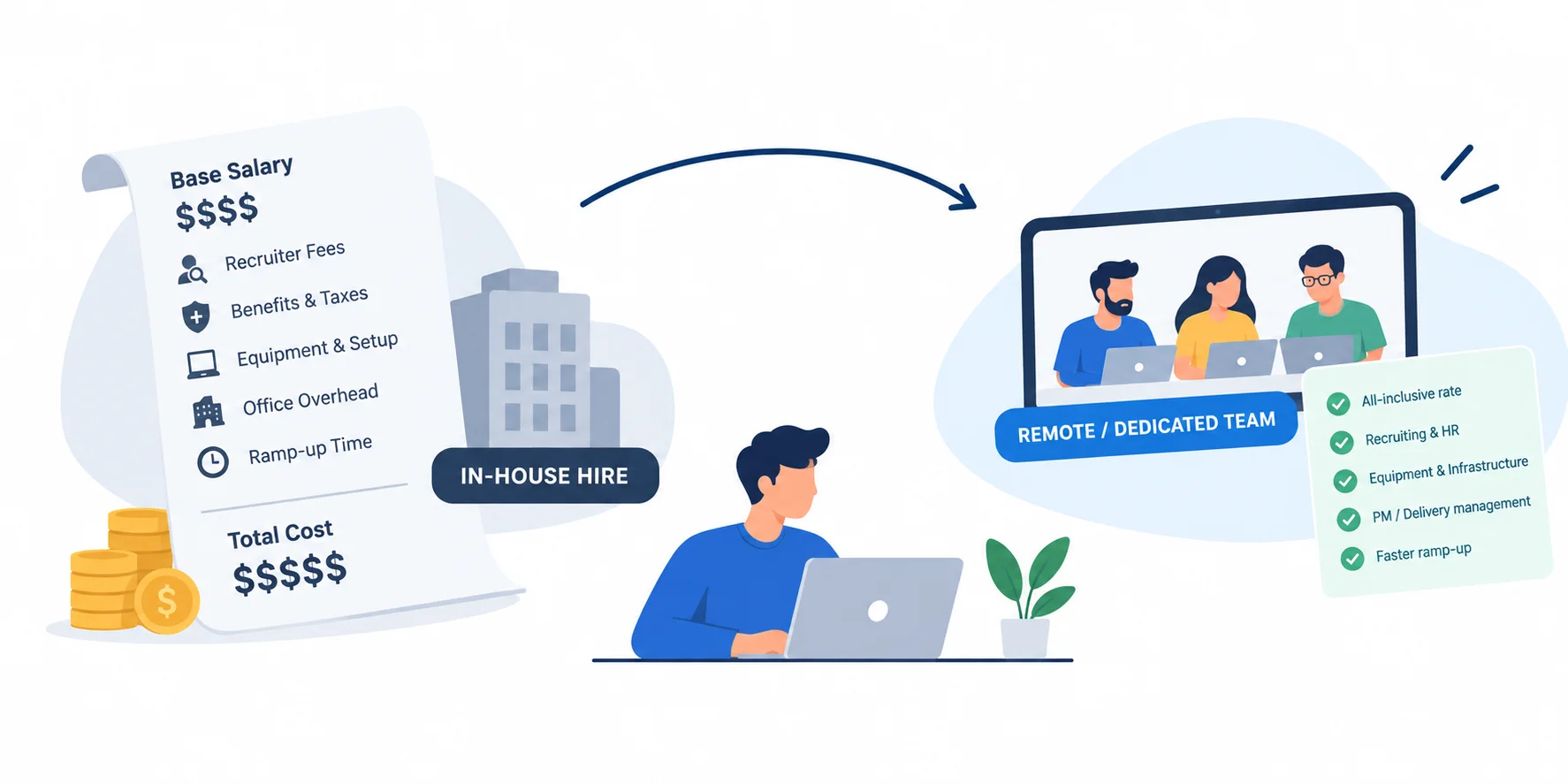
If you go the Django route and need to grow the team quickly, it can make sense to hire Django developers who have built SaaS backends before, rather than training a team from scratch.
Our take
There is no wrong answer between these two. Both run serious products at scale, and both will still be around in ten years.
The wrong answer is choosing based on a benchmark you read online, then fighting your own team's skills for the next two years.
So be practical. Look at your team, your roadmap and your first-year needs. Then pick the stack that lets you ship, and spend your energy on the product your customers are actually paying for.