Sign up with Google
 Sign in with Zoho

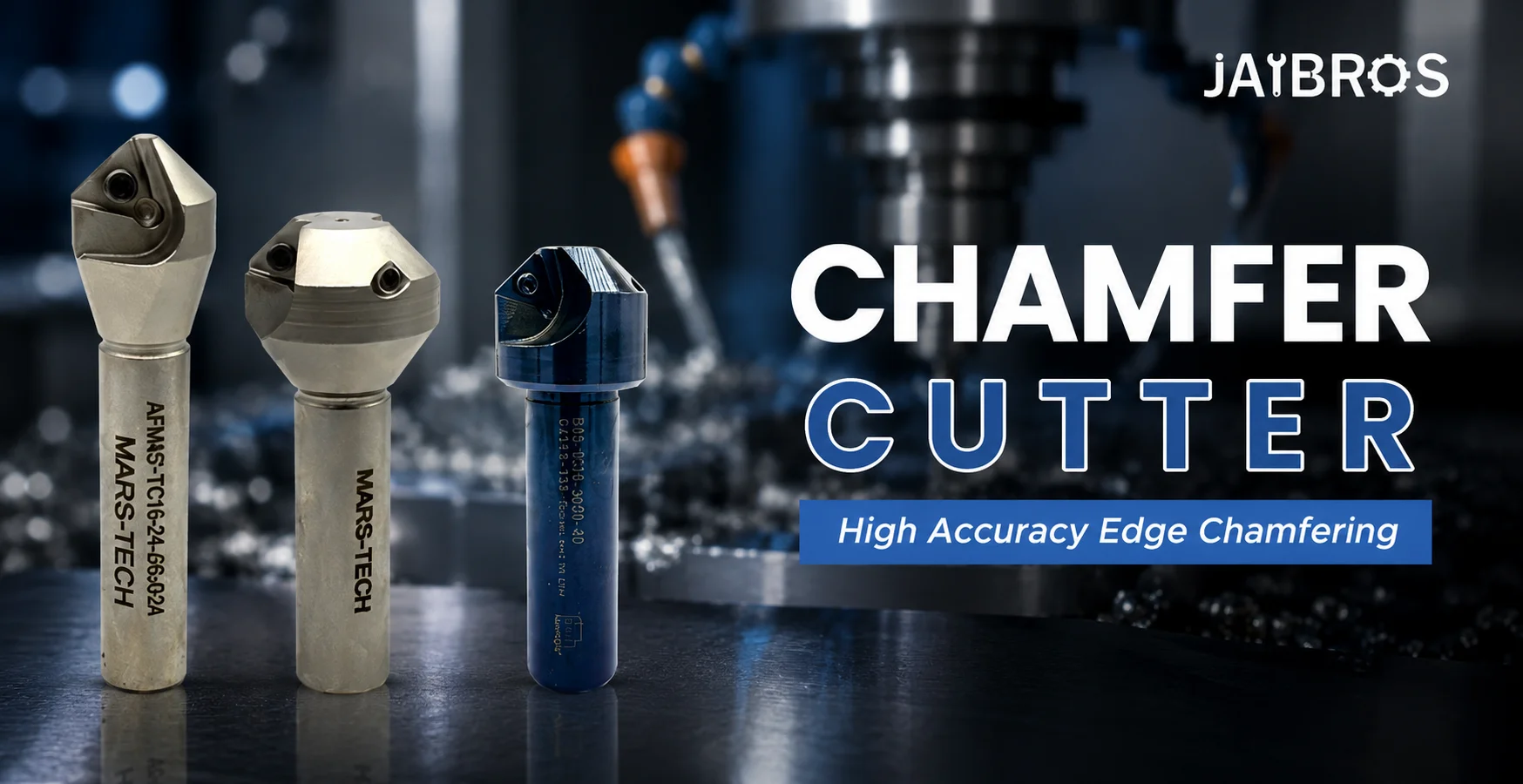
In metalworking and machining, selecting the right cutting tool is essential for achieving clean, accurate, and professional results. Although chamfer cutters and countersinks may look similar, they are designed for different purposes. Understanding their differences helps improve machining quality, ensure proper tool selection, and achieve better finishing. This guide explains how a champer tool, a chamfer cutter, and a countersink differ, along with their uses, benefits, and key applications in simple English.
What Is a Chamfer Cutter?
A chamfer cutter is a cutting tool designed to create a beveled edge on the corner of a workpiece or around the edge of a drilled hole. Instead of leaving a sharp corner, the cutter removes a small amount of material to produce a smooth angled surface.
The most common chamfer angles include:
- 30°
- 45°
- 60°
These angles are selected depending on the machining requirement and the final application.
A champer tool is widely used in CNC machining, milling operations, metal fabrication, and precision engineering where smooth edges are required for better safety and assembly.
What Is a Countersink?
A countersink is a cutting tool used to enlarge the opening of an existing hole into a cone-shaped recess. This recess allows flat-head screws or rivets to sit flush with or below the material surface.
Unlike a chamfer cutter, a countersink mainly prepares holes for fasteners rather than simply removing sharp edges.
Common countersink angles include:
- 82°
- 90°
- 100°
- 120°
The correct angle depends on the screw standard being used.
Main Difference Between a Chamfer Cutter and a Countersink
Although both tools remove material from the edge of a hole, they have different purposes.
Understanding these differences ensures the correct tool is selected for every machining task.
How a Chamfer Cutter Works
A chamfer cutter rotates at high speed while gradually removing material from the edge of a workpiece.
The cutting process:
- Removes sharp corners
- Produces smooth bevels
- Improves appearance
- Makes handling safer
- Helps parts fit together accurately
Many modern workshops use CNC machines to automate chamfering for consistent results.
How a Countersink Works
A countersink follows an already drilled hole.
It cuts a conical recess around the hole opening so that screws can be installed neatly without protruding above the surface.
Its main objectives include:
- Better screw seating
- Improved assembly
- Cleaner finished appearance
- Reduced stress around screw heads
Applications of Chamfer Cutters
Chamfer cutters are used across many industries because they improve both functionality and appearance.
Common applications include:
- Edge finishing of machined parts
- Deburring drilled holes
- Preparing components before welding
- Improving part assembly
- Aerospace components
- Automotive manufacturing
- Mold and die making
- Precision engineering
A properly selected champer tool helps achieve uniform edge quality while reducing manual finishing work.
Applications of Countersinks
Countersinks are commonly used where fasteners must sit flush with the material surface.
Typical applications include:
- Furniture manufacturing
- Mechanical assembly
- Metal fabrication
- Aircraft construction
- Automotive body panels
- Sheet metal work
- Woodworking projects
Benefits of Using a Chamfer Cutter
A chamfer cutter offers several machining advantages.
Improves Safety
Sharp edges can cause injuries during handling. Chamfering removes these hazards.
Better Component Assembly
Beveled edges help parts align more easily during assembly.
Cleaner Appearance
Finished products look more professional with smooth and uniform edges.
Reduced Burr Formation
Proper chamfering removes unwanted burrs left after drilling or milling.
Longer Tool Life
Correct edge preparation reduces stress during later machining operations.
Benefits of Using a Countersink
Countersinking provides several practical benefits.
- Allows screws to sit flush
- Improves product appearance
- Prevents screw head damage
- Supports stronger assemblies
- Reduces stress concentration around holes
Choosing the Right Tool
Selecting the correct cutting tool depends on the intended application.
Choose a chamfer cutter when you need:
- Smooth edges
- Burr removal
- Edge finishing
- Easier assembly
- Improved safety
Choose a countersink when you need:
- Flush screw installation
- Conical recesses
- Fastener preparation
- Professional fastening results
Many professionals also consult a reliable chamfer tool manufacturer when selecting tools for specific machining applications.
Factors to Consider Before Buying
Before selecting any cutting tool, consider the following factors:
Material Type
Different materials require different cutting geometries.
Examples include:
- Steel
- Stainless steel
- Aluminum
- Brass
- Cast iron
- Plastic
Cutting Angle
Choose the angle based on your machining requirement.
Tool Material
Common materials include:
- High-Speed Steel (HSS)
- Carbide
- Cobalt steel
Machine Compatibility
Ensure the tool is compatible with your drilling, milling, or CNC machine.
Surface Finish Requirement
Precision machining often requires higher-quality cutting tools.
Many industries also work with experienced chamfer tools supplier companies to ensure consistent quality and availability.
Role of Chamfering Machines
Large manufacturing facilities often use a chamfering machine to automate edge preparation.
These machines provide several advantages:
- Faster production
- Uniform chamfers
- Better dimensional accuracy
- Reduced operator effort
- Higher productivity
They are widely used in mass production environments where consistency is essential.
Maintenance Tips
Proper maintenance improves cutting performance and extends tool life.
Follow these simple practices:
- Clean tools after use.
- Store in a dry location.
- Avoid excessive cutting speeds.
- Replace worn cutting edges promptly.
- Use suitable cutting fluids where required.
- Inspect tools regularly for damage.
Proper maintenance helps any champer tool deliver accurate and reliable performance over time.
Common Mistakes to Avoid
Avoid these common machining errors:
- Using the wrong cutting angle
- Applying excessive feed rates
- Operating dull tools
- Choosing incorrect spindle speed
- Skipping lubrication
- Ignoring tool inspection
Correct machining practices improve both safety and productivity.
Choosing a Reliable Source for Chamfer Tools
When selecting a champer tool, it is important to choose a trusted supplier that offers quality products, clear specifications, and a wide range of machining solutions. Many professionals compare different options based on material, performance, and application before making a decision. If you are exploring industrial cutting tools, Jaibros is one of the platforms where users can browse various machining and engineering tools to find products that match their project requirements.
Conclusion
Although chamfer cutters and countersinks may appear similar, they perform different functions in machining. A chamfer cutter creates smooth beveled edges, while a countersink forms a conical recess for fasteners. Selecting the correct tool improves machining accuracy, enhances product quality, and increases workplace safety.
Whether performing manual machining or using CNC equipment, understanding these differences allows operators to achieve better finishing results while extending tool life. Choosing the right champer tool for each application ensures efficient machining and professional-quality components.
Frequently Asked Questions (FAQs)
1. What is the main purpose of a chamfer cutter?
A chamfer cutter is mainly used to remove sharp edges and create smooth beveled corners on metal, plastic, or wooden components. It improves safety, makes assembly easier, reduces burr formation, and gives finished products a clean and professional appearance. It is commonly used in machining, fabrication, and precision engineering industries.
2. Can a countersink replace a chamfer cutter?
No. Although both tools remove material around a hole, they are designed for different purposes. A countersink creates a conical recess for flat-head screws, while a chamfer cutter produces a beveled edge for deburring and finishing. Using the correct tool ensures better machining accuracy and the desired final result.
3. Which industries commonly use chamfer cutters?
Chamfer cutters are widely used in automotive manufacturing, aerospace engineering, CNC machining, metal fabrication, mold making, tool rooms, and precision component manufacturing. They are valuable wherever smooth edges, burr removal, and improved component assembly are required to maintain product quality and workplace safety.
4. How do I choose the right chamfer cutter?
Consider the material being machined, required chamfer angle, cutting tool material, machine compatibility, and surface finish expectations. Carbide cutters are generally preferred for high-speed machining and harder materials, while HSS cutters are suitable for many general-purpose machining applications. Proper selection improves efficiency and extends tool life.
5. Why is chamfering important in manufacturing?
Chamfering removes sharp edges, reduces burrs, improves safety, enhances product appearance, and allows components to fit together more easily. It also helps prevent edge damage during handling and assembly. In modern manufacturing, chamfering is considered an important finishing operation that contributes to both product quality and operational efficiency.








.webp)