Sign up with Google
 Sign in with Zoho

Turns out I was wrong. The biggest threat wasn't across the street. It was sitting in our own server room.
Our operations platform — built around 2011, patched more times than I can count — finally gave us the scare that changed everything. A routine update on a Wednesday afternoon triggered a cascade failure that locked our entire team out of customer records for nineteen hours. Nineteen hours. No access to orders. No invoicing. No client communication. My operations manager was running things off her phone and a prayer.
We didn't get hacked. We didn't face a natural disaster. We were taken down by our own software because it was old, fragile, and held together by years of temporary fixes that had quietly become permanent.
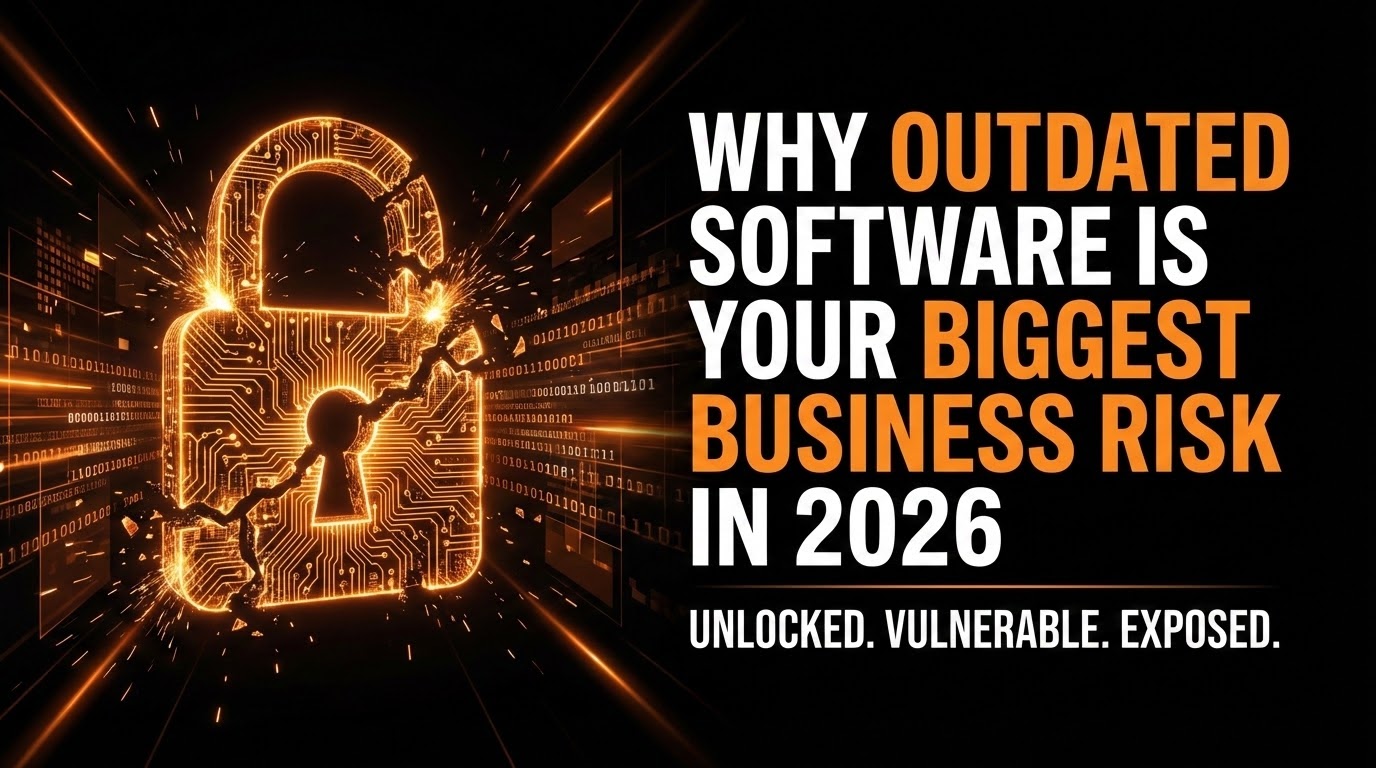
If your business depends on software that was built more than a decade ago, that story should scare you. Because in 2026, outdated software isn't just an inconvenience. It's the single biggest risk most businesses are carrying without realizing it.
And the path out? It's more achievable than you think. Legacy system modernization services have changed dramatically in the last couple of years, and the businesses that are moving now are the ones who'll still be standing in 2030.
The risks nobody talks about at the quarterly meeting
Everyone focuses on revenue and margins. Nobody puts "our software might take us down" on the agenda. But maybe they should. Here's what's actually happening in 2026.
Security has become a nightmare. A Datadog report this year found that 87 percent of organizations are running software with known, exploitable vulnerabilities. Not theoretical risks — actual holes that hackers can walk through. And security debt is exploding. Veracode's latest data shows 82 percent of organizations now carry security debt, up from 74 percent just last year. Sixty percent carry critical security debt. If your software hasn't been patched because the vendor stopped supporting it three years ago, you're essentially operating with your front door open.
The money drain is worse than you think. U.S. organizations lose roughly $1.8 billion annually in productivity because of outdated technology. At the company level, most businesses spend 60 to 80 percent of their IT budget just maintaining old systems. Not improving them. Maintaining them. That leaves almost nothing for the tools, features, and capabilities your competitors are building right now.
Your people are suffering in silence. Your best employees — the ones with options — don't want to work with technology from 2012. They want modern tools. They want systems that work on the first try, not systems that require a reboot ritual every morning. When talented people leave because your tech stack frustrates them, the replacement cost is far higher than whatever you'd spend on modernization.
Customers notice more than you think. A Microsoft poll showed 91 percent of customers would consider ending business relationships with companies using obsolete software. That's not about features. That's about trust. When your platform is slow, glitchy, or looks like it hasn't been updated since the last presidential election, customers draw conclusions about how seriously you take their business.
So what does fixing this actually look like?
Modernization isn't about ripping everything out and starting from scratch. It's about upgrading what's broken, protecting what works, and building a foundation that doesn't crumble the next time someone runs a routine update. Here's the process that works in 2026.
Step 1 — Audit the ugly truth. Map every system, every integration, every connection your business depends on. AI discovery tools do the technical heavy lifting now — tracing data flows and uncovering hidden dependencies in weeks. But also sit down with your people. The finance person who manually reconciles two reports every Friday because the systems don't sync. The warehouse lead who prints paper backups because he's been burned by crashes too many times. Those conversations reveal the damage no scan can detect.
Step 2 — Identify where you're bleeding. Not everything needs fixing. Some old systems work fine. Focus your money on the ones actively hurting your business — the platform crashing during your busy season, the tool that requires a $280-an-hour specialist for every small change, the security gaps that could trigger a breach costing you $1.9 million or more.
Step 3 — Start with one system. The one keeping you up at night. A furniture retailer I know started with their online ordering platform. It had been dropping orders during holiday traffic spikes for two straight years. They modernized that single system in about ten weeks. Order completion rate jumped from 71 percent to 96 percent. Holiday revenue that year hit a company record. One fix. Massive impact.
Step 4 — Run old and new side by side. Never switch off the old system until the new one has earned your trust. Run them in parallel. Compare every output. AI testing tools automatically catch edge cases your team forgot existed. When the food services company I work with migrated their dispatch platform, their drivers had no clue the backend changed until someone brought it up at a staff meeting two weeks later. That's how clean it should be.
Step 5 — Bring your team into the process early. Don't spring new software on people who've spent years mastering the old one. Let them test it. Let them complain. Let them shape it. A supply chain manager I know was invited to co-design the new dashboard during development. She spotted a workflow flaw the developers missed — and she became the loudest champion when it was time to roll it out to the rest of the team.
Step 6 — Make maintenance a habit, not an emergency. Set up monitoring. Keep documentation current. Schedule quarterly reviews. Budget for ongoing improvements. The companies reporting 40 to 75 percent lower infrastructure costs after modernization aren't running better software by accident. They're running disciplined organizations that treat their technology like a living system.
"But I can't afford this right now"
I hear this every time. And every time, the math tells the same story.
You're already spending the money. It's just buried in emergency support calls, lost productivity, specialist contractor fees, and revenue that walked out the door because your systems couldn't keep up. Phased modernization means you start with one focused investment, see the return — usually within twelve to eighteen months — and decide what comes next. Your old system stays live as a safety net the entire time. If anything goes sideways, you roll back. No downtime. No drama.
The real cost isn't modernization. It's another year of hoping your old software holds together through one more busy season.
Where Sparkout Tech comes in
We've helped business owners navigate exactly this situation — from the first honest assessment to the "why didn't we do this sooner" moment on the other side. We don't push unnecessary rebuilds. We don't pad timelines. We figure out what's actually broken, build a plan that fits your budget and your risk tolerance, and execute in phases that keep your business running while we work.
Our legacy application modernization services are built for owners who've been living with software problems long enough to be skeptical of anyone promising to fix them. We get it. That's why we'd rather show you results on one system than sell you a twelve-month contract on day one.
Your next move
Get the free assessment. It takes one conversation. We look at your systems, tell you what's actually at risk, and give you a realistic plan — no jargon, no pressure, no sixty-page proposal that gathers dust on someone's desk.
You already know your software is a problem. The only thing left to decide is whether you fix it now — while the choice is yours — or later, when a nineteen-hour outage makes the decision for you.
I'd strongly recommend now.