 Sign up with Google
 Sign in with Zoho

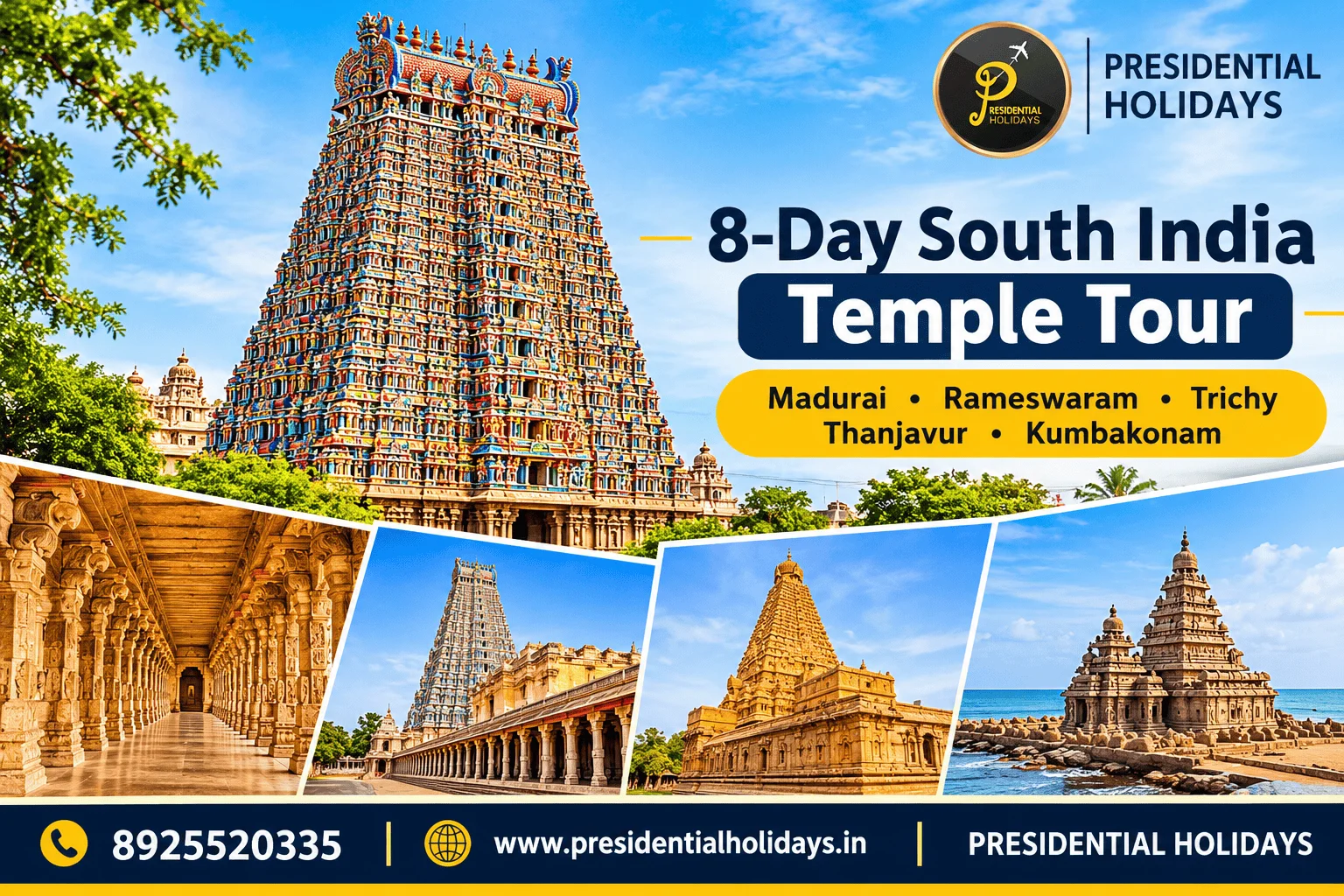
A temple tour across Tamil Nadu can cover several important pilgrimage centres, but the order of visits matters when the destinations are spread across different parts of the state. Madurai, Rameswaram, Trichy, Thanjavur and Kumbakonam are among the major stops on a traditional Tamil Nadu temple circuit. Each has its own religious significance, and the distances between them need to be considered when preparing a travel schedule.
An eight-day itinerary can bring these destinations together, with additional visits to Chidambaram, Mahabalipuram and Chennai. The route needs to account for road travel, temple visiting hours, overnight stays and time at each location. A day-by-day plan helps establish how much can be covered without making the schedule unnecessarily rushed.
This guide explains the route, the major temples at each stop and the travel arrangements to consider before booking a South India temple tour.
Day 1: Arrive in Madurai – Begin the Pilgrimage
Madurai is a suitable starting point for a South Indian temple tour because of its historical importance and connectivity with other pilgrimage destinations.
After arrival, the itinerary can begin with a visit to Meenakshi Amman Temple. Dedicated to Goddess Meenakshi and Lord Sundareswarar, the temple is recognized for its towering gopurams, detailed sculptures and traditional mandapams.
The day's sightseeing can also include Thirumalai Nayakkar Mahal, an architectural landmark associated with the Nayak dynasty, and Gandhi Memorial Museum.
An evening visit to the traditional shopping streets around Puthu Mandapam offers an opportunity to explore local handicrafts, textiles and regional products.
Overnight stay: Madurai.
Day 2: Madurai to Rameswaram - Explore a Major Pilgrimage Destination
The second day involves a road journey of approximately 170 km from Madurai to Rameswaram, taking around 3.5 hours under normal travel conditions.
Rameswaram holds an important place in Hindu pilgrimage traditions and is closely associated with the Ramayana. The Ramanathaswamy Temple is the principal attraction, drawing devotees for its religious significance and extensive corridors.
Agni Theertham, located near the temple, is another important pilgrimage location. Visitors can also explore the surrounding coastal landscape and the historic Pamban Bridge.
Dhanushkodi offers a different experience through its coastal scenery and historical remains. Located near the southeastern tip of Pamban Island, it is an important stop for understanding the region's geographical and cultural significance.
Overnight stay: Rameswaram.
Day 3: Rameswaram to Trichy - Visit Historic Temple Complexes
The journey continues towards Tiruchirappalli, covering approximately 230 km and taking around five hours by road.
Trichy is known for its historic temples and religious traditions. The Sri Ranganathaswamy Temple at Srirangam is one of the major Vaishnavite pilgrimage centres in India. Its extensive temple complex, impressive entrance towers and traditional halls make it an important destination.
Rockfort Temple offers another perspective on the city's religious heritage. Located on a prominent rock formation, the temple provides views of the surrounding urban landscape.
Jambukeswarar Temple at Thiruvanaikaval is another important stop. Dedicated to Lord Shiva, it represents the water element among the five Pancha Bhoota Sthalams.
Visiting these three landmarks provides an opportunity to understand the religious diversity and architectural traditions of Trichy.
Overnight stay: Trichy.
Day 4: Trichy to Thanjavur and Kumbakonam - Discover Chola Heritage
The next stage connects Trichy with Thanjavur, a journey of approximately 60 km.
The Brihadeeswarar Temple is the principal attraction in Thanjavur. Constructed during the reign of Rajaraja Chola I, this UNESCO-listed monument is admired for its massive vimana, stone craftsmanship and distinctive Chola architectural style.
The sightseeing schedule can also include Thanjavur Palace and Saraswathi Mahal Library, both of which reflect the city's royal and literary heritage.
After exploring Thanjavur, proceed towards Kumbakonam, approximately 40 km away. The town is widely known for its concentration of historic temples and traditional religious practices.
Overnight stay: Kumbakonam.
Day 5: Kumbakonam Temple Circuit – Explore Ancient Shrines
A dedicated day in Kumbakonam allows sufficient time to explore its prominent temples without combining too many distant destinations into one schedule.
Adi Kumbeswarar Temple is one of the town's principal Shiva temples. Its traditional architecture, sculpted pillars and religious associations make it an important pilgrimage stop.
Sarangapani Temple, dedicated to Lord Vishnu, is another major landmark known for its impressive gopuram and distinctive temple structure.
Airavatesvara Temple at Darasuram is particularly important for its Chola-era architecture and intricate stone carvings. It is part of the UNESCO-listed Great Living Chola Temples.
The Navagraha temples located around Kumbakonam can also be included as an optional extension, depending on available time and travel arrangements.
Overnight stay: Kumbakonam.
Day 6: Kumbakonam to Chidambaram and Mahabalipuram
The journey continues towards Chidambaram, an important centre associated with Lord Nataraja and the traditional worship of Shiva.
The Thillai Nataraja Temple is the main attraction. It is recognized for its association with the cosmic dance of Lord Shiva and its distinctive religious and architectural features.
After the temple visit, proceed towards Mahabalipuram. This coastal heritage town is known for its Pallava-era monuments and UNESCO-listed archaeological sites.
The route connects two important aspects of Tamil Nadu's heritage: traditional temple worship and historic stone architecture.
Overnight stay: Mahabalipuram.
Day 7: Mahabalipuram Sightseeing and Transfer to Chennai
The seventh day can begin with sightseeing around Mahabalipuram.
The Shore Temple is one of the town's most recognized landmarks, situated along the Bay of Bengal. Its stone towers and coastal location make it an important example of early structural temple architecture.
The Pancha Rathas showcase monolithic rock-cut construction, while Arjuna's Penance is known for its extensive sculptural panels depicting mythological and natural themes.
After sightseeing, continue towards Chennai, approximately 60 km away.
Overnight stay: Chennai.
Day 8: Chennai Sightseeing and Departure
The final day provides an opportunity to explore selected landmarks in Chennai before departure.
Kapaleeshwarar Temple in Mylapore is an important Shiva temple recognized for its traditional Dravidian architecture and colourful entrance tower.
Marina Beach offers a coastal experience, while Santhome Basilica represents another important part of the city's religious heritage.
The schedule can also include shopping around T. Nagar, depending on departure timings.
The journey concludes with a transfer to Chennai Airport or Railway Station.
Important Travel Considerations Before Booking a South India Temple Tour
Planning an eight-day pilgrimage across several destinations requires attention to a few important details.
1. Route and travel duration: Check the distance between each destination and allow sufficient time for road journeys. Some temple towns require additional local travel.
2. Temple timings: Darshan schedules, special poojas and festival arrangements may affect sightseeing plans. Verify the latest temple timings before departure.
3. Accommodation: Staying overnight in the destination towns reduces unnecessary backtracking and makes early temple visits easier to organize.
4. Transportation: A suitable vehicle and coordinated transfers are important when visiting multiple cities over consecutive days.
5. Meals and daily arrangements: Confirm meal arrangements, sightseeing inclusions and accommodation details before finalizing the tour.
6. Additional temple visits: Optional destinations such as the Navagraha temples may require extra time. Their inclusion should be confirmed while planning the itinerary.
Choosing an Organized South Indian Temple Tour Package
Arranging accommodation, transportation, sightseeing, and meals independently across several cities can involve considerable coordination. An organized tour package brings these arrangements together within a planned schedule.
Presidential Holidays offers an 8-day / 7-night South Indian Temple Tour Package covering Madurai, Rameswaram, Trichy, Thanjavur, Kumbakonam, Chidambaram, Mahabalipuram, and Chennai.
The package includes accommodation, transportation, sightseeing, and three meals a day, covering breakfast, lunch, and dinner. This itinerary connects major pilgrimage destinations with important historical and architectural landmarks.
Travel arrangements can be discussed with the tour team to understand the itinerary, package inclusions, and booking requirements.
Explore Tamil Nadu's Sacred Destinations in One Journey
An eight-day pilgrimage across Tamil Nadu brings together important temples, historic cities and cultural landmarks. From the Meenakshi Amman Temple in Madurai to the Ramanathaswamy Temple in Rameswaram and the Chola monuments of Thanjavur, each destination contributes a distinct experience.
A well-planned route makes it possible to explore these places within a single extended journey while keeping travel and accommodation arrangements coordinated.