Sign up with Google
 Sign in with Zoho

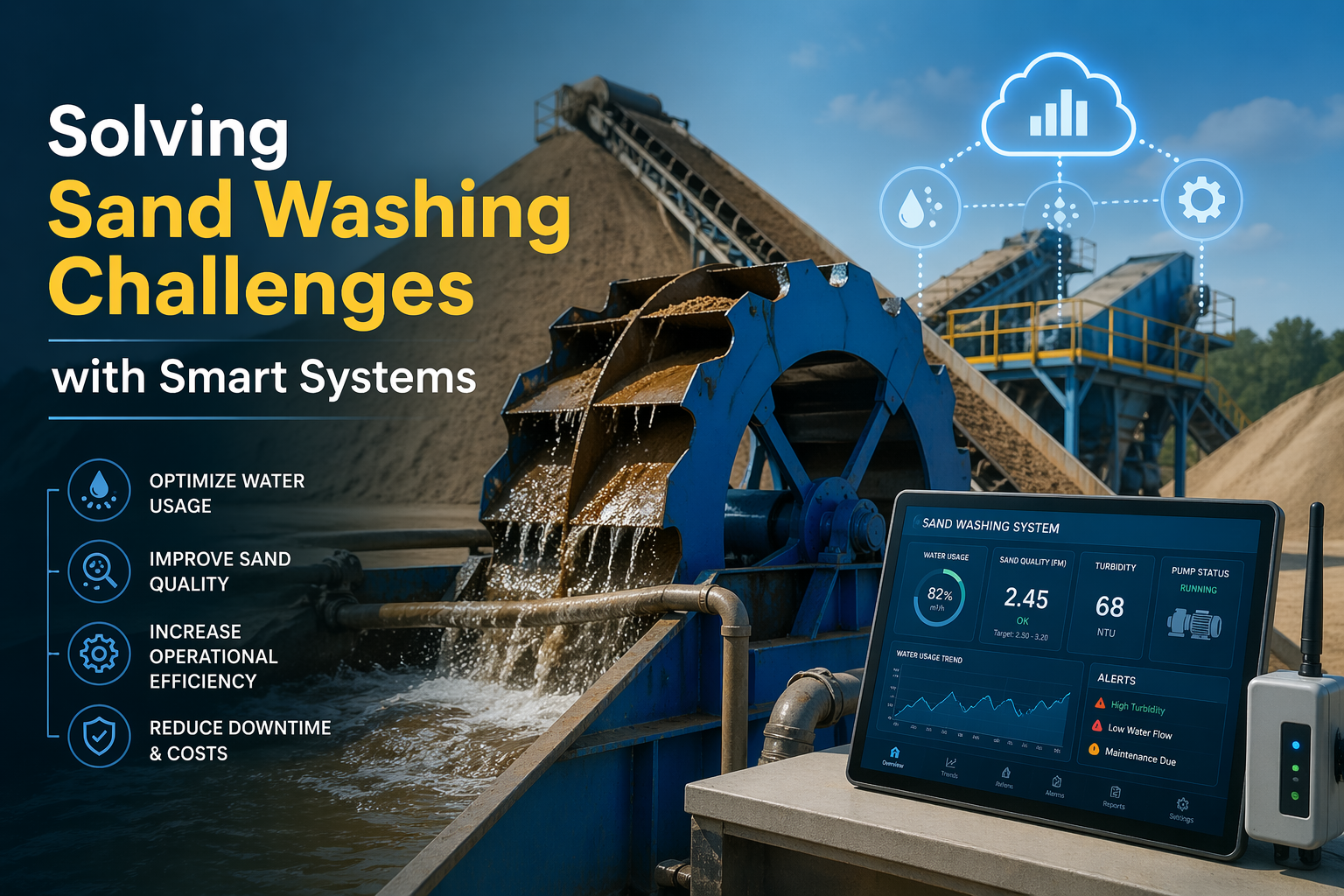
It usually starts after the first shipment—moisture content is off, fines are higher than promised, and suddenly your margins depend on how well your Sand Washing Machine actually performs, not what the brochure claimed. Most buyers discover this late. By then, the supplier has already moved on to the next order.
That’s where smarter systems—especially hydrocyclone-based setups—change the equation. Not theoretically. On-site, where 2–3% material loss can erase profit from an entire batch.
Specification That Actually Decides Output Stability
Hydrocyclone Integration: Not Optional Anymore
Which means if your current setup still relies purely on mechanical separation, you’re already behind. A properly designed Hydrocyclone Separator can recover particles down to 75 microns, compared to 150–200 microns in conventional systems. That’s not a small gain. That’s saleable material you were previously dumping.
Most buyers underestimate pressure balance inside the cyclone. A mismatch of even 0.5 bar can distort separation efficiency by over 12%.
Feed Consistency and Slurry Density
Here’s where reality bites. If your slurry density fluctuates beyond ±8%, your hydrocyclone filter performance becomes unpredictable. You won’t notice it immediately—but your clients will when grading varies across shipments.
And yet, many suppliers don’t even provide density monitoring as standard.
Sand Washer Configurations
There are two dominant types: bucket wheel and screw-based systems. Both have their place. But choosing blindly is a mistake.
- Bucket wheels handle higher throughput but lose more fines
- Screw classifiers retain fines but consume more power per ton
That trade-off isn’t discussed enough by most Sand Washer Manufacturers in India.
The Detail Buyers Skip: Water Recycling Rate
Nobody tells you this upfront—water recovery efficiency impacts your operational cost more than power consumption in many regions of India. A system with 85% recycling efficiency versus 70% can reduce freshwater dependency by nearly 20,000 liters per day in mid-scale plants.
The Spec Detail Most Buyers Skip During Supplier Evaluation
Most buyers think they’re comparing machines. They’re not. They’re comparing how honest suppliers are about limitations.
1. Recovery Efficiency Claims
Good answer: “85–90% under stable feed conditions.” Bad answer: “Up to 95%.” That “up to” hides everything.
2. Wear Part Life
Good answer: Specific hours—say 1,800 to 2,200 operational hours. Bad answer: “Depends on usage.” That’s a non-answer.
3. Water Consumption Data
Good answer: Measured per ton processed. Bad answer: “Low water requirement.” Low compared to what?
4. Installation Support
Good answer: On-site commissioning with calibration. Bad answer: Remote guidance only. You don’t want to debug slurry flow over a video call.
5. Export Experience
Good answer: Documented shipments across 31 countries. Bad answer: “We export globally.” That usually means two shipments and a lot of optimism.
A supplier who avoids specifics is not protecting trade secrets. They’re protecting themselves from accountability.
Benefits That Directly Protect Your Margins
And yet, the real reason buyers switch systems isn’t performance—it’s predictability.
Higher Fine Material Recovery
A good Hydrocyclone Manufacturer in India will help you recover up to 15% more fine sand. That’s inventory you were losing earlier.
Lower Rejection Rates
Consistent grading reduces client disputes. Which means fewer returns and less renegotiation after delivery.
Reduced Water Costs
With closed-loop systems, water usage drops significantly—often by 60–70% in optimized plants.
Energy Efficiency Over Time
Which sounds minor until you run 12-hour shifts. Even a 1.5 kWh saving per ton adds up fast.
Less Downtime
Wear-resistant liners and predictable maintenance cycles mean fewer unexpected stoppages.
Better Compliance
Dust and wastewater regulations are tightening across India. Systems that manage fines properly keep you ahead of penalties.
Availability Across India Is a Logistics Decision, Not Just Location
That’s where working with established Sand Washer Suppliers in India makes a difference. Not because of proximity—but because of parts availability and response time.
Most plants can’t afford more than 48–72 hours of downtime. Yet some buyers still source from suppliers who take 10 days to ship critical components.
From northern belts like Uttar Pradesh to coastal processing hubs in Gujarat and Tamil Nadu, supply chain consistency matters more than factory distance.
And yes, a Sand Washing Machine Manufacturer with export experience typically has better logistics discipline. They’ve had to. Customs delays force you to learn quickly.
About Us — What We Learned the Hard Way
At Oretech Industries, we’ve seen how small spec mismatches turn into large financial losses.
We’ve been exporting since 2013, and today our systems operate in 31 countries. That didn’t happen by chance.
We stopped using a particular polyurethane liner batch in 2022 after three clients reported premature wear in high-silica applications. We replaced it across all units—at our cost. That’s not a marketing story. That’s how long-term supply relationships are built.
Tell Us Your Feed Specs. We’ll Tell You What Works.
If you’re evaluating a new Sand Washing Machine in India, send us:
- Feed size distribution
- Required output grading
- Daily processing capacity
- Water availability
We respond within 24 hours.
Our MOQ starts from a single unit, and we handle commissioning on-site. If your specs are incomplete, we’ll tell you directly. It’s faster than fixing mistakes later.
Conclusion
A reliable Sand Washer is less about machinery and more about how well the system handles real-world variability—feed inconsistency, water constraints, and wear. The difference between average and efficient setups often comes down to hydrocyclone integration and honest specifications. Buyers who focus only on upfront cost usually pay more later. The shift toward smarter systems isn’t optional anymore—it’s already happening.
FAQs
What should I look for in a Hydrocyclone Manufacturer in India?
Focus on test data, not claims. Ask for separation efficiency under varying feed conditions. If they can’t provide it, move on.
How does a Hydrocyclone Separator improve sand quality?
It separates finer particles using centrifugal force, leading to better grading control. But performance drops if feed pressure isn’t stable—that’s the catch most ignore.
Are hydrocyclone filters suitable for all sand types?
No. High-clay content feeds can reduce efficiency. You may need pre-treatment depending on material composition.
What is the ideal Sand Washing Machine setup?
Depends on your output requirement. A mix of mechanical washing and hydrocyclone separation usually works best for commercial operations.
How to choose reliable Sand Washer Manufacturers in India?
Check installation history, not just catalog specs. Also verify after-sales support timelines. Delayed service is a bigger issue than machine cost.
Do Sand Washer Suppliers in India provide customization?
Some do, but not all. And customization often increases lead time. If your project timeline is tight, factor that in early.
What affects Sand Washing Machine performance the most?
Feed consistency, water quality, and maintenance cycles. Ignore any one of these, and performance drops—no matter how good the machine is.