Sign up with Google
 Sign in with Zoho

You've probably stood at a pharmacy counter and heard this line: "Sir/Ma'am, there's a generic version too — it's cheaper." And then you probably thought... wait, is it actually the same medicine, or am I about to buy something inferior?
Totally fair question. Let's break it down in plain words.
What Does "Generic" Even Mean?
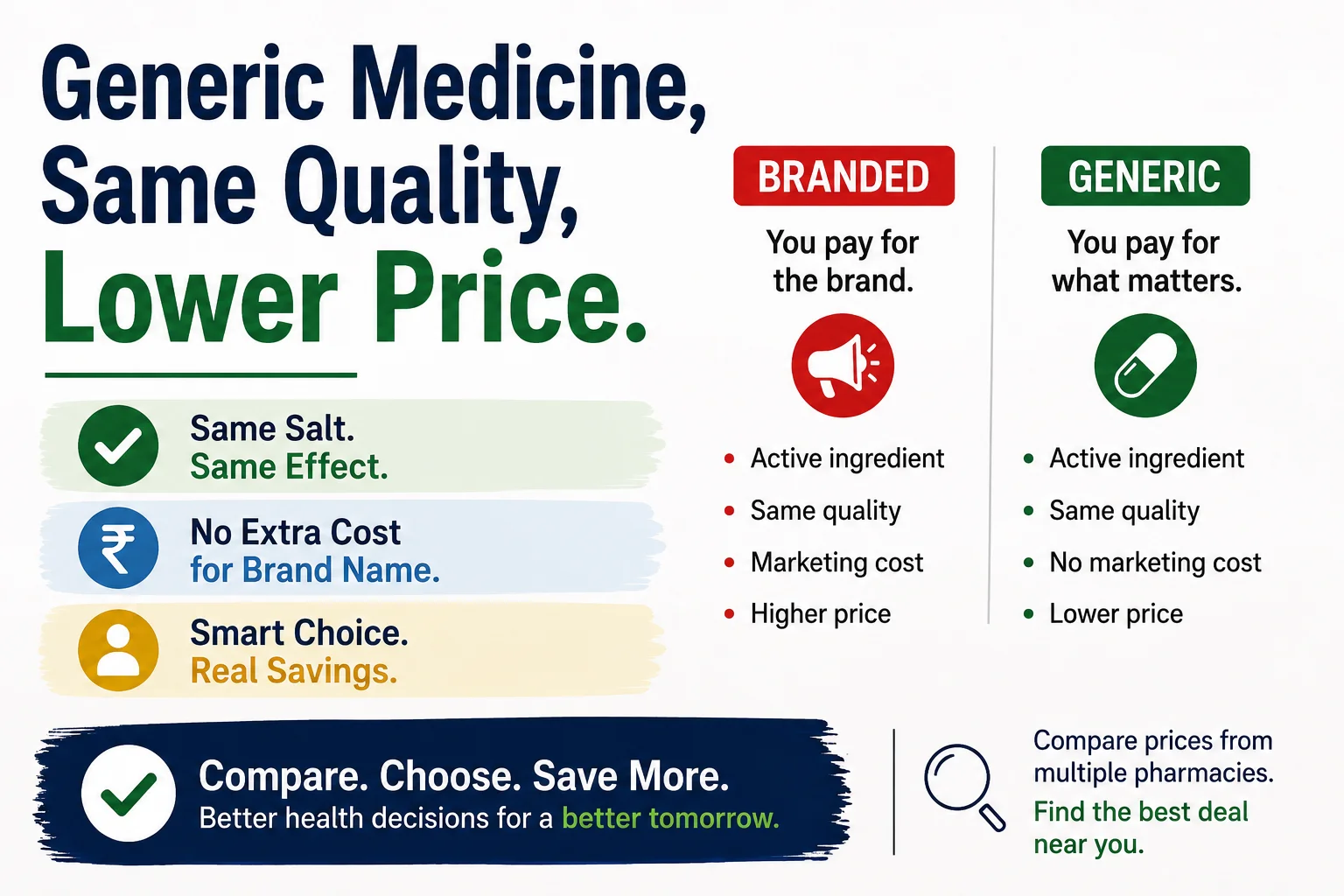
A generic medicine isn't a knock-off or a cheap copy made in someone's garage. It's a medicine that has:
- The exact same active ingredient (salt) as the branded version
- The same strength and dosage
- The same intended effect on your body
The only real difference? It's sold without the fancy brand name — and without the brand's marketing budget baked into the price.
So Why Is the Branded Version So Much More Expensive?
Here's the honest answer: a big chunk of that extra cost isn't going into the medicine itself.
That marketing cost is a real thing — companies spend heavily to get doctors and patients to recognize their brand name. Generics skip that entirely, and you pocket the savings.
Is It Actually Safe to Switch?
Yes — as long as it's coming from a licensed source. In most countries, generic medicines have to pass the same regulatory approval as branded ones before they're allowed to be sold. They're tested to prove they work the same way in your body.
That said, a few sensible ground rules:
- Always buy from verified, licensed pharmacies — never random unverified sellers
- Double-check the salt name and dosage match your prescription exactly
- If you're on a very sensitive medication (certain heart, thyroid, or seizure drugs), ask your doctor before switching, since even tiny formulation differences can matter for these
- If anything feels off after switching, don't just push through it — check with your doctor
Quick Example: Same Salt, Different Price Tag
Let's say your prescription is for a common fever and pain reliever. Here's roughly how the pricing gap can look:
- Branded version: ₹50 for a strip of 10
- Generic version (same salt, same strength): ₹18–20 for a strip of 10
Multiply that gap across a month, a year, or a chronic condition you're managing long-term — and it stops being "a small difference" and starts being real money back in your pocket.
How MediCompares Makes This Easy
You don't have to memorize salt names or dig through pharmacy shelves to figure this out yourself. On MediCompares, every medicine listing shows you:
- The branded option
- Available generic or alternative-brand options with the same composition
- Prices from multiple pharmacies side by side
So instead of just trusting whatever's handed to you at the counter, you actually get to see the full picture and choose what makes sense for your budget and your health.
The Bottom Line
Generic doesn't mean "lesser" — it just means "less marketing, more savings." As long as you're buying from a trusted, licensed source and it fits your prescription, switching to a generic alternative is one of the easiest ways to cut your medicine bill without cutting corners on your health.