Sign up with Google
 Sign in with Zoho

I used to think I was doing a decent job with food at home. The kids were eating. Lunchboxes came back mostly empty. Dinner happened every night, even if it was rushed between homework, laundry, and trying to remember whether anyone had soccer practice. That felt like enough.
Then, one Thursday afternoon changed how I looked at all of it.
My son came home from school, dropped his backpack by the stairs, and collapsed onto the couch without even taking off his shoes. Usually, he bursts through the door talking about something random: a joke from class, who got in trouble at recess, what they traded at lunch. That day? Nothing. He just stared at the ceiling, looking exhausted.
I remember standing in the kitchen holding a knife over a half-made sandwich, thinking, “Maybe he’s just tired.” Kids get tired. Life gets busy. I didn’t think much of it.
But it kept happening.
Every afternoon around 4 o’clock, he crashed. No energy. No focus. Homework became a battle. Even little things irritated him. At first, I blamed screen time, then late bedtimes, then school stress. Looking back now, food should have been the obvious clue, but honestly, I missed it.
We were feeding him constantly. Granola bars in the car. Packaged snacks after school. Drive-thru dinners on the busiest nights. Juice boxes. Sports drinks. Quick fixes everywhere. He was full, technically. Just not fueled properly.
That’s when I reached out to Dr. Shahid Hasnain at Gentle Pediatrics. I expected a lecture. Instead, he asked normal questions in a calm way that didn’t make me feel judged. What does breakfast usually look like? How much water does he drink? What snacks are easiest during the week?
Simple stuff. Real-life stuff.
And honestly, that made it easier to actually change things.
Kids Need More Than “Enough Food”
I used to think dinner was dinner. If there was something on the plate and everyone ate a few bites before asking for dessert, we were doing okay.
Now I pay attention differently.
Protein matters. Iron matters. Fiber matters. Kids burn through energy fast, especially during school years, sports, and growth spurts. Tiny bodies, huge demands. I didn’t fully understand that until my daughter went through one winter where she seemed sick every other week.
One night stands out in my head. She fell asleep on the couch with a fever while holding a half-eaten popsicle in one hand. I remember brushing sweaty hair off her forehead and thinking, “How is she sick again already?”
After another appointment and a conversation about her eating habits, we started making small swaps instead of trying to overhaul our entire kitchen overnight.
Nothing dramatic.
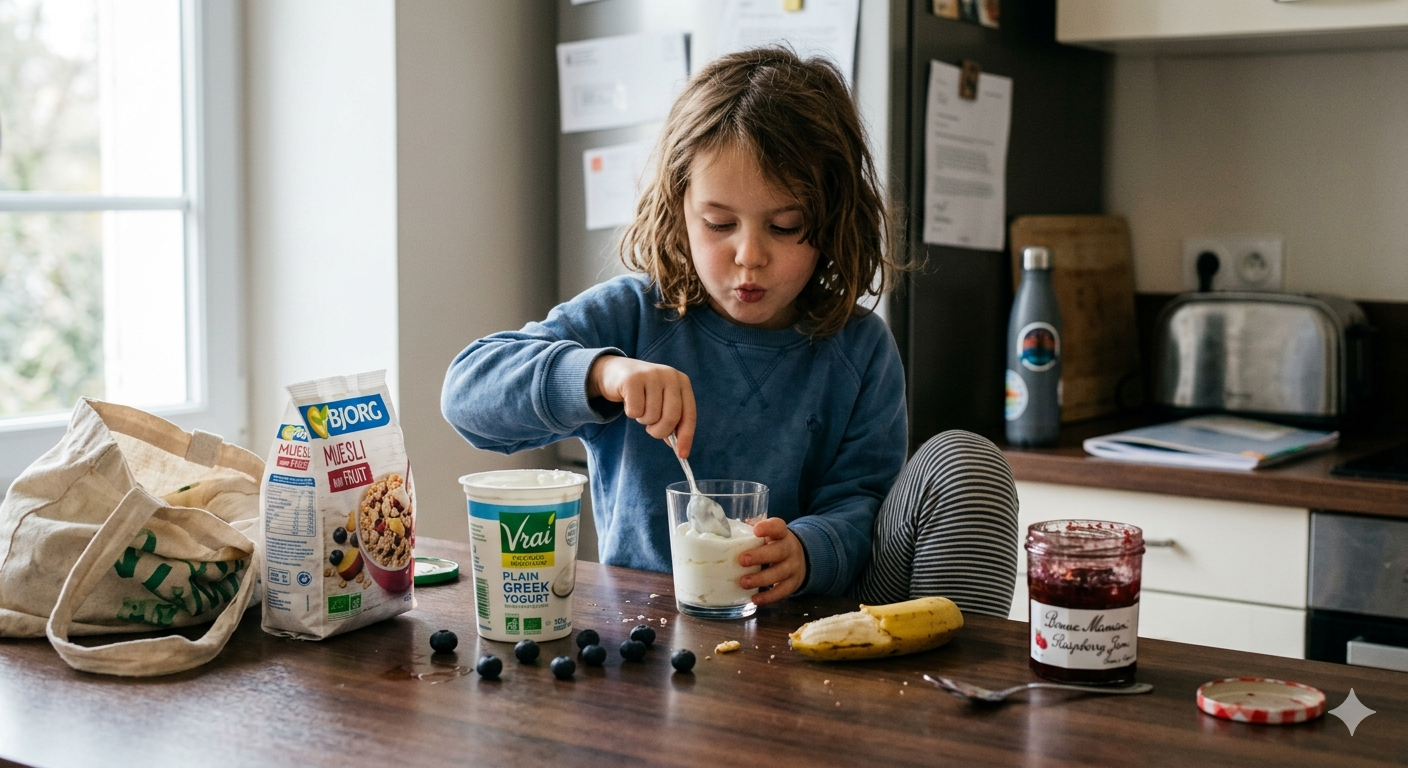
Greek yogurt instead of cookies after school. Peanut butter toast instead of sugary cereal. Fruit that was already washed and easy to grab. We started keeping boiled eggs in the fridge because they were quick. I even bought one of those giant water bottles everyone seems to own now because the kids drank more water when it felt “fun.”
Slowly, things shifted.
Not perfectly. We still ordered pizza on some Fridays. There were still birthday parties full of cupcakes and blue frosting. But the constant cycle of exhaustion and sniffles eased up.
Breakfast Changed More Than I Expected
There was one morning last fall that still sticks with me. We overslept. Everyone was scrambling. My son tried to leave for school with nothing but two bites of a cereal bar.
About three hours later, his teacher emailed me saying he seemed distracted and unusually tired in class.
I felt awful because I knew exactly why.
After that, breakfast became non-negotiable. Nothing fancy. We’re not one of those families making elaborate rainbow smoothie bowls before sunrise. Most mornings are messy and rushed.
But we figured out realistic options.
Scrambled eggs. Oatmeal with banana slices. Toast and fruit. Sometimes just a smoothie thrown together while someone searches for missing shoes. The point was consistency, not perfection.
And I noticed the difference faster than I expected.
The afternoon crashes got better. Homework became less emotional. He still complained about math, obviously, but the total meltdowns slowed down.
Food wasn’t magically fixing childhood. It was just giving his body something solid to work with.
The Mood Swings Were Real
One phase in particular nearly broke me.
Every afternoon felt tense. Someone was crying. Someone was angry. My son and daughter fought over absolutely everything. Homework turned into shouting matches over spelling words. I was exhausted before dinner even started.
Then one afternoon I looked at what they’d eaten after school: candy, chips, and one of those sugary drinks that somehow claims to contain vitamins while tasting like melted popsicles.
The crash afterward was brutal.
So we experimented a little. Cheese and crackers. Apples with almond butter. Hummus and carrots. Even simple popcorn worked better sometimes.
The house didn’t suddenly become peaceful like a commercial. Kids are still kids. But things leveled out. Less chaos. Less irritability. Fewer emotional explosions over tiny problems.
That surprised me more than anything.
Kids Notice What We Do
One evening I put broccoli on my son’s plate and told him he should eat some because it was healthy.
Without missing a beat, he looked at me and said, “You never eat it either.”
That one hurt because he was right.
Kids watch everything. Not just what we tell them, but what we actually do.
After that, we stopped treating healthy habits like punishment meant only for children. We started eating together more often instead of everyone scattering to different rooms. Phones stayed off during dinner most nights. The kids helped pick groceries.
One Saturday, my daughter insisted on arranging strawberries and yogurt into little cups she called her “restaurant snacks.” The kitchen was a disaster afterward. There was yogurt on the counter, blueberries on the floor, and somehow honey on a chair.
Still worth it.
She ate every single one proudly because she helped make them.
Every Family Is Different
That’s probably the biggest thing I learned through all of this.
There isn’t one perfect meal plan that works for every child. Some kids are picky. Some have allergies. Some go through phases where they suddenly hate foods they loved last week. My daughter changes her “favorite food” every few days like she’s updating a social media status.
What helped us most was focusing on small changes we could actually stick with long term.
Not perfection. Not guilt.
Just paying more attention.
A Final Thought From One Parent to Another
I wish someone had told me earlier that nutrition affects so much more than physical growth. It touches energy, concentration, mood, sleep, even how kids handle stressful days at school.
And the truth is, most parents are trying their best already. We’re busy. We’re tired. Sometimes survival dinners happen. Sometimes the easiest snack wins because you’re answering work emails while helping with homework and trying to remember if there’s clean laundry for tomorrow morning.
That’s real life.
You don’t have to transform everything overnight to make a difference. One better breakfast helps. One less sugary drink helps. A few balanced snacks during the week help.
Small things count more than people think.
I learned that slowly, one tired afternoon at a time.