Sign up with Google
 Sign in with Zoho

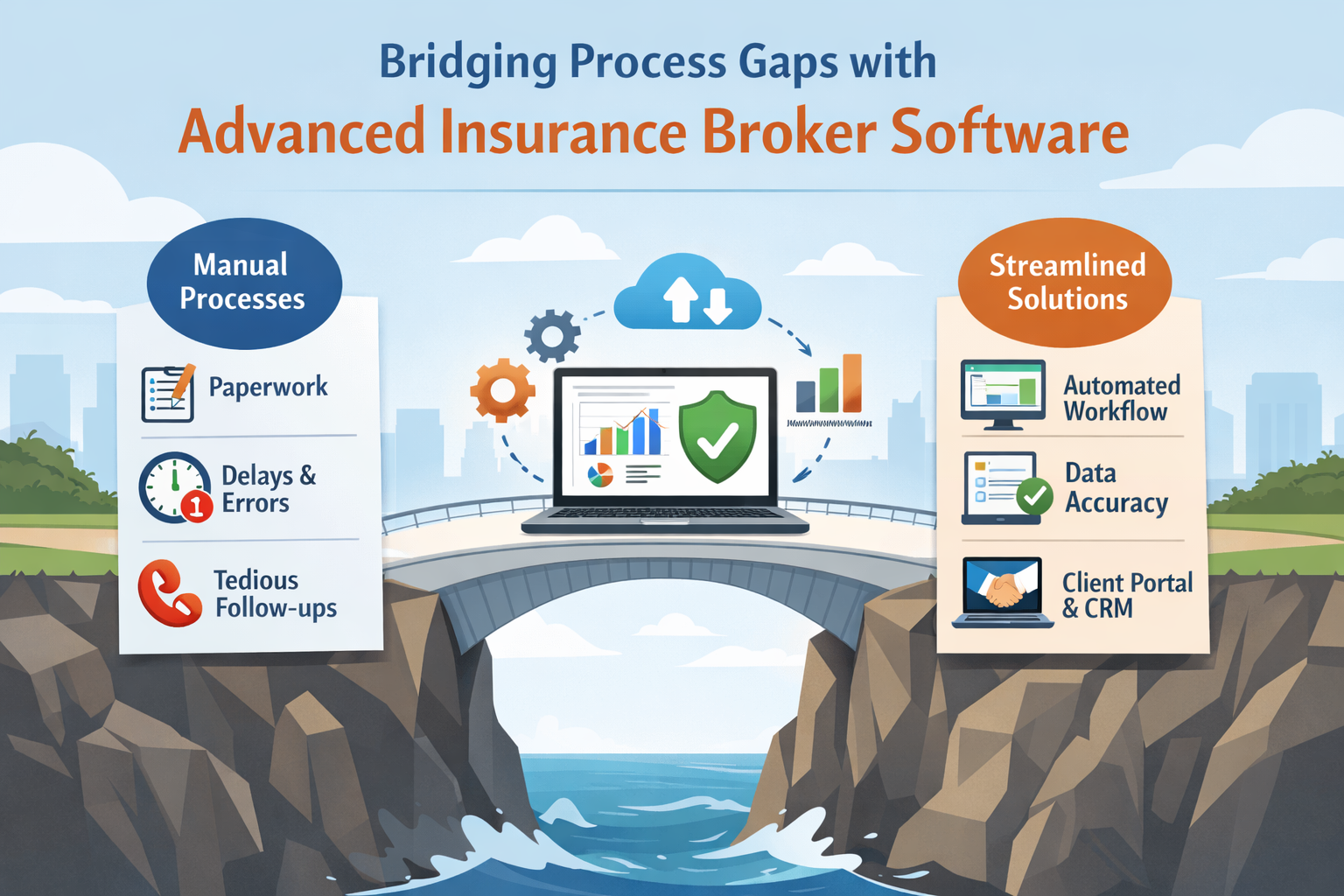
Clients who demand accuracy, speed, and transparency put pressure on insurance brokers. Nevertheless, a lot of brokers and agencies operate using manual procedures and disjointed workflows, which cause friction throughout the entire insurance lifecycle. These gaps turn into operational flaws that cause leads to fall through the cracks, client updates to be overlooked, and claims to stall.
Brokers and agencies find these issues unbearable as competitors set new standards for service. So, what's the solution? An insurance broker software driven by automation and AI. With this solution, brokers can rebuild their operations. This means every step, from lead capture to policy renewal, can be tracked, is data-driven, and consistently executed.
As per the latest reports, the insurance brokerage market is expected to reach the US $562.48 billion mark by 2031 at 9.38% CAGR. Technology plays an important role in fueling this growth. Wondering how? Let’s explore through this blog.
What Are the Common Process Gaps in Insurance Brokerage?
Even mature insurance broker firms struggle with hidden inefficiencies that sit between teams, systems, and external partners. These issues often stem not from a lack of effort, but from old processes that weren't built for today's digital needs. Here’s a closer look at the insurance broker process gaps:
1. Lead Management to Policy Issuance Gap
Many brokers still track leads in basic CRMs or spreadsheets, then type data into rating tools, carrier portals, and policy administration systems. This leads to:
- Missed or delayed opportunities when follow-ups rely on individual advisors' discipline rather than system-triggered alerts.
- Inconsistent handoffs between sales and operations, where critical risk details captured during discovery never reach underwriting. This leads to incomplete submissions and rework.
Think of a commercial lines broker who gets a complex property request by email. They capture partial details in a spreadsheet and forward attachments to a placement team. As needs change, there's no single source of truth. Thus, the path from potential client to signed policy becomes unclear and error prone.
2. Client Communication Breakdowns
Clients now expect “anytime, anywhere” access to information. But many insurance brokers use unstructured email threads and phone calls to handle updates, endorsements, and queries. This results in:
- When advisors must search through emails and computer files for the most recent details on a policy or claim, they take too long to reply.
- Service levels are inconsistent, as some customers receive prompt updates, while others only receive information when they report problems.
When there's no central record of interactions, it's hard to show what advice was given, keep everyone on the same page, or coordinate messages across teams in different time zones.
3. Slow Underwriting and Placement
Underwriting and placement often involve multiple stakeholders: sales reps, tech teams, insurance companies, and sometimes middlemen. When submissions are assembled manually, delays happen because:
- They have to enter the same data over and over into different insurance carrier portals and document forms, which takes longer and might lead to mistakes.
- Repeated requests for clarification due to missing or conflicting underwriting data, forcing underwriters to review files again instead of pricing the risk.
These delays frustrate clients and weaken brokers' negotiation power, as renewal dates and new business deadlines approach without firm terms in place.
4. Claims Handling Inefficiencies
Claims remain the most emotional point of contact for policyholders, yet the process often splits among brokers, TPAs, and insurers. Common issues include:
- Old-fashioned intake and sorting, where FNOL comes in by email or phone, then gets keyed into multiple systems.
- Clients have no real-time access to claim status, documents, or financial information, forcing them to chase updates.
This manual, opaque process weakens the broker's position as a trusted advocate and increases the likelihood of missed reserves, slower settlements, and arguments.
5. Scattered Compliance and Reporting
Insurance is subject to strict regulations, and brokers must demonstrate compliance with proof of advice, disclosures, remuneration, and data handling practices. When records are spread across email, shared drives, and old systems:
- Regulatory reporting becomes a reactive, manual task that takes up a lot of time and puts companies at risk of fines.
- Leaders don't get the latest information on key numbers. For example, how many policies lapse, how well they're selling additional products, or what customers are complaining about. This makes it hard to make good decisions.
When market rules or expectations change, disjointed processes make it even tougher to adjust accordingly.
6. Data Redundancy and Entry Errors
Many agents face a common problem with their broker software systems: the same data is copied into multiples systems, such as CRMs, policy systems, accounting tools, and spreadsheets. Typing in the same information repetedly at each step causes:
- More work and money spent, plus more mistakes in customer details on what the policies cover, or how much they cost.
- Trouble running accurate analyses of all policies because the data doesn't match up, is missing information, or hasn't been double-checked.
In today's world, where AI and smart data tools promise to give companies an edge, weak data foundations can cancel out many of the expected benefits.
If left unfixed, these problems snowball into longer quote-to-bind times, lost revenue, higher E&O risk, and a customer experience that doesn't meet the standards set by digital-native insurance broker companies. Advanced insurance broker software, powered by AI and automation, tackles these issues. It simplifies work processes and ensures compliance in daily tasks. The software also creates a single, analysis-ready data layer that enables quick, tailored client service.
How Does an Advanced Insurance Broker Software Bridge the Process Gaps?
Today's insurance broker software for brokers goes beyond just turning paper forms into digital ones. It changes how insurance brokers work, how connected data is used, configured workflows, and human-AI collaboration. This creates a stronger, more flexible organization where teams focus on advisory, while the software handles routine tasks and provides helpful insights when making decisions.
I. Unified Data Ecosystem
A key feature of an insurance broker platform is a single shared data model. It covers everything from leads and policies to claims, documents, and financials. When set up right:
- Each client's record shows a complete timeline of interactions, risks, and coverage. Additionally, sales, service, and claims teams can see this information.
- AI services work throughout the entire book, helping with risk sorting, predicting customer loss, and suggesting products, because data is uniform and stored in one place.
For instance, an insurance broker can spot mid-market clients whose payrolls are growing, and claims are happening frequently. Then, they can suggest ways to manage risk based on portfolio-wide patterns.
II. Automated Workflow Engines
Software for insurance brokers has built-in automation engines that turn operating steps into adjustable workflows that are triggered by specific events. These engines can:
- Send tasks to the right people when someone asks for a quote, a policy is close to renewal, or a claim reaches a certain amount, so the process doesn't rely on individual memory.
- Create documentation, reminders, and follow-up tasks based on rules, which reduces manual work and speeds up processes in underwriting, policy issuance, and renewals.
Brokers using such capabilities report the ability to quote and bind in a single client conversation, with documents issued in near real time rather than days later.
III. Integrated Communication Hubs
Modern insurance broker systems software replaces scattered email threads with organized multi-channel communication centers linked to client and policy files. These centers allow:
- Safe messaging, alerts, and file sharing through client portals and mobile apps, which builds a clear, trackable record of all interactions.
- AI chatbots and virtual assistants tackle basic queries and status checks 24/7, while sending complex issues to human advisors with full context.
This means clients get consistent, nonstop service without losing the personal touch that sets brokers apart from direct channels.
IV. Real-Time Analytics Dashboards
New broker systems embed analytics and AI models right into dashboards, bringing insights from occasional reports into everyday choices. With live dashboards:
- Managers monitor sales pipeline health, placement results, and claims patterns in detail, allowing proactive actions and smarter negotiations with insurance carriers.
- Advisors get alerts about cross-sell opportunities, emerging risks, or at-risk accounts. This helps them interact with clients better.
For example, AI can spot clients who might stop using the service and suggest ways to keep them, like reviewing their coverage or offering different program structures.
V. Document Management Systems
Processes that use lots of documents, such as submissions, endorsements, and claim correspondence, work better with centralized, version-controlled storage built into the insurance broker software. Some advanced ways to manage documents include:
- Smart intake and sorting where AI pulls out structured information from proposals, policy wording, and loss records to fill in system fields and cut down on manual typing.
- Permission-based entry and activity logs that ensure the right team members can view, edit, and share documents, boosting both productivity and control.
In insurance claims, this lets adjusters and customer support teams work on the same file, with all proof and messages chronologically organized and searchable.
VI. Compliance Automation
Compliance automation in broker insurance software integrates regulatory requirements into daily workflows instead of treating them as afterthoughts. Key features include:
- Automatic capture and storage of advice records, disclosures, and approvals, which makes audits easier and lowers the chance of non-compliance.
- Scheduled, rule-based reporting that extracts data straight from the underlying system, which removes the need for manual compilation and boosts accuracy for regulators and carriers.
Insurance brokers can maintain strong control environments using advanced tools to monitor unusual patterns. In the meantime, brokers can better focus on client-facing tasks.
Final Words
Closing the process gaps in insurance brokerage isn't just about boosting productivity anymore. It helps insurance brokers stay ahead of the curve and deliver the experience that the customer truly seeks. An insurance broker platform that unifies data, automates tasks, and utilizes AI helps insurance broker companies provide faster, transparent service while improving compliance and profits.
As insurance brokers adopt the latest tools, they're shifting their focus. Instead of just handling paperwork, they're now advising clients on risks and exposures. In this race, the most successful companies will combine human judgment with intelligent automation in their chosen software for insurance brokers. By doing so, they turn process gaps into opportunities for differentiation, strengthen client relationships, and drive sustainable growth.