Sign up with Google
 Sign in with Zoho

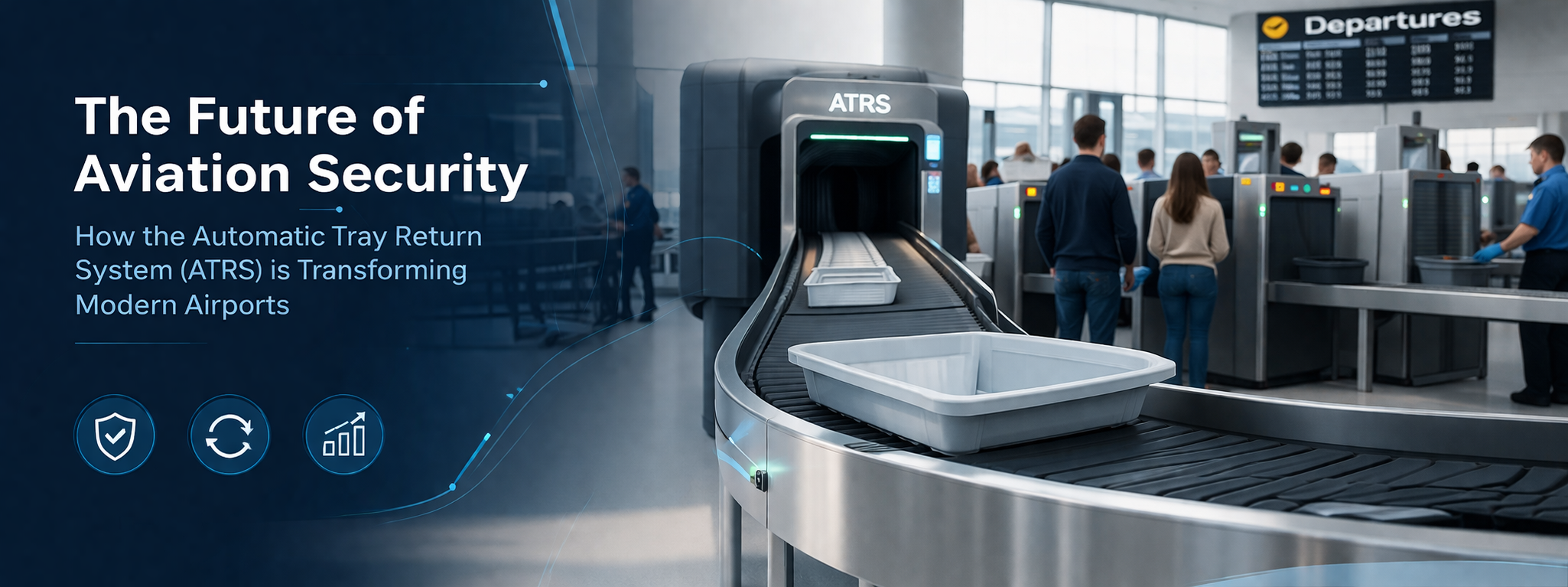
The global aviation industry is currently navigating a period of unprecedented growth. As passenger volumes soar toward pre pandemic peaks and beyond, the pressure on airport infrastructure has never been more intense. Among the various touchpoints in a traveler’s journey, the security checkpoint remains the most significant bottleneck a place where anxiety often spikes and efficiency frequently stalls. To combat this, airports are increasingly turning to automation to streamline operations without compromising safety.
At the heart of this technological shift is the Automatic Tray Return System (ATRS). Designed to optimize the movement of cabin baggage through security screening, this system is no longer a luxury but a necessity for high traffic hubs. By integrating sophisticated robotics and smart logistics, ATRS addresses the physical and operational constraints that have plagued traditional security lanes for decades.
The Evolution of Security Screening
For years, the standard security lane relied on manual labor. Passengers would wait for a stack of plastic trays, lift them onto a roller bed, and push them toward the scanner. Once screened, a security officer or a dedicated staff member would have to manually collect the empty trays from the end of the lane, stack them on a trolley, and wheel them back to the start of the process.
This manual cycle created several points of failure:
- Physical Strain: Staff members faced repetitive strain injuries from lifting heavy stacks of trays.
- Congestion: The "re stacking" process often blocked passenger movement or required the lane to be temporarily closed.
- Inefficiency: The speed of the lane was dictated by the slowest human element, leading to unpredictable wait times.
The introduction of the Automatic tray return system for Airport operations has effectively eliminated these hurdles. By automating the "closed loop" cycle of the tray, airports can maintain a constant flow of baggage, ensuring that the scanner is always fed and the passenger side is always stocked.
Understanding the Mechanism: ATRS for X Ray Baggage Scanner Integration
The true power of an ATRS lies in its seamless integration with the screening hardware. When we discuss an ATRS for X Ray Baggage Scanner, we are looking at a unified ecosystem. The system is typically composed of three primary zones: the induction area, the screening tunnel, and the reclaim area.
1. The Induction Area
This is where the passenger experience begins. Modern ATRS designs feature multiple "parallel loading" stations. Unlike traditional single file lines, parallel loading allows three to four passengers to prepare their trays simultaneously. If one passenger needs more time to remove their laptop or liquids, the person behind them can bypass them and place their tray on the motorized conveyor. This simple change in geometry significantly increases the "throw rate" the number of trays entering the system per hour.
2. The Screening and Diversion Zone
As trays move through the X ray machine, the ATRS works in tandem with the security software. If an image is flagged for a secondary search, the system automatically diverts that specific tray to a separate "reject" lane. This ensures that the main flow of "cleared" bags continues uninterrupted. High speed diverters use sensors to track each tray's unique ID (often via RFID), ensuring 100% traceability.
3. The Reclaim and Return Loop
Once passengers collect their items, they slide the empty tray into a return slot. Gravity or a motorized vertical lift then takes the tray to an under floor or overhead conveyor belt. This hidden return path whisks the trays back to the beginning of the lane. This is where companies like Krystalvision Image Systems Pvt. Ltd. play a pivotal role, providing the integrated imaging and logistical technology required to make these complex handovers appear effortless to the end user.
Key Benefits of ATRS Implementation
The transition to an automated system offers a multifaceted return on investment, impacting security, passenger satisfaction, and the bottom line.
Enhanced Security and Focus
When security personnel are freed from the manual task of moving trays, they can dedicate their full attention to the X ray monitors. Automation reduces "lane fatigue," allowing officers to remain sharp and focused on threat detection. Furthermore, because the trays move at a consistent, controlled speed, the X ray images are of higher quality, reducing the need for re scans.
Increased Throughput
A traditional manual lane can process roughly 150 to 180 passengers per hour. In contrast, a lane equipped with an ATRS can handle upwards of 300 to 400 passengers per hour. This doubling of capacity allows airports to process more people in the same physical footprint, delaying or even eliminating the need for costly terminal expansions.
Improved Passenger Experience
Long security lines are a primary driver of negative airport reviews. ATRS reduces wait times and provides a calmer, more organized environment. Features like "automatic tray dispensers" mean passengers never have to hunt for a tray or wait for a staff member to bring a stack over. This creates a sense of "self service" autonomy that modern travelers appreciate.
Operational Cost Savings
While the initial capital expenditure for an ATRS is higher than manual rollers, the long term operational savings are substantial. By reducing the number of staff required per lane to handle logistics, airports can reallocate human resources to more critical security functions or customer service roles. Additionally, the durability of automated conveyors reduces the wear and tear on the trays themselves.
Technological Components of a High Performance ATRS
To achieve the 1300 word depth of understanding required for such a system, one must look under the hood at the components that drive these machines.
- RFID Tracking: Every tray is embedded with a Radio Frequency Identification tag. This allows the system to pair a passenger's tray with their specific X ray image. If a bag is flagged, the system knows exactly which tray it is, preventing "mix ups" in the secondary search area.
- Variable Speed Drives (VSD): These allow the conveyor belts to speed up or slow down based on real time demand. If the reclaim area is full, the induction belt slows down to prevent a pile up.
- Anti Bacterial Surfaces: In the post pandemic era, many ATRS trays and belts are treated with antimicrobial coatings or integrated with UV C sterilization tunnels that disinfect the trays as they move through the return loop.
- Smart Sensors: Photoelectric sensors monitor the gap between trays. This prevents collisions and ensures that the X ray machine has enough "dead space" between bags to provide a clear image for the operator.
Challenges and Considerations
Despite the clear advantages, implementing an ATRS is not without challenges. It requires careful planning regarding:
- Floor Space: ATRS lanes are typically longer than manual lanes due to the parallel loading zones and the diversion loops. Airports must often reconfigure their floor plans to accommodate the hardware.
- Maintenance: Being a mechanical system, it requires a rigorous preventative maintenance schedule. Sensors must be calibrated, and belts must be checked for tension to ensure 24/7 uptime.
- Passenger Education: While intuitive, the shift to parallel loading can be confusing for infrequent travelers. Clear signage and "floor ambassadors" are often needed during the initial rollout phase.
The Global Perspective: A New Standard
Airports in Europe and Asia have been early adopters of ATRS technology, with hubs like London Heathrow, Singapore Changi, and Dubai International setting the benchmark. However, the rest of the world is catching up fast. Regulatory bodies are increasingly recommending automation as a way to standardize security protocols across borders.
As we look to the future, the integration of Artificial Intelligence (AI) with ATRS will be the next frontier. Imagine a system that can predict a "bottleneck" before it happens by analyzing the gait and luggage volume of approaching passengers, automatically adjusting the belt speed to compensate.
Conclusion
The Automatic Tray Return System (ATRS) represents a paradigm shift in how we view airport security. It transforms a chaotic, manual process into a streamlined, data driven operation. By utilizing an ATRS for X Ray Baggage Scanner setup, airports can ensure that security is not a barrier to travel, but a fluid part of the journey.
As technology continues to advance, the synergy between hardware and software will only deepen. Companies providing these solutions are not just selling machinery; they are providing the peace of mind that comes with knowing that every bag is tracked, every tray is accounted for, and every passenger is moving toward their destination faster than ever before. In the high stakes world of aviation, the Automatic tray return system for Airport utility stands as a testament to the power of automation to improve our daily lives.
Through the efforts of innovators like Krystalvision Image Systems Pvt. Ltd., the vision of a "frictionless" airport is becoming a reality. The result is a safer, faster, and more pleasant experience for everyone who takes to the skies.