Sign up with Google
 Sign in with Zoho


Most children's books open with something ordinary: a school morning, a family dinner, a quiet afternoon. The Adventures of Sonny, Gogo, and Tobo by Jennifer Hashmi opens on a birthday, and before the candles are even cold, the world tilts sideways in the best possible way.
Sonny receives a gift that looks like a clown doll. But when he puts it on his pillow at bedtime and whispers goodnight, the "toy" sits up and says, "I'm not a clown. I'm a Pongo."
And just like that, a sky island fantasy story is born, one that belongs firmly in the tradition of imaginative children's literature, yet carries its own gentle, original heart.
What Is Pongoland, Exactly?
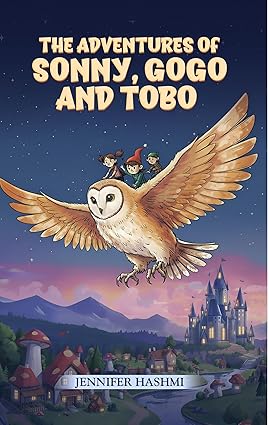
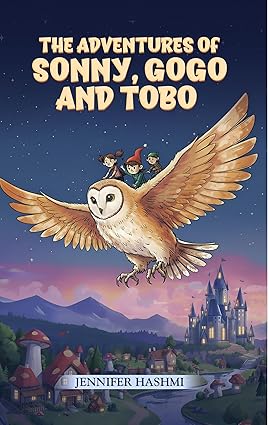
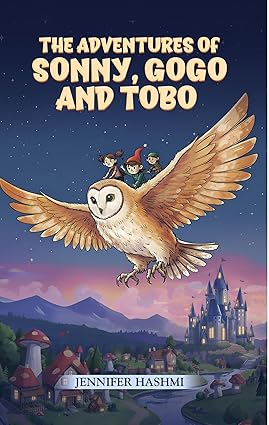
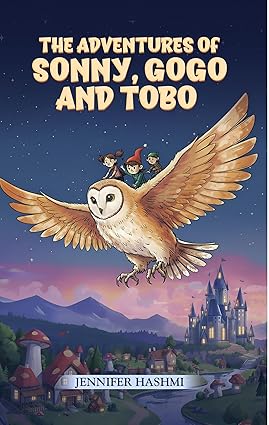
Pongoland is an island that floats in the sky. It appears ahead of a traveler "like a bright light", solid where clouds are soft, alive where the sky is empty. There are pink and yellow and green and blue houses dotting the hillsides, a palace with high towers at the top, and meadows where an owl named Goggles lands with barely a sound.
This is not the cold, grand fantasy of dragons and prophecies. It is something warmer and more domestic, a world where a boy's mother offers fruit drinks and slices of cake, where the King sits on a throne but speaks kindly, and where children solve their own problems with a little bravery and a lot of quick thinking.
The archipelago, a collection of sky islands spread across this different dimension, is one of the most imaginative settings in recent values-based children's literature. Each island has its own character, its own craft, its own produce. Some are wealthier than others. Some face problems that their neighbors know how to solve. And slowly, across the stories, the idea of cooperation between islands takes shape not through war or politics, but through friendship.
The Three Boys at the Center of It All
Sonny is a child from our world, curious, courageous when it matters, and genuinely kind. Gogo is his Pongo companion, practical and loyal, and he has a younger brother, Tobo, who has a remarkable talent for getting into trouble. The trio works beautifully together precisely because they are so different.
What makes this a great educational fantasy fiction is that the children are never passive. In every story, there is a dilemma. Something is lost, someone is trapped, and a mystery has appeared overnight. The adult characters, wise ones like the healer Madame Fulati, offer guidance, but the boys do the solving. Readers who love books about friendship and cooperation will recognize something real in how Sonny, Gogo, and Tobo navigate their world: they argue sometimes, they make mistakes, they pull each other forward.
This is what Hashmi means when she writes that the stories are meant to show that "we are not just puppets. We have choices that can affect the world in which we live."
Magic That Whispers Rather Than Shouts
One of the most thoughtful decisions in this chapter book for middle-grade readers is how it handles magic. There are no dramatic spells, no dark sorcerers, no wands raised in battle. The magic in Pongoland is, as Hashmi herself describes it, discreet.
Madame Fulati keeps a herb garden. She makes poultices, powders, and syrups that heal the people of all the islands. Her herbs have properties that seem impossible, but Hashmi leaves open the possibility that what looks like magic is simply "advanced science." That ambiguity is intentional and lovely. It tells young readers that wonder and reason are not enemies.
This gentle approach makes the book a safe, wholesome fantasy for children of all temperaments, especially those who are sensitive to frightening content. The world portrayed is never in danger of collapsing. Even when things go wrong, and they do, delightfully, the tone remains warm. The stakes feel real to the characters without feeling terrifying to the reader.
A World That Teaches Without Lecturing
Parents looking for moral stories for children often face a frustrating paradox: books that are clearly trying to teach something tend to feel preachy, which means children tune them out. The Adventures of Sonny, Gogo, and Tobo sidesteps this neatly.
The lessons are embedded in the problems. Consider what happens across the broader arc of the stories:
- Economic inequality between islands is introduced not as a political lecture but as something the boys observe and want to do something about.
- Cooperation emerges naturally when one island has resources another lacks, and characters on both sides must figure out how to share.
- Moral growth happens incrementally. Sonny becomes braver, Gogo becomes more patient, and Tobo (slowly, adorably) becomes less impulsive.
- Problem-solving is always at the center: the boys face a dilemma in each story and work through it step by step.
This is values-based children's literature doing what it does best, reflecting good values through the texture of the story rather than through characters who stop to explain the lesson.
The Human Experience in a Sky Island World
There is something in Hashmi's Pongoland that adults may recognize even as children delight in the surface magic: the longing for a place where people treat each other well.
Pongoland's society is, at its core, a vision of what a human community could look like. The King is respected but not feared. Resources are shared. Different people visit, trade, and help one another. Mistakes happen, but they are met with problem-solving rather than punishment. When Sonny has to return to his own world, he feels genuinely sad, not because Pongoland is more exciting, but because it is kinder.
That sadness is quietly profound. Every child who has ever felt the end of a good book like a small grief will understand it perfectly.
Who Should Read This Book?
The Adventures of Sonny, Gogo, and Tobo works beautifully as a children's fantasy-adventure book for readers aged roughly 7 to 12. The early chapters are shorter and simpler, designed to draw in new readers. As the book progresses, the chapters grow longer and richer, which mirrors how Sonny, Gogo, and Tobo themselves grow across the narrative.
It is an imaginative children's series for readers who:
- Love a magical world for young readers that feels cozy rather than overwhelming
- Want a sky island fantasy story with genuine emotional warmth
- Are ready for a chapter book that asks them to think, not just follow action
- Appreciate characters who grow and change across a long story
Teachers and parents looking for classroom reads or bedtime chapters will find this book holds up beautifully over multiple sittings.
A Final Word Jennifer Hashmi has built something rare in Pongoland: a magical world that uses the tools of fantasy sky islands, talking Pongo folk, a wise-woman healer, and an owl who flies between dimensions not to dazzle, but to illuminate. The adventures of Sonny, Gogo, and Tobo matter because the boys matter, and because the world they move through is one that quietly insists things could be better than they are.
That is a powerful message to place inside a children's book. It lands all the more gently for being wrapped in fruit drinks, cake, and the sound of an owl's wings in the dark.
Ready to take the journey to Pongoland? Pick up The Adventures of Sonny, Gogo, and Tobo by Jennifer Hashmi and introduce a young reader in your life to a world where kindness is the most powerful magic of all. Share this article with a parent, teacher, or librarian who might be looking for their next great read-aloud and let the archipelago in the sky work its quiet wonder.