
 Sign up with Google
 Sign in with Zoho
Your knees hurt every day. You've tried physiotherapy, painkillers, and steroid injections. Nothing has lasted.
Your doctor mentions knee replacement. But
you're not ready for that, and honestly, you shouldn't have to be.
Genicular Artery Embolization (GAE) is a newer, minimally invasive procedure that reduces chronic knee pain without surgery, without general anaesthesia, and without a lengthy hospital stay.
Most patients in Chennai have never heard of it. That's the problem this article aims to fix.
Here, you'll learn exactly what GAE is, how it works, who it helps, and why it's quickly becoming one of the most talked-about options for knee pain treatment without surgery.
If you have moderate knee osteoarthritis and feel stuck between "injections don't work" and "I don't want surgery," this is written for you.
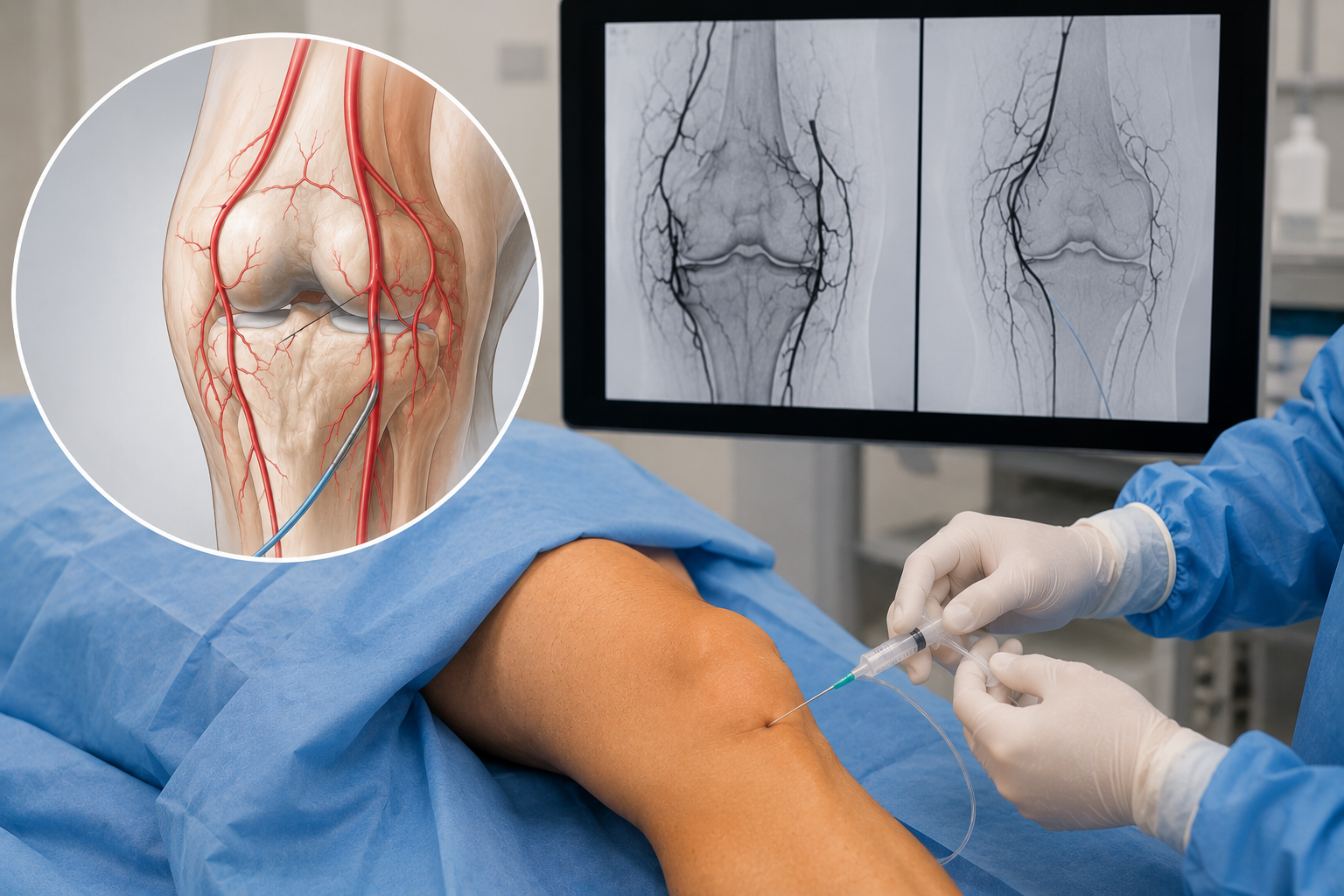
What is Genicular Artery Embolization? Genicular Artery Embolization (GAE) is an image-guided, catheter-based procedure where tiny particles are injected into the arteries supplying an inflamed knee joint, reducing abnormal blood flow, lowering inflammation, and relieving chronic pain without any surgical incision.
Why Knee Osteoarthritis Pain Is Harder to Treat Than Most People Think
Knee osteoarthritis is not just a cartilage problem. That's the part most patients and even some doctors miss.
Yes, cartilage wears down over time. But a significant part of the chronic pain comes from inflammation driven by abnormal blood vessel growth inside the joint lining. The body grows new, leaky blood vessels around the inflamed tissue. These vessels keep the inflammation cycle running, which is why painkillers and injections only provide short-term relief.
According to the World Health Organization (2023), osteoarthritis affects over 528 million people globally. In India, knee osteoarthritis is the most common joint disorder in adults above 45.
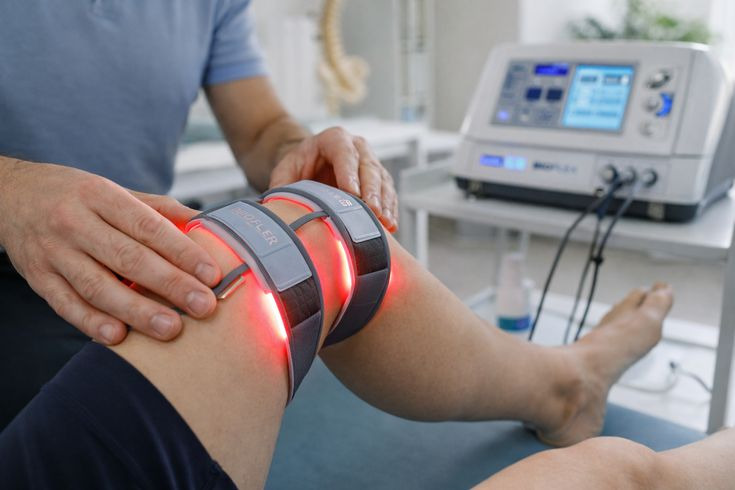
Why standard treatments often fall short:
- Painkillers reduce symptoms but do not address inflammation at the source
- Steroid injections provide relief for 2–3 months before wearing off
- PRP injections help some patients but have inconsistent results
- Physiotherapy builds muscle support but cannot reverse vascular-driven inflammation
- Knee replacement is effective but carries surgical risks and a long recovery
The key issue is this: none of these treatments target the abnormal blood vessels feeding the inflammation. GAE does.
Pro Tip: If your knee feels warm to the touch, not just painful, that warmth is a sign of active vascular inflammation. This is precisely the mechanism GAE targets. Patients with this type of pain tend to respond especially well.
Key Takeaway: Chronic knee pain in osteoarthritis is partly vascular. Treatments that ignore this rarely give lasting relief. GAE addresses the inflammation at its blood supply, which is why it works when other options haven't.
What Exactly Happens During a GAE Procedure
GAE works by reducing blood flow to the abnormal vessels, causing knee inflammation. Less blood to those vessels means less inflammation and less pain.
The procedure is performed by an interventional radiologist using live X-ray imaging for precise guidance throughout.
Step-by-step: The GAE procedure
- Pre-procedure MRI and angiogram planning:- Maps the arteries supplying the knee
- Local anaesthesia:- Applied at the wrist or groin. No general anaesthesia needed
- Catheter insertion:- A thin, flexible tube enters through a 2mm skin puncture
- Navigation to genicular arteries:- Live X-ray guides the catheter to the target vessels
- Particle injection:- Microscopic embolic particles are released to reduce blood flow to the inflamed tissue
- Catheter removed:- No stitches needed. A small bandage covers the entry point
- Walk out the same day:- Most patients go home within a few hours
The whole procedure takes 60–90 minutes. Most patients experience noticeable pain improvement within 2–4 weeks as inflammation reduces.
GAE vs Knee Replacement - side by side:
Pro Tip: GAE does not rebuild cartilage. It reduces the vascular inflammation, causing pain. So your X-ray after GAE will look the same, but your pain level will be significantly lower. Don't judge the result by imaging alone.
Key Takeaway: GAE is a precise, same-day procedure with a clear mechanism. It reduces pain by addressing the vascular inflammation driving it - not by changing the joint structure.
Who Is Getting GAE in Chennai - And What Results Look Like
GAE is most transformative for a specific group of patients - those caught between "injections aren't working anymore" and "I'm not ready for surgery."
This group is larger than most people realise.
Consider a common scenario: a 58-year-old man with Grade 3 knee osteoarthritis. His orthopaedic surgeon has told him he's "not quite at the stage" for replacement. But steroid injections have stopped lasting. He can't walk more than 15 minutes without stopping. He's cutting back on work. His quality of life is dropping steadily.
He's offered more injections. Or told to wait until the OA progresses enough to justify surgery.
Neither option actually helps him now.
This is exactly the gap that GAE fills. Specialists like Dr. Ravindran, an Endovascular and Interventional Radiologist at irdoctor, use Doppler imaging and MRI-based planning to assess whether the patient's knee pain has a vascular component — and whether GAE is the right intervention. This imaging-first approach means patients receive a treatment matched to their actual pathology, not just their symptom severity score.
A 2022 randomised controlled trial published in Radiology found that GAE produced significant pain reduction in 73% of patients at 6 months, compared to 49% in a sham procedure group. These are strong numbers for a non-surgical intervention.
Pro Tip: Ask your doctor to specifically assess whether your knee shows signs of synovial hypervascularity, abnormal blood vessel growth in the joint lining. This is visible on MRI and is the clearest predictor of a good GAE response.
Key Takeaway: GAE delivers real, measurable results for the right patients. The key is proper candidate selection through imaging, not just clinical scoring.
Who Is a Good Candidate for GAE, and Who Isn't
GAE is most effective for patients with Grade 2 or Grade 3 knee osteoarthritis who have not responded to conservative treatment. Not everyone qualifies, and a good specialist will tell you clearly if another route suits you better.
GAE is well suited for you if:
- You have moderate knee OA (Grade 2–3 on Kellgren-Lawrence scale)
- Steroid or PRP injections have stopped giving meaningful relief
- You want to delay or avoid knee replacement
- Your knee feels warm, swollen, or inflamed regularly
- You are considered high surgical risk due to age, diabetes, or heart conditions
- You want a same-day, walk-out procedure with minimal downtime
GAE is less suitable if:
- You have Grade 4 OA with complete bone-on-bone contact
- Your pain is primarily mechanical, clicking, locking, or instability
- You have a ligament tear or meniscus injury requiring structural repair
- You have an active joint infection or severe arterial disease in the leg
Common mistake: Some patients push for GAE when they actually need surgery, and some avoid surgery when GAE is no longer sufficient. The honest answer always comes from proper imaging and a specialist who will tell you the truth either way.
Pro Tip: If you're unsure whether you're a candidate, get a weight-bearing X-ray and an MRI. Then ask specifically: "Does my imaging show synovial inflammation consistent with a GAE response?" That question will get you a much more useful answer than "Should I try GAE?"
Key Takeaway: GAE is the right choice for a specific patient profile. Imaging confirms who benefits most. When it's the right match, results are significant — and lasting.
What to Expect After GAE Recovery and Results
Recovery after GAE is straightforward and fast compared to any surgical option.
First 48 hours: Mild soreness at the catheter entry site. Some patients experience temporary knee aching as the body responds to the procedure. This is normal and settles quickly.
Days 3–7: Most patients return to light daily activity. Walking is encouraged. Avoid strenuous exercise or heavy lifting for the first week.
Weeks 2–4: Pain reduction begins. Many patients notice their morning stiffness improving first. Full anti-inflammatory effect builds gradually as the abnormal vessels reduce in activity.
1–3 months: Peak benefit is typically reached by this point. A follow-up MRI or ultrasound confirms reduction in synovial vascularity.
How long do results last? Clinical data shows GAE results last 12–24 months in most patients. Some benefit for longer. If symptoms return, the procedure can be repeated.
After GAE, most patients are advised to:
- Continue physiotherapy to strengthen knee-supporting muscles
- Manage weight — every kilogram lost reduces knee load significantly
- Use anti-inflammatory medication as needed during the early weeks
- Attend follow-up imaging at 3 months to confirm treatment response
Pro Tip: GAE is not a standalone cure. Patients who combine it with a structured physiotherapy programme consistently report better long-term outcomes than those who rely on the procedure alone. Think of GAE as resetting the inflammation physiotherapy is what keeps it from returning.
Key Takeaway: Recovery is fast, results build over weeks, and combining GAE with physiotherapy significantly extends the benefit. Most patients return to normal daily life within 1–2 weeks.
FAQ: People Also Ask About Genicular Artery Embolization
How does Genicular Artery Embolization reduce
knee pain?
Genicular Artery Embolization GAE works by injecting microscopic particles
into the arteries supplying abnormal, inflamed blood vessels in the knee joint.
Reducing blood flow to these vessels lowers inflammation in the joint lining.
Less inflammation means less pain — without removing or replacing any joint
structure. Results develop gradually over 2–4 weeks as the inflammatory cycle
is interrupted.
What is the success rate of GAE for knee
osteoarthritis?
Clinical trials show GAE achieves significant
pain relief in 70–80% of patients with moderate knee osteoarthritis. A 2022 RCT
published in Radiology reported 73% meaningful pain reduction at 6 months.
Results are strongest in patients with Grade 2–3 OA and imaging-confirmed
synovial inflammation, which is why proper candidate selection matters so
much.
Why is GAE better than steroid injections for
chronic knee pain?
Steroid injections reduce inflammation for
2–3 months, then wear off. They don't address the abnormal blood vessels
sustaining that inflammation. GAE targets those vessels directly, producing
longer-lasting relief. It's not that injections are useless; they are a
reasonable first step. But when they stop working, GAE is the logical next
intervention before considering surgery.
When should I consider GAE over knee
replacement surgery?
Consider GAE when you have Grade 2–3
osteoarthritis, steroid or PRP injections have failed, and you are not yet at
the bone-on-bone stage that typically warrants replacement. GAE is also worth
considering if you are elderly, diabetic, or at higher surgical risk. It is a
bridge, not a bypass, that can delay or, in some cases, eliminate the need for
replacement.
Which type of doctor performs Genicular Artery Embolization in Chennai? GAE is performed by interventional radiologists specialists trained in image-guided, catheter-based procedures. It is not performed by orthopaedic surgeons. When searching for GAE in Chennai, look specifically for an interventional radiologist with experience in musculoskeletal embolization and access to advanced fluoroscopy and MRI planning facilities.
Conclusion: You Have a Real Option Between Injections and Surgery
Knee pain does not have to follow a fixed path from injections to surgery to replacement.
Genicular Artery Embolization sits in the middle of that path and offers something neither injections nor surgery can: a targeted, minimally invasive solution to the vascular inflammation that keeps pain going.
It is same-day. It is a local anaesthesia only. Recovery takes days, not months. And for the right patient, it works.
Here's what to do if you think GAE might be right for you:
- Get a weight-bearing knee X-ray and MRI if you don't have one
- Ask your doctor whether your imaging shows synovial inflammation
- Request a referral to an interventional radiologist for a GAE assessment
- Ask specifically: "Am I a Grade 2–3 candidate for Genicular Artery Embolization?"
You deserve a full picture of your options before any decision is made. One conversation with the right specialist this week could change the treatment path you've been on for years.