
 Sign up with Google
 Sign in with Zoho

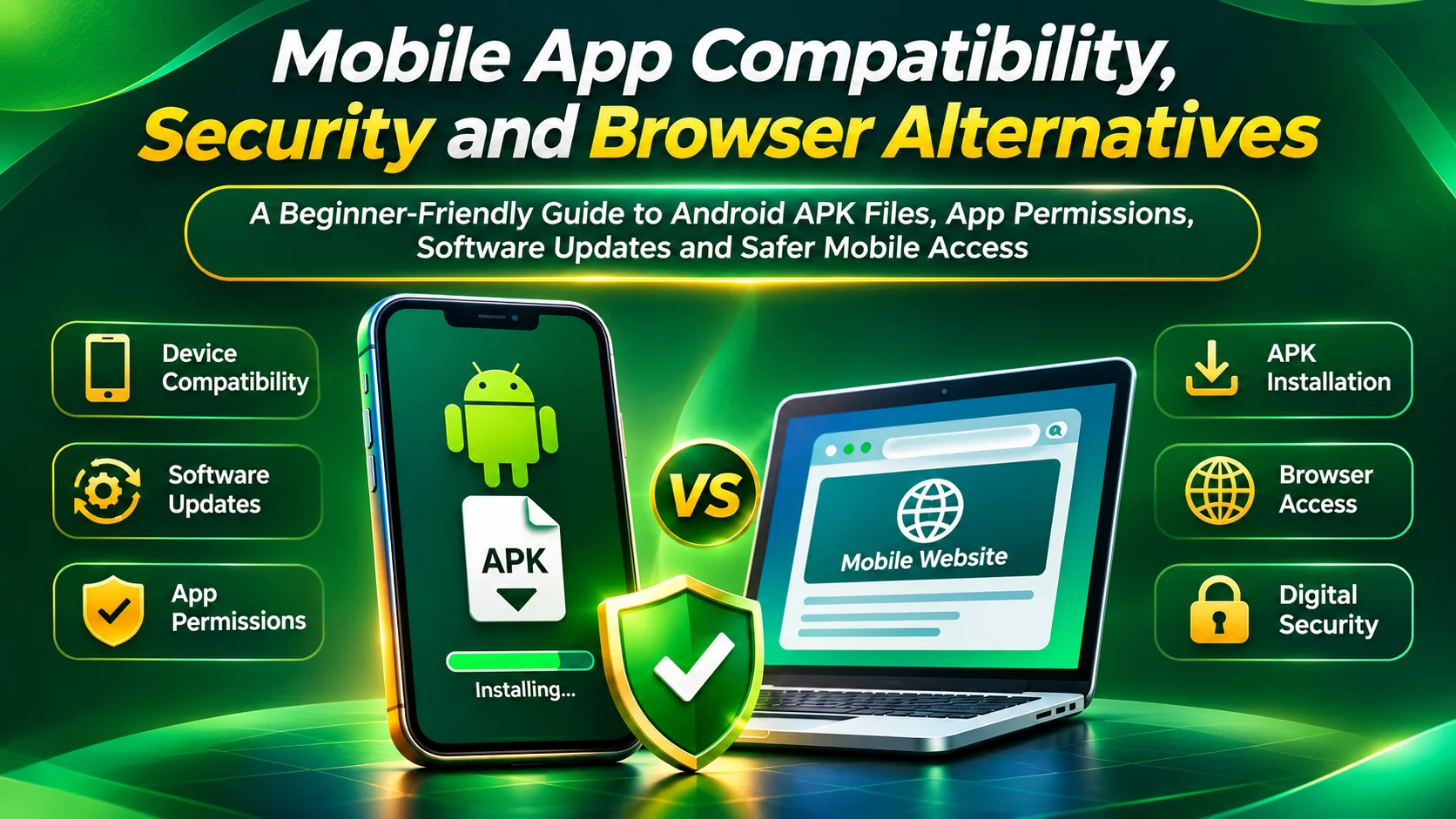
Mobile technology has made digital services accessible through smartphones, tablets and other portable devices.
Users can often choose between installing an application and opening a mobile-friendly website.
Although both methods may provide access to similar information, they differ in compatibility, storage requirements, permissions and update processes.
Understanding these differences is useful when evaluating unfamiliar digital services.
Why Does Mobile Compatibility Matter?
Applications are developed for particular operating systems and device requirements.
An Android application may require a minimum system version or specific hardware capabilities.
A mobile website, by comparison, generally depends on browser compatibility and responsive design.
Neither approach guarantees that every device will support every feature.
What Are the Main Differences Between Apps and Websites?
Applications are installed on devices and may integrate with operating-system functions.
Mobile websites operate through browsers and can often be accessed without a separate installation.
Applications may store local data and request device permissions.
Websites may also store cookies, cache information and request browser permissions.
The practical differences depend on how each service is developed.
Why Do Some Android Apps Use APK Files?
APK files are packages used for Android application installation.
Some publishers distribute APK files directly through websites rather than recognized app stores.
This method can be legitimate, but users should verify the publisher and download source.
Unfamiliar websites may distribute modified or outdated files.
How Can Users Evaluate an APK?
A careful review should consider several questions.
Is the publisher identifiable? The website should provide clear information about the application developer.
Is the version current? Users should compare the file with documented release information.
Are the permissions appropriate? Requests for device access should relate to the application's purpose.
Is there a reliable update process? Users should know how newer versions are distributed.
Are support details available? Verified support channels can help resolve technical problems.
What Happens When an Application Is Incompatible?
An application may fail to install because of operating-system restrictions, insufficient storage or incomplete downloads.
Other problems can include package-signature conflicts and unsupported device features.
Users should examine error messages and confirm compatibility before attempting another installation.
Downloading replacement files from unfamiliar sources can introduce unnecessary security risks.
Can a Mobile Website Be a Practical Alternative?
Yes. Many services provide responsive websites designed for smartphone screens.
Browser access may be useful when an application is unavailable or when users prefer not to install additional software.
However, mobile websites still require appropriate security practices.
Users should verify website addresses, maintain updated browsers and understand privacy settings.
What Can Users Learn From Mobile Access Documentation?
An informative mobile access page should explain supported devices, installation requirements, software versions and troubleshooting.
The Gold365 Green App information page provides an example of a website discussing Android APK access and mobile browser alternatives.
The associated platform involves real-money gaming. Such services carry financial risks and may be restricted by local laws.
Technical accessibility should therefore not be interpreted as confirmation that participation is legally permitted.
Why Is Digital Awareness Important?
Mobile security depends on a combination of publisher practices, operating-system protections and user decisions.
Understanding software distribution, application permissions and update procedures helps people recognize potential risks.
The most useful approach is to evaluate digital services through clear, verifiable information rather than relying on unsupported security claims.
Choosing Technology With Greater Awareness
Applications and mobile websites serve different purposes.
The appropriate choice depends on device compatibility, accessibility requirements, privacy preferences and security considerations.
By understanding these differences, users can make better-informed decisions about how they access digital information.