Sign up with Google
 Sign in with Zoho

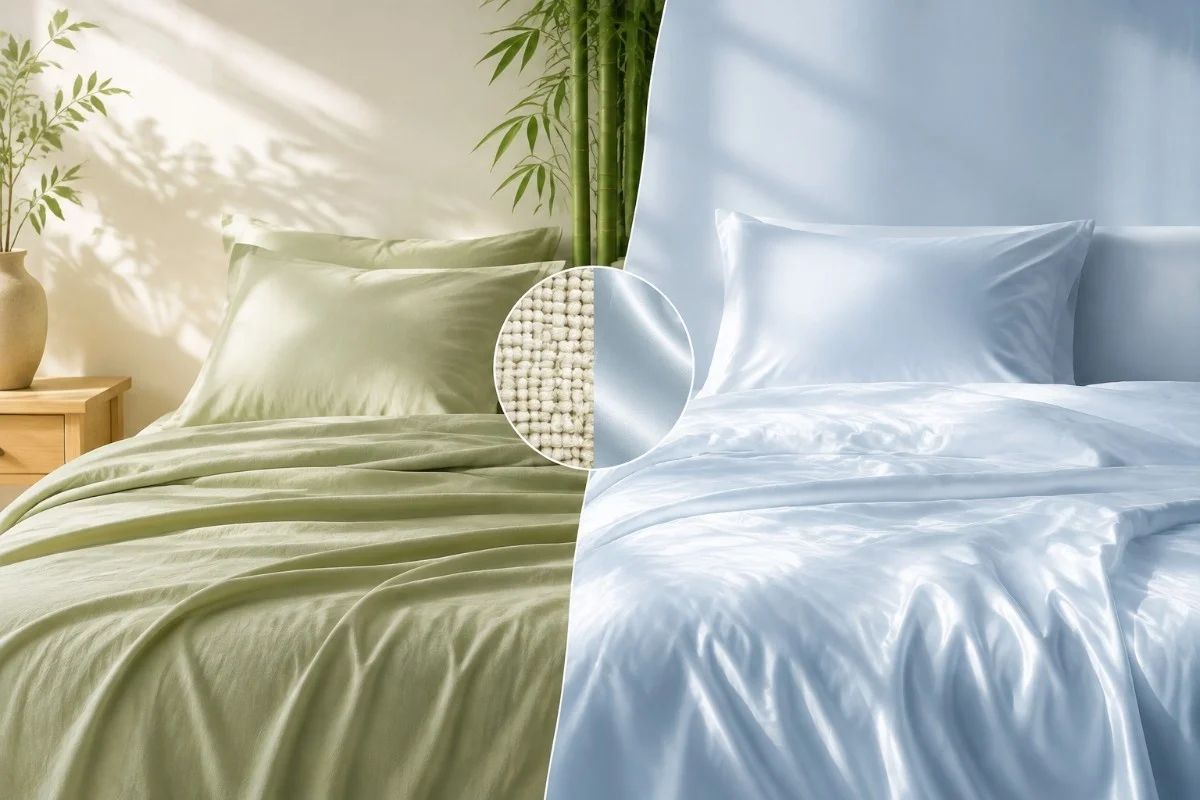
I used to think I just "ran hot." That was my excuse for years - waking up at 2 a.m., sheets stuck to my back, flipping my pillow over for the fifth time looking for a cool spot that didn't exist anymore. Turns out it wasn't me. It was the sheets.
Nobody tells you this when you're bedding-shopping, but the fabric your sheets are made from does more work than almost anything else in your bedroom - more than your thermostat, honestly, in a lot of cases. Some materials let heat escape. Others trap it right against your skin and hold it there. Once I understood the difference, my sleep genuinely got better, and I didn't have to touch the AC once.
The Short Version: Why It Matters at All
Every fabric does two things while you sleep, whether it's doing them well or not. It either lets air move through it, or it doesn't. And it either pulls sweat away from your body, or it just... sits there. Natural fibres tend to be good at both. A lot of synthetics aren't.
That's really the whole story behind why some sheets feel cool and others feel like sleeping inside a sandwich bag.
Cotton, Linen, Bamboo - The Natural Side
Cotton is the one most of us grew up with, and percale cotton in particular deserves its reputation. It's got a crisp, almost papery feel - if you've stayed somewhere with hotel-quality sheets and thought "why don't mine feel like this," it was probably percale. The looser weave lets air move through it instead of trapping it against you.
Linen is the one people are often nervous about buying because it feels a bit rough in the store. Don't let that put you off. It softens fast - like, noticeably softer after just a few washes - and it's honestly one of the best fabrics out there for pulling moisture away from your skin. Flax fibres are naturally more porous than cotton, so they just handle sweat better.
Bamboo (usually sold as bamboo viscose, sometimes lyocell) is the newer kid on the block, and I get why it's caught on. It's silky, it's naturally cooling to the touch, and it doesn't require the same "let it soften over time" patience that linen does. If you want soft and cool without waiting a month for the fabric to break in, this is probably your pick.
Any of these three will get you real, lasting cooling bed sheets - not a one-week trick that fades, but an actual difference you'll notice every night.
Where Synthetic Sheets Fall Short
I'm not going to pretend polyester and microfiber sheets are useless. They're cheap, they don't wrinkle, and you can throw them in the dryer without babying them. For a guest room or a kid's bed, sure, fine.
But temperature-wise? They're working against you. The fibres are packed in tight, almost like plastic wrap, so heat has nowhere to go and moisture just sits on top of the fabric instead of being absorbed. That clammy feeling everyone associates with cheap sheets - that's this.
Some of the newer synthetic blends do get marketed as "cooling," and to be fair, a few of them work okay right out of the package. The catch is that effect tends to wear off after a handful of washes in a way natural fibres just don't.
So What Should You Actually Buy?
Depends on you, honestly. If you're a hot sleeper - and if you're reading this, you probably already know if you are - go natural. Percale cotton or linen are the safest bets for genuinely cooling bed sheets that hold up over years, not months. Bamboo's a great pick if softness matters just as much as temperature to you.
If you barely notice temperature at night and you'd rather not think about fabric care, a decent synthetic blend won't ruin your life. Just go in knowing it won't breathe the same way.
One myth worth killing while we're here: thread count doesn't tell you much. A high number stitched onto cheap polyester still won't keep you cool. It's the fibre and the weave doing the actual work, not the number on the packaging.
The Real Takeaway
You spend something like a third of your life touching these sheets. That's not a small thing to get wrong. If you've been waking up hot, sticky, or just off, it might not be your room at all - it might just be time to change what's on the bed. Swapping in a proper set of natural cooling bed sheets sounds like a small fix, but it's the kind of small fix that actually shows up every single night.