Sign up with Google
 Sign in with Zoho

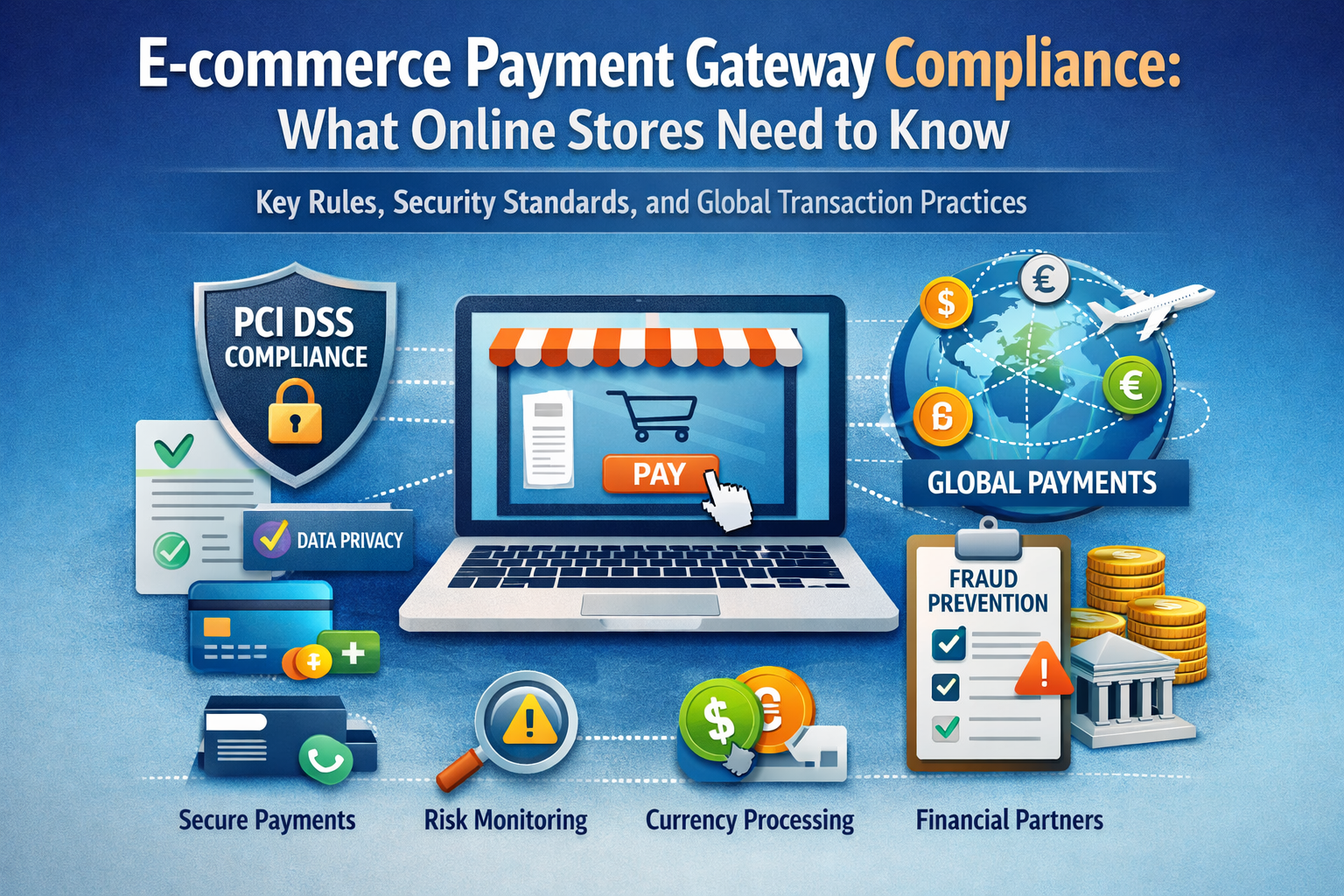
Running an online store today means more than just listing products and waiting for orders. Payments sit at the center of every online transaction, and the way those payments are processed carries legal, financial, and operational responsibilities. Store owners often focus on marketing, pricing, and customer experience, but payment compliance is equally important.
Regulations around online transactions have grown across countries. Payment security rules, consumer protection laws, and financial reporting requirements all influence how online businesses accept payments. Because of this, merchants must work with reliable providers and maintain compliant payment processes.
Ignoring compliance can lead to payment interruptions, penalties, or even the suspension of merchant accounts. On the other hand, businesses that follow proper payment practices usually experience smoother operations and greater customer trust.
Why Compliance Matters for Online Payments
Every online payment involves sensitive data such as card numbers, billing details, and customer information. Payment compliance exists primarily to protect this information and prevent fraud.
Payment regulations exist at multiple levels. Governments establish financial regulations, card networks create payment security standards, and payment providers implement operational rules for merchants.
For online stores, this creates a layered responsibility. Businesses must ensure their checkout systems follow security rules while also maintaining transparency in transactions.
Admittedly, many small merchants assume their payment provider handles everything. However, merchants still share responsibility for maintaining secure systems and compliant payment flows.
Clearly, when compliance is handled properly:
- Customer payment data remains protected
- Fraud risks are reduced
- Transactions are processed smoothly
- Merchants maintain strong relationships with payment providers
In comparison to stores that ignore compliance requirements, compliant businesses rarely experience sudden payment account suspensions.
Payment Security Standards Every Store Must Follow
One of the most widely known payment standards is the Payment Card Industry Data Security Standard (PCI DSS). This set of rules applies to any business that processes card payments.
PCI DSS focuses on protecting cardholder data and preventing unauthorized access to payment systems.
Some core requirements include:
- Secure storage and transmission of card data
- Strong encryption protocols
- Access control systems for payment environments
- Regular security testing
- Network monitoring
Initially, these requirements may seem technical for small businesses. However, most modern payment gateways provide built-in compliance features that help merchants meet these standards.
In the same way, hosted checkout pages and tokenized payment systems reduce the amount of sensitive data merchants must handle directly.
As a result, many businesses choose payment providers that manage much of the security infrastructure.
Data Privacy Rules Affecting Online Stores
Beyond payment security standards, online stores must also comply with privacy laws related to customer information.
Many regions now enforce strict data protection regulations. These laws control how businesses collect, store, and use customer data.
Some common privacy requirements include:
- Informing customers about data collection
- Allowing users to request data deletion
- Limiting how long personal data is stored
- Protecting stored customer information from breaches
Similarly, businesses operating internationally must follow privacy laws in multiple jurisdictions.
For example, companies selling to customers in Europe must follow GDPR regulations, even if the business itself is located outside Europe.
Consequently, merchants must make sure their payment infrastructure supports secure data handling and transparent policies.
Payment Gateway Compliance and Fraud Prevention
Fraud prevention is another critical part of payment compliance.
Online transactions involve risks such as stolen credit cards, identity theft, and fraudulent chargebacks. Payment gateways often include fraud detection tools designed to identify suspicious activity.
Common fraud prevention measures include:
- Address verification systems (AVS)
- CVV verification
- Transaction velocity checks
- Risk scoring algorithms
- IP address monitoring
Despite these tools, merchants must still monitor their transactions. Chargeback ratios remain a major concern for payment providers.
If a store accumulates excessive chargebacks, the payment provider may classify the business as high risk.
Still, merchants who actively monitor transactions and resolve disputes quickly typically maintain healthier payment relationships.
Global Sales and Regulatory Challenges
Selling internationally adds another layer of complexity to payment compliance.
Cross-border transactions involve currency conversions, international regulations, and multiple financial institutions.
Because of this, businesses expanding globally often rely on a Global payment solution that can manage international transactions securely.
Such systems help merchants handle:
- International card payments
- Currency conversions
- regional payment regulations
- cross-border transaction reporting
Likewise, international payment systems often include built-in fraud monitoring and currency management tools.
This approach allows online stores to operate across borders while keeping payment operations organized.
Choosing the Right Payment Infrastructure
Not every payment gateway fits every type of online store. Businesses should evaluate providers based on security, compliance support, and operational reliability.
Key factors to consider include:
- PCI compliance support
- fraud prevention features
- currency support
- integration with ecommerce platforms
- reporting tools
- settlement times
Eventually, these factors affect both daily operations and long-term growth.
For instance, many online stores rely on reliable E-commerce Payment Solutions to maintain smooth transactions during high sales periods.
In comparison to older payment systems, modern platforms often offer automation and real-time monitoring features that simplify payment management.
Payment Processing and Checkout Experience
Compliance should never disrupt the customer experience.
Customers expect checkout pages to be fast, simple, and secure. At the same time, merchants must ensure every transaction follows payment security rules.
Balancing both priorities requires carefully designed payment flows.
Some best practices include:
- secure hosted checkout pages
- tokenized card storage
- two-factor authentication for certain transactions
- mobile-friendly payment interfaces
Similarly, merchants should test checkout systems regularly to identify potential issues.
Checkout failures can lead to abandoned carts and lost revenue. However, compliant payment systems reduce such risks by maintaining stable transaction environments.
Managing Payments Across Multiple Markets
Many online businesses now sell in several regions simultaneously. This introduces operational challenges related to currency handling and financial reporting.
Payment systems must track transactions across multiple currencies while maintaining accurate accounting records.
Consequently, some businesses rely on eCommerce Payment Processing Solutions that support international operations and automated reporting.
These systems help merchants:
- accept payments in different currencies
- simplify transaction reconciliation
- maintain consistent financial records
- reduce administrative workload
In the same way, unified payment dashboards allow merchants to track global sales activity from a single interface.
Working With Reliable Financial Partners
Payment providers play a major role in maintaining compliant operations. However, financial partners must also understand the needs of digital businesses.
Some online companies work with fintech platforms that support cross-border payments and international business operations.
For example, firms offering payment infrastructure and business banking support can simplify financial operations for growing companies.
In particular, providers such as Firm EU offer services designed for international merchants that require stable payment systems and reliable transaction processing.
Not only payment tools, but also financial infrastructure can influence how smoothly an online store operates.
As a result, merchants should evaluate financial partners carefully before integrating payment services into their business operations.
Compliance Monitoring and Ongoing Responsibilities
Payment compliance is not a one-time task. Regulations change regularly, and payment providers frequently update their requirements.
Because of this, merchants should maintain ongoing monitoring practices.
Recommended steps include:
- conducting periodic payment system audits
- reviewing fraud reports
- tracking chargeback ratios
- updating security systems regularly
- reviewing payment provider policy changes
Similarly, businesses should train staff members who manage financial operations.
Employees handling refunds, chargebacks, or payment disputes must follow proper procedures to avoid compliance issues.
Eventually, these internal practices help maintain stable payment relationships.
Unexpected Compliance Challenges
Even well-managed stores can face payment challenges.
Some common issues include:
- sudden payment gateway restrictions
- increased chargeback activity
- regional regulatory changes
- currency conversion complications
Despite these challenges, businesses that maintain strong compliance practices usually resolve issues faster.
For instance, working with a trusted payment provider or financial partner often speeds up dispute resolution.
Although construction and ecommerce operate differently, financial systems designed for complex payments sometimes offer insights into managing large-scale transaction environments.
Preparing Your Online Store for Long-Term Payment Stability
Online commerce continues to grow rapidly, and payment regulations will likely become stricter over time.
Merchants who prepare early tend to avoid operational disruptions later.
Key preparation steps include:
- selecting compliant payment gateways
- maintaining clear financial records
- monitoring fraud and chargebacks
- maintaining secure checkout systems
- reviewing compliance policies regularly
Similarly, businesses should stay informed about payment industry updates.
Payment technology evolves quickly, and new security measures frequently appear in response to emerging threats.
Consequently, staying informed helps merchants maintain reliable payment systems as their businesses grow.
Conclusion
Payment gateways play a critical role in online business operations. Behind every successful transaction lies a system built on security rules, regulatory compliance, and reliable financial infrastructure.
Online merchants must treat payment compliance as an ongoing responsibility rather than a technical detail handled entirely by service providers. From data protection laws to fraud prevention systems, every part of the payment process contributes to customer trust and operational stability.
Businesses that prioritize secure payment systems usually experience fewer disruptions, smoother international transactions, and stronger relationships with financial partners. Over time, these advantages help online stores maintain consistent growth while protecting both customers and the business itself.