Sign up with Google
 Sign in with Zoho


Chess has long been associated with intelligence, analytical thinking, and problem-solving ability. From casual players to world champions like Magnus Carlsen and Garry Kasparov, the game is often perceived as a test of intellectual superiority. This leads many to ask: what is the average IQ of chess players, and how closely is chess IQ linked to actual intelligence?
This article presents a well-structured and research-backed explanation of the relationship between chess intelligence, IQ, and real performance in the game.
What is the average IQ of chess players?
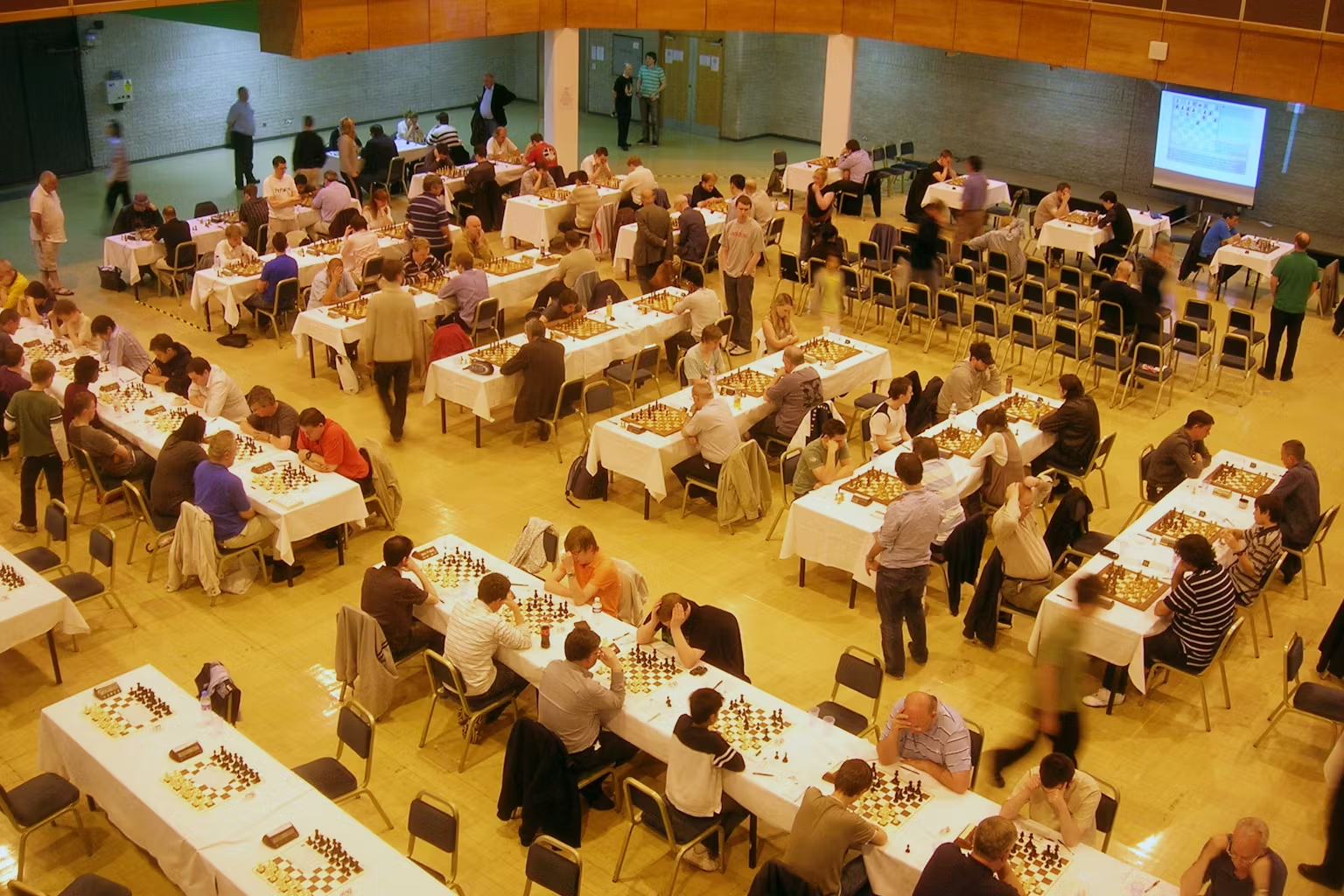
The average IQ of chess players generally falls slightly above the global average of 100, but it varies significantly based on skill level and experience. While beginners may reflect average intelligence levels, stronger players often demonstrate higher cognitive abilities.
Typical ranges across skill levels
- Casual or beginner players: around 90–110
- Intermediate club players: around 100–120
- Advanced players: around 120–135
- Grandmasters: often estimated above 130
These ranges suggest that average IQ chess players tend to have somewhat higher-than-average intelligence, but not necessarily at a genius level.
It is important to understand that these figures are approximate. Individual variation is wide, and many strong players may fall outside these ranges.
Do top chess players have exceptionally high IQs?
The topic of the IQ of chess grandmasters often attracts attention, with many assuming that elite players possess extraordinary intelligence. Notable figures such Viswanathan Anand are frequently linked to high IQ estimates.
However, most of these claims are not officially verified.
Key considerations
- Very few professional players have taken standardized IQ tests publicly
- Reported IQ figures are often based on speculation
- Chess ability does not directly measure general intelligence
Why elite players appear highly intelligent

Pattern recognition
Strong players rely heavily on pattern recognition, a core element of chess intelligence developed through years of study and gameplay.
Calculation ability
They can calculate complex variations several moves ahead, which gives the impression of exceptionally high intelligence.
Structured memory
Instead of memorizing isolated moves, they store patterns and positions, making decision-making faster and more efficient.
These abilities are often mistaken for raw IQ, but they are largely the result of experience and training.
Does chess increase IQ?
A commonly searched question is: does chess increase IQ? While chess has clear cognitive benefits, its effect on overall IQ is limited.
Cognitive benefits of chess
- Improved concentration and attention span
- Enhanced logical reasoning
- Better problem-solving skills
- Strengthened memory and visualization
These improvements contribute to stronger chess intelligence, especially among students and younger players.
Long-term impact
Research indicates that chess can enhance specific mental abilities but does not significantly raise overall IQ levels in the long term. Instead, it refines cognitive processes that are closely related to intelligence.
What factors matter more than IQ in chess success?
Although discussions around average IQ chess players are common, real success in chess depends on several other factors that often outweigh intelligence.
Practice and experience
Consistent and deliberate practice is the most important factor. Strong players spend years analyzing games, studying strategies, and learning from mistakes.
Knowledge and preparation
Understanding openings, and endgame techniques is essential for competitive success.
Pattern recognition
One of the defining elements of chess IQ is the ability to recognize recurring patterns quickly. This skill is developed through repetition and experience rather than innate intelligence.
Psychological strength
- Maintaining focus during long games
- Handling pressure in competitive situations
- Making confident decisions
These factors often determine outcomes in closely contested matches.
How strong is the relationship between IQ and chess skill?

The relationship between IQ and chess ability is moderate rather than strong. Research typically shows a correlation between 0.3 and 0.5, indicating that IQ has some influence but is not the primary factor.
Interpretation of correlation
- Higher IQ may help players learn faster in the starting stages
- The importance of IQ decreases as experience increases
- Training and exposure become more critical at advanced levels
IQ versus chess rating
Although there is no exact formula, general patterns can be observed:
- Beginner players: average IQ levels
- Intermediate players: slightly above average
- Advanced players: higher cognitive performance
Even with these trends, answering what is the average IQ of chess players precisely is difficult due to wide variation among individuals.
Conclusion
The average IQ of chess players is typically slightly above the general population, usually ranging between 100 and 120. While discussions about the IQ of chess grandmasters often suggest extremely high intelligence, there is limited verified data to support such claims.
The connection between chess intelligence and IQ exists but is not strong enough to define success. More important factors include practice, experience, pattern recognition, and psychological resilience.
In response to the question does chess increase IQ, the evidence suggests that chess enhances thinking skills rather than fundamentally changing intelligence levels. Ultimately, chess is a skill-based discipline, and consistent effort plays a far greater role than raw IQ in determining success.