
 Sign up with Google
 Sign in with Zoho

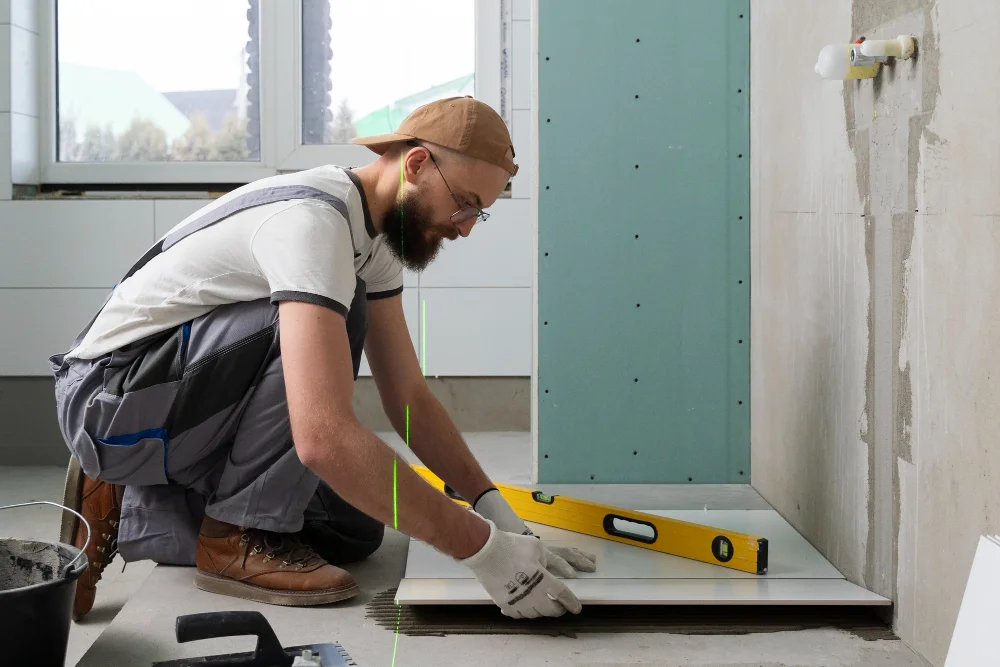
The construction industry in Australia requires skilled tradesmen who can provide high-quality work, maintain safety and complete projects in compliance with the industry standards. In a wide range of trade professions, wall and floor tiling is one of those that make an impact in the residential, commercial and industrial construction sector. From installing tiles in bathrooms to finishing floors in big commercial buildings, tilers make contributions to the function, durability and appearance of the space.
For people who are looking to develop construction skills, there is the chance to pursue the CPC31320 Certificate III in Wall and Floor Tiling. This course provides the necessary knowledge and experience in relation to tiling methods, handling materials, surface preparation and installation processes which will help learners to know the requirements of the construction industry.
However, how does this qualification prepare learners for the actual construction world? Let us have a look at the skills, training areas and career opportunities in relation to wall and floor tiling.
1. Develops Practical Wall and Floor Tiling Skills
Practical experience is critical for anyone who plans to join the construction industry. The Certificate III in Wall and Floor Tiling course teaches students basic techniques necessary to perform tiling jobs on various surfaces.
The skills that can be acquired by the student through this program include:
- The ability to measure and calculate the tiling needs.
- Preparation of walls and floors before installation.
- Selection of the correct tiles and adhesives.
- Positioning the tiles properly.
- Sealing the gaps between the tiles with grout.
- Maintaining neat finishes and consistent spacing.
Such skills will enable the students to learn the processes that are necessary in professional tiling jobs.
2. Surface preparation and levelling knowledge
Tile laying requires more than just putting tiles onto a surface. Preparation is needed to ensure that an even, sturdy and level finish is achieved.
Wall and floor tiling classes provide the opportunity for students to learn about various surface conditions and the preparation methods required before installation.
Some of the key things learned include:
- Checking the condition of surfaces prior to working.
- Identifying uneven areas and surface imperfections.
- Preparation of substrate prior to installing tiles.
- Creating accurate levels.
- Choosing appropriate methods of preparation.
- Maintaining alignment during the process of installation.
Surface preparation knowledge allows future tilers to identify possible issues that could occur before installing the tiles.
3. Presents Various Materials for Tiles and Techniques for Installation
Construction projects involve various materials for tiles, based on the design, location, function and durability requirements. It is essential for professional tilers to be familiar with different materials and their behavior as well as suitable techniques of installation.
Certificate III in Wall and Floor Tiling training programs provide information about various materials used for tiling and different techniques.
They include ceramic and porcelain tiles, as well as other materials used in various tiling projects.
Some information that trainees receive includes:
- Selection and characteristics of tiles.
- Selection and application of adhesives.
- Tile cutting and shaping techniques.
- Patterns and layout of installation.
- Grouting and finishing techniques.
- Equipment and tools used in tiling projects.
The above information allows trainees to understand how to approach different tiling projects.
4. Provides Skills in Measuring, Levelling and Setting-Out
Accuracy is perhaps the single-most essential requirement in professional tiling. Incorrect calculations or inaccurate tile placements will definitely have an effect on the appearance and quality of the final product.
A wall and floor tiling course allows students to acquire measuring and setting out skills that apply in the construction environment.
Students acquire the skill of calculating surface areas, calculating tile quantities, making reference points and planning the tile layout before starting the actual process of installing the tiles.
This is because in cases like laying down tiles on a bathroom floor, a tiler should consider the space available for work, tile size and where to make cuts.
Such measuring and planning skills apply not only in renovations but also in other fields such as construction of new buildings.
5. Focuses On Workplace Health and Safety
A construction site has different dangers ranging from sharp tools, heavy items, dust, electric machines and lifting materials among others. This makes knowledge about workplace health and safety important for individuals joining the industry.
In vocational tiling training, the learner gets exposed to how one works safely and the need to follow procedures at work.
Important things to consider regarding safety are:
- The use of personal protective gear.
- Proper handling of tools and machinery.
- Safe handling of materials.
- Having clean work environments.
- Identifying workplace hazards.
- Comprehending safety procedures.
This makes the learner understand his/her responsibilities on construction sites.
6. Enhances Problem-Solving Skills and Attention to Detail
Each construction job will be unique. It may be challenging for tilers to work on uneven surfaces, awkward-sized rooms, corners, and intricate designs of tiles.
These challenges need practical thinking, patience, and the skill of being able to come up with the appropriate solution.
Students are taught problem-solving skills through practical classes and assessment by tackling the various difficulties in installing the tiles.
This is especially important since mistakes in installation may affect the appearance of the tiled surface.
7. Prepares Students for Construction Work Environment
Construction involves much more than just technical skills. Workers need to be able to communicate, understand instructions, plan and work alongside other professionals.
Wall and floor tiling course training allows students to get familiar with the requirements of practical construction work environment.
Students learn:
- Following construction instructions.
- Planning materials and tools.
- Carrying out tasks according to project needs.
- Communicating with supervisors and other workers.
- Observing professional standards.
- Collaborating in carrying out construction tasks.
These practical skills help students to learn how tiling tasks relate to construction projects.
What Career Options Will Open Up For You After Certificate III in Wall and Floor Tiling?
After completion of Certificate III in Wall and Floor Tiling, you may be able to explore career options in the construction and tiling industry, based on your experience, employer and licensing requirements.
Some of the careers that you could consider are:
Wall and Floor Tiler: Carry out tile installation works in residential and commercial premises, including bathrooms, kitchens, floors and other areas.
Residential Tiling Worker: Get involved in tiling operations for houses and residential building projects.
Commercial Tiling Worker: Take part in tiling operations for commercial buildings like offices and retail outlets.
Tiling Contractor: Depending on your experience and business skills, you may explore the option of being a tiling contractor.
The above qualification may help you in your further trade studies and training.
Reasons to Select Vocational Training for a Career in Wall and Floor Tiling?
Vocational training offers an educational option that is practical in nature for people who like learning occupations through demonstration and practical sessions.
Unlike the conventional forms of education, where learning is based on theoretical aspects only, trade education combines both theory and practical aspects.
This form of learning is suitable for learners who want to learn from classroom sessions and relate such learning to common practices in the construction field.
The learners can acquire technical skills, know what is expected in the workplace and get to understand the trade better.
While choosing vocational courses in Australia, there are certain factors that one must take into consideration.
Conclusion
CPC31320 Certificate III in Wall and Floor Tiling is a structured pathway that allows people who want to learn how to do practical things in Australia’s construction industry. Surface preparation, measuring, tile setting, safety, and workplace communication are just some of the topics covered in this qualification.
No matter whether you want to work on residential or commercial projects, or even build a career in construction, it may be wise to start by learning the trade.
Selecting the right training education institute and understanding the course requirements will be a crucial step in making your decision.
Frequently Asked Questions
1. What is Certificate III in Wall and Floor Tiling?
(PC31320 Certificate III in Wall and Floor Tiling is a vocational course that aims at equipping an individual with practical and technical skills required for wall and floor tiling.
2. What skills are acquired in a wall and floor tiling course?
Skills developed include; surface preparation, measuring, leveling, cutting tiles, fixing tiles, grouting and workplace health and safety practices.
3. How long does Certificate III in Wall and Floor Tiling take?
The duration varies depending on the institution offering the course and delivery mode. It is advisable for one to consult on the course duration and other requirements.
4. What are some of the job roles I can get after a wall and floor tiling course?
Some of the potential pathways available are wall and floor tiler, residential tiling worker, commercial tiling worker and tiling contractor, among others.
5. Is Certificate III in Wall and Floor Tiling for beginners?
Yes. This qualification can be considered for individuals interested in building tiling knowledge and practical skills in a trade.