Sign up with Google
 Sign in with Zoho

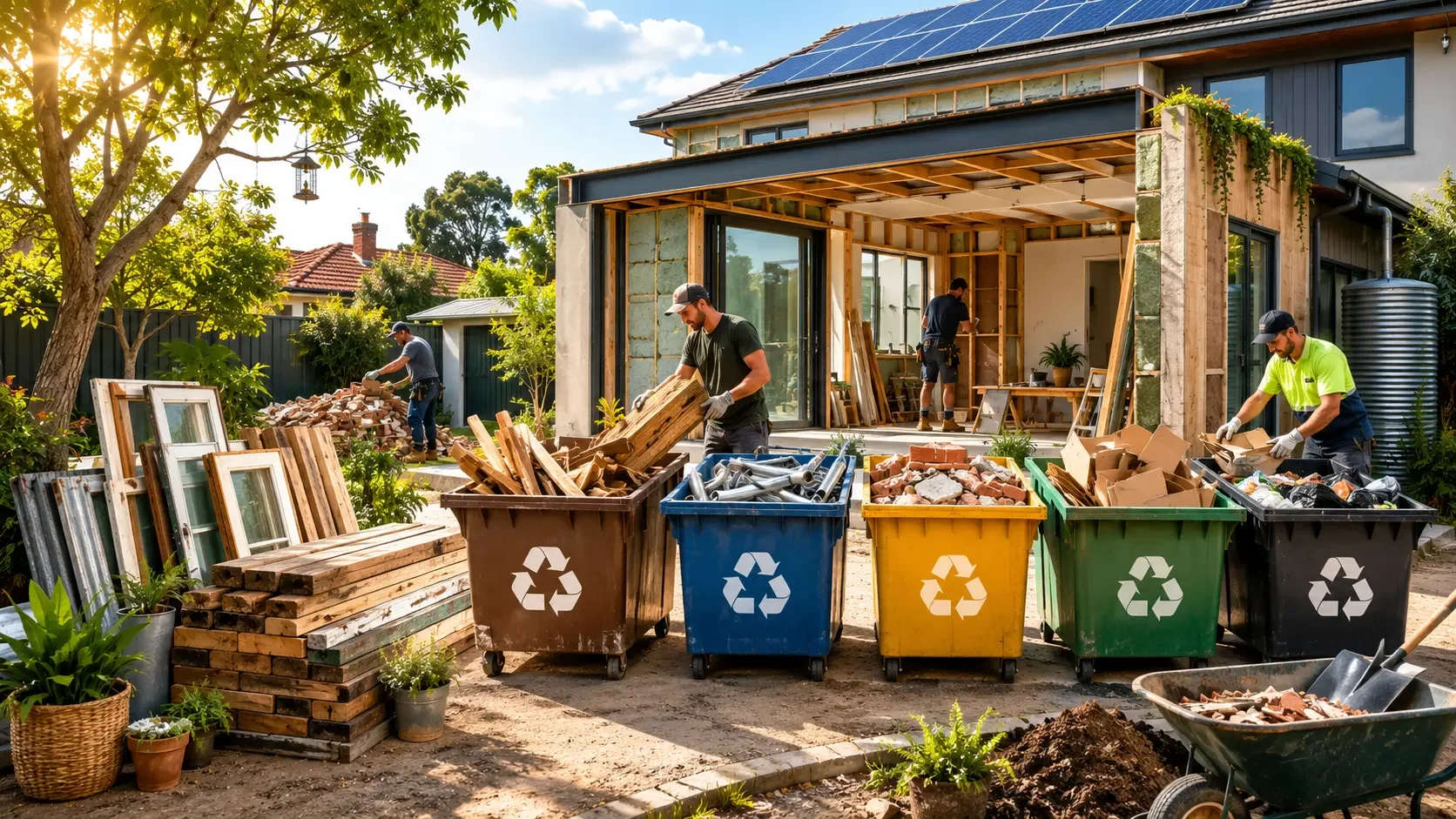
Renovations can transform a property and bring improvements. In most cases, renovating makes the house more comfortable and adds to its value. But renovations also produce waste in large quantities – broken tiles, old timber, metal scraps, plasterboards, packaging materials, unwanted fixtures and so forth.
But there is hope. There are sustainable waste management practices that you can adopt throughout your renovation process. With just a bit of planning, you can save money and resources while producing less waste.
Importance of Adopting Sustainable Practices
Construction and renovations are known for producing great amounts of waste. Most of the waste consists of materials that still have a lot of value. If you fail to manage it, some valuable items will still be put to waste in landfills, where they will be left to decompose.
Sustainable practices in home renovations concentrate on minimising waste production, as well as promoting reuse and recycling. These two strategies go hand-in-hand to maximise resource conservation.
Start Planning Waste Management Before Renovations
A lot of people focus on such issues as design, budget, and contractors when preparing their projects. But planning for waste management is also essential.
Asking some questions at the planning stage will help minimise waste:
- What materials need to be removed?
- Can any of these materials be reused?
- What materials are eligible for recycling?
- How much waste will the project generate?
- What disposal techniques do I need?
Having answers to these questions will help organise waste disposal more effectively.
Conduct a Pre-Renovation Audit
Identify Reusable Materials
You should conduct an inspection of the house before commencing with demolitions to assess the condition of existing materials. Some items can still be in perfect condition and be suitable for further use either inside the renovated space or elsewhere.
Materials worth saving and potentially reusing may include such things as flooring and wallboards, doors, windows, light fixtures, cabinets, bathroom fittings and other.
Calculate Expected Waste Volumes
It is important to estimate the quantity of waste generated during your home renovation, as the size of waste collection services you will need will depend on that.
An accurate estimate helps avoid overordering waste disposal services or conducting them twice. You need to know how many cubic meters of trash your project will create.
Opt for Deconstruction Rather Than Demolition
While demolitions are quick, deconstruction takes a little longer. But deconstruction enables more sustainable waste disposal. Materials recovered through deconstruction include:
- wood;
- metal;
- bricks and stones;
- roofing materials;
- doors and windows.
Thus, deconstruction can reduce the amount of waste sent to landfills dramatically.
Choose Sustainable Building Materials
Reducing waste is crucial during renovations. But it can start even before your work is underway.
Selecting sustainable building materials allows homeowners to decrease waste throughout the life cycle of a particular product. You should select such items as:
- recycled;
- recyclable;
- locally-sourced;
- durable;
- renewable.
Examples of sustainable materials used in renovations are recycled wood, reclaimed brick and stone, bamboo products, recycled metal and so forth.
Sort Waste at Its Source
Sorting different types of waste is one of the best practices when renovating a property. When materials get mixed together, recycling becomes problematic, since it is hard to determine which waste belongs to which type.
Separate Waste Types
Create separate areas for disposing waste of different types – timber, concrete, metal, green waste, cardboard, plastics, and general waste. Properly sorting the waste will boost recycling rates while lowering costs.
Educate Workers
If you hire professional workers, you need to educate them about waste sorting. Providing detailed instructions is necessary so that no recyclable material gets mixed with general waste accidentally.
Promote Recycling of Construction and Renovation Materials
There are several ways of disposing renovation materials in a sustainable manner.
Recycle Timber
If untreated wood has not become unusable, you can try and repurpose it. Even wood waste can become useful – by processing it into mulch or biomass fuel.
Recycle Metal
Almost all kinds of metals are suitable for recycling. Recycling metals conserves natural resources and reduces energy use.
Recycle Concrete and Bricks
When crushed, concrete and bricks find application in road bases, landscaping projects, and various constructions.
Recycle Cardboard and Packaging
Home renovation produces vast amounts of packaging. Almost all of that material can be recycled using regular recycling techniques.
Don't Waste Usable Materials and Fixtures
In some cases, fixtures still can be in perfect condition even though you don't want to use them anymore. Consider donating those materials. Here is a list of items you may donate:
- kitchen cabinets;
- appliances;
- bathroom fittings;
- doors;
- light fixtures;
- flooring materials.
Donating helps extend product lifespan and reduces waste.
Don't Order More Materials Than Necessary
Sometimes people order more materials than necessary, and excess becomes waste. So, it is important to calculate your needs accurately. Collaborate with a contractor to measure all materials needed. This way, you can prevent the creation of additional waste.
Dispose of Hazardous Materials Properly
During the renovation of old buildings, you may come across materials requiring special disposal. They may consist of such components as:
- paints and solvents;
- adhesives;
- chemicals;
- asbestos-containing materials.
Such materials should never be mixed with household rubbish, as this can create environmental and public health problems. Disposal of hazardous materials must comply with local laws.
Seek Help of Professionals
To dispose of hazardous materials properly, you may need to seek professional assistance. It is never recommended to dispose of such waste independently.
Manage Waste Disposal Services Efficiently
Properly collected waste can be disposed of easily. For efficient waste disposal during home renovations, you need to select proper waste management techniques and companies to provide services.
Many homeowners opt for skip bins to collect renovation waste in one place. Later, this waste is sorted and recycled by professionals. Organised waste collection helps you keep a clean and safe workplace throughout the process.
Reduce Packaging Materials Generated During Renovations
It is easy to overlook packaging materials that accumulate during renovations. But if you pay attention to packaging, you can reduce waste.
Whenever you purchase building materials, consider the following advice:
- buy products packed in small quantities;
- choose packaging that is recyclable;
- prefer bulk purchases;
- return reusable packaging where you can.
Track Your Waste Management Performance
You should track your performance in waste management regularly. Keeping track of your achievements is beneficial for making adjustments along the way. Simple records can include the number of:
- materials purchased;
- materials recycled;
- materials donated;
- waste sent to landfills.
Conclusion
It would be impossible to do anything about renovation waste without any preparations. Fortunately, there are ways to manage waste sustainably and efficiently. You need to:
- plan in advance;
- separate recyclable waste from non-recyclable;
- sort materials;
- recycle construction materials.
A sustainable waste management process is key when considering home renovation work. It can be achieved through proper planning, reuse of materials, recycling construction waste, and sustainable means of disposing of waste. In cases where more substantial renovations are undertaken, companies like Skippy Bin Adelaide provide useful means of waste management for renovation projects.