Sign up with Google
 Sign in with Zoho


Speaking with a Domestic Violence attorney Dayton survivors trust can help you understand how to safely collect and use this information.
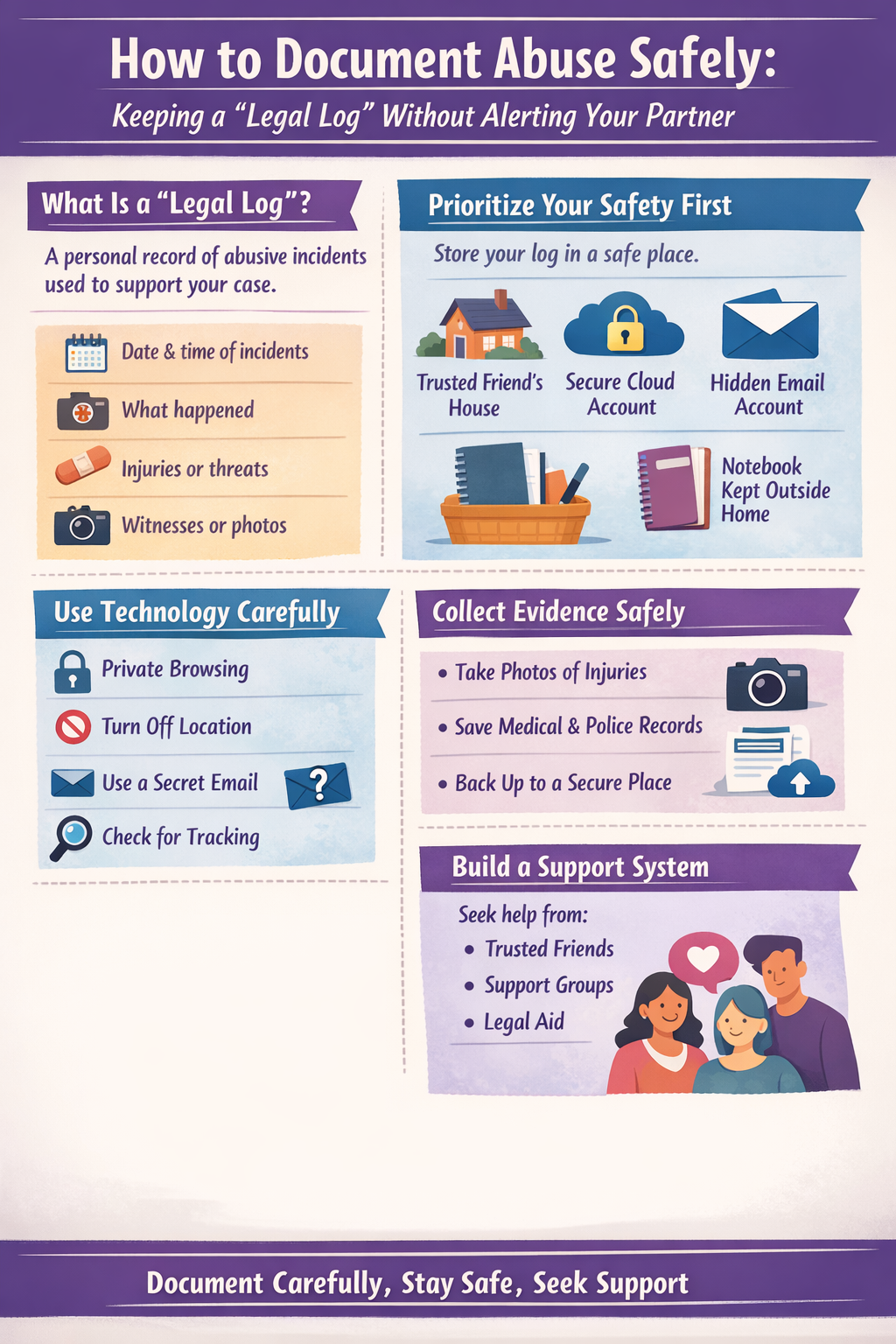
What Is a “Legal Log”?
A legal log is a personal record of abusive behavior. It tracks incidents over time and creates a clear timeline.
This log can be useful in court. It may support requests for protection orders, custody changes, or criminal charges.
What to Include in Your Log
Try to record details such as:
- Date and time of each incident
- What happened, in clear and simple terms
- Any injuries or threats
- Names of witnesses, if any
- Photos or medical visits related to the incident
Keep entries short and factual. Avoid emotional language when possible.
Prioritize Your Safety First
Before you start documenting, think about your safety. If your partner monitors your phone or belongings, keeping a log at home may be risky.
Safe Places to Store Your Records
Consider storing your log in a place your partner cannot access:
- A trusted friend or family member’s home
- A secure cloud account with a new password
- A hidden email account used only for this purpose
- A notebook kept outside your home
Always log out of shared devices after accessing your records.
Use Technology Carefully
Phones and computers can be monitored. Be cautious about how you use them.
Tips for Digital Safety
- Use a private or incognito browser
- Turn off location sharing
- Use a new email your partner does not know about
- Avoid saving passwords on shared devices
If you suspect tracking, consider using a public or trusted device instead.
Take Photos and Save Evidence
Photos can be powerful evidence. If it is safe, take pictures of injuries, damaged property, or the scene.
How to Store Evidence Safely
- Upload photos to a secure cloud account
- Send copies to a trusted person
- Rename files to something neutral if needed
Make sure your partner cannot easily find these files.
Keep Medical and Police Records
If you seek medical care or contact the police, keep copies of those records.
These documents can support your log and provide official proof of abuse.
Ask for Copies When Possible
Hospitals and law enforcement can provide reports. Store them in a safe place along with your notes.
Avoid Raising Suspicion
It is important that your documentation does not alert your partner.
Stay Discreet
- Do not leave journals or notes in plain view
- Avoid discussing your records with people your partner knows
- Use neutral names for files or accounts
Small steps can help keep your efforts private.
Build a Support System
You do not have to do this alone. Trusted people can help you stay safe and keep records secure.
Who Can Help
- Close friends or family
- Counselors or support groups
- Legal professionals
Having support makes it easier to protect both your safety and your rights.
Take Control While Staying Safe
Documenting abuse can be an important step toward protection and justice. A clear, consistent record can strengthen your case.
But your safety always comes first. Take steps that protect you while building your log.