 Sign up with Google
 Sign in with Zoho

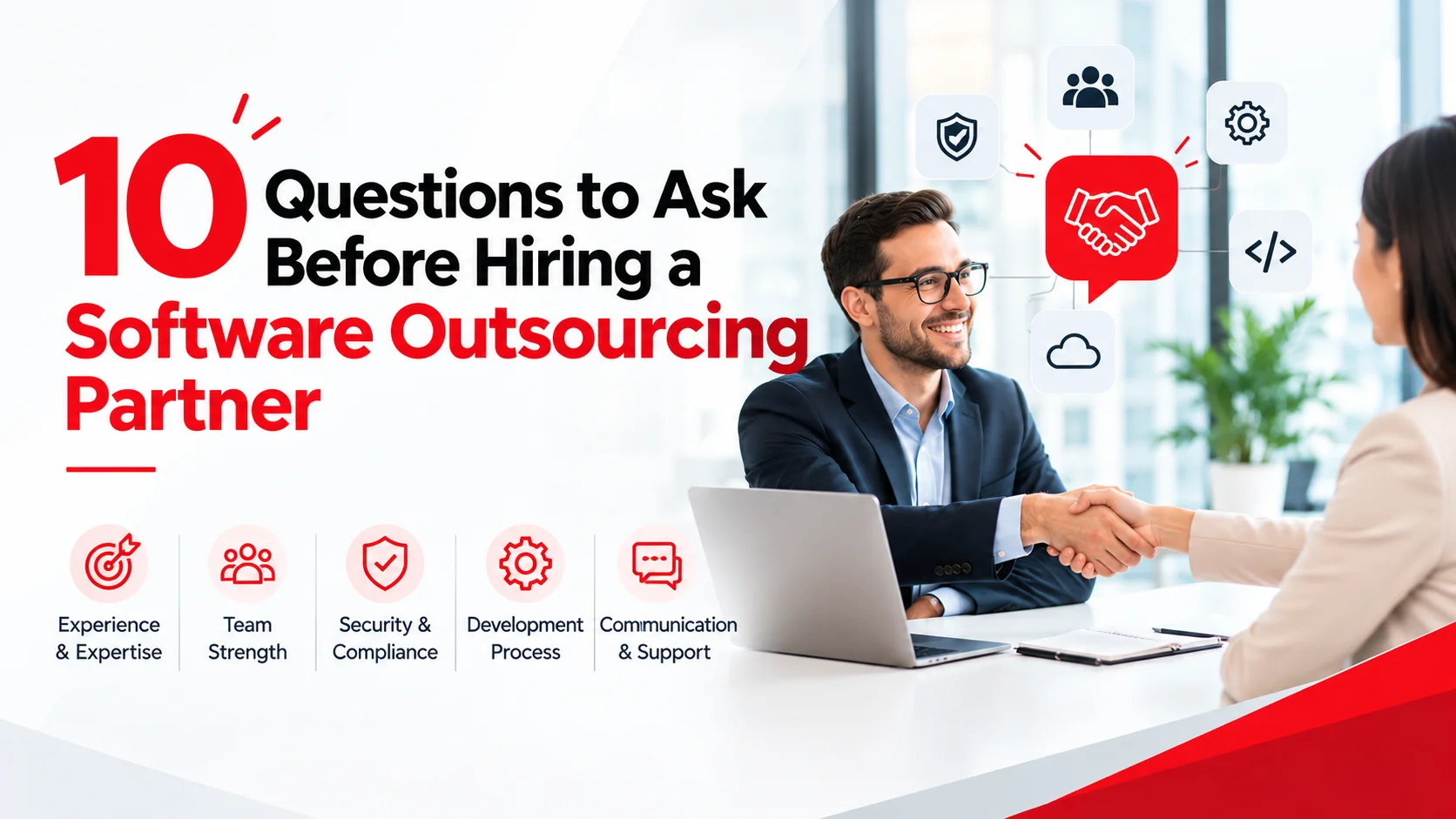
Hiring a software outsourcing partner can help businesses save development costs, access experienced developers, and complete projects without building an in-house team. However, choosing the right company is not as simple as comparing prices or checking a few websites.
Many businesses face problems like missed deadlines, poor communication, unexpected costs, and software that does not meet their requirements. Most of these issues can be avoided by asking the right questions before signing a contract.
Whether you are planning to build a new application, upgrade existing software, or hire a dedicated development team, here are 10 important questions to ask before hiring a software outsourcing partner.
1. Do You Have Experience Working on Similar Projects?
Before hiring a software development outsourcing company, check whether they have experience handling projects similar to yours. A company might have excellent developers but may not understand the specific needs of your industry.
For example, if you want to develop healthcare software, your development partner should understand patient data security, healthcare workflows, and relevant compliance requirements.
Things to check:
• Previous projects and case studies
• Experience in your industry
• Client testimonials and references
• Experience with projects of similar size and complexity
Ask the company to share examples of its previous work. This will give you a better understanding of what it can deliver.
2. What Technologies and Development Skills Do You Offer?
The technology used to develop your software directly affects its performance, security, scalability, and maintenance costs.
A reliable software outsourcing partner should have developers experienced in technologies such as Python, Java, .NET, PHP, React, Angular, and Node.js, depending on your requirements.
Rather than simply asking which technologies they use, discuss your project and see what they recommend.
Ask questions like:
• Which technology would work best for my project?
• Do you have experienced developers for that technology?
• Can the software support future business growth?
• Can you integrate third-party APIs, cloud services, or AI features?
The company should explain its recommendations in simple terms instead of using technical language that is difficult to understand.
3. What Will Be the Total Software Development Cost?
Cost is often the main reason businesses choose software development outsourcing. However, the lowest quotation does not always mean the best value.
Some companies offer attractive starting prices but charge extra for testing, changes, deployment, or maintenance.
Before making a decision, request a detailed cost breakdown.
Common software outsourcing pricing models include:
• Fixed Price: Suitable for projects with clearly defined requirements and deliverables.
• Time and Material: Suitable when project requirements may change during development.
• Dedicated Development Team: Suitable for long-term projects requiring ongoing development support.
Also, ask about payment milestones, additional charges, and how changes in project scope will affect the final cost.
4. How Will Communication and Project Updates Be Managed?
Communication is one of the most important factors when working with an offshore software development company.
For example, if your business is based in the USA and your development team works in India, time zone differences can sometimes create delays. Having a proper communication process can help avoid these problems.
Before hiring, clarify:
• Will there be a dedicated project manager?
• How often will you receive project updates?
• Which communication tools will be used?
• Will there be overlapping working hours?
• How quickly can you expect responses?
A professional outsourcing company should keep you informed about progress, challenges, and upcoming tasks.
5. What Software Development Process Do You Follow?
Every software project needs proper planning, development, testing, and deployment. Without a clear process, even a simple project can become difficult to manage.
Ask the outsourcing company how it plans and executes software development projects.
Many companies follow Agile development, where work is divided into smaller stages called sprints. This allows clients to review completed features regularly and provide feedback.
A standard development process may include:
1. Understanding business requirements
2. Project planning and technology selection
3. UI/UX design and development
4. Software testing and quality checks
5. Deployment and ongoing support
Make sure you understand when you will receive updates and how your feedback will be included.
6. How Do You Handle Software Security and Quality Testing?
Security and software quality should be discussed before development begins, especially if your application handles customer information, financial transactions, or confidential business data.
A reliable software development outsourcing partner should have proper testing procedures and security practices.
Important areas to discuss:
• Manual and automated software testing
• Data protection and confidentiality agreements
• Secure coding practices
• Bug tracking and resolution
• Security testing and access management
• Relevant industry compliance requirements
For example, an eCommerce application needs secure payment integration, while healthcare software may require additional protection for patient information.
Ask how the company identifies security issues and resolves them before launch.
7. Who Will Own the Source Code and Intellectual Property?
This is an important question that many businesses overlook when outsourcing software development.
Imagine spending months developing a custom application and later discovering that you do not have complete access to its source code.
To avoid such situations, clarify ownership rights before signing the agreement.
Your contract should clearly mention who owns the source code, software designs, documentation, and other project deliverables. It should also explain when ownership is transferred and whether any third-party software licenses apply.
You should also request access to the project repository and relevant technical documentation.
This will make it easier to maintain or upgrade the software in the future, even if you decide to work with another development company.
8. Can You Share Client Reviews and Previous Project Examples?
Almost every software outsourcing company claims to provide quality services. But how can you verify those claims?
One practical way is to review previous projects and speak with existing or past clients.
Check the company's website for case studies and testimonials. You can also explore independent platforms such as Clutch and GoodFirms.
Look for feedback related to:
• Project delivery timelines
• Communication and transparency
• Technical expertise
• Problem-solving capabilities
• Post-development support
If possible, request a client reference from a project similar to yours. Real client experiences can help you make a more informed decision.
9. What Happens If Project Requirements Change?
Software requirements often change during development. You may decide to add a new feature, modify an existing function, or integrate another business application.
For example, you might initially plan a basic customer management system but later want to add automated reports or AI-powered features.
Before hiring a software outsourcing partner, ask how such changes will be handled.
Clarify these points:
• How are new requirements reviewed and approved?
• Will additional development costs apply?
• How will changes affect the project timeline?
• Will you receive updated estimates before work begins?
A clear change management process helps avoid confusion, unnecessary expenses, and project delays.
10. Will You Provide Support and Maintenance After Launch?
Launching software is not the end of the development process. Your application will need regular updates, bug fixes, security patches, and performance improvements.
Some outsourcing companies focus only on development and offer limited support after delivery.
Before finalising your partner, ask about its maintenance services and support availability.
Check whether the company offers ongoing technical assistance, how quickly critical issues are addressed, and whether support is included in the project cost.
For business-critical software, you may also need a service-level agreement (SLA) defining response times and support responsibilities.
Choosing a partner that offers reliable post-launch support can help keep your software running smoothly.
Final Thoughts
Finding the right software outsourcing partner is not just about hiring developers at a lower cost. It is about choosing a company that understands your business, communicates clearly, and can manage your project from planning to post-launch support.
Before making a decision, compare companies based on their experience, technical skills, pricing transparency, development process, and client feedback. Asking these 10 questions can help you avoid common outsourcing mistakes and choose a partner that fits your business needs.
If you are looking for a reliable software development outsourcing company, SynapseIndia provides custom software development, website development, mobile app development, and offshore development services.
Whether you need to build software from scratch or extend your existing development team, choosing the right outsourcing approach can help you manage costs, improve development efficiency, and support your long-term business goals.