 Sign up with Google
 Sign in with Zoho

AI projects can stall even when a business has the right technology. The problem may start with unclear goals, messy data, disconnected systems, limited team skills, or a lack of clear rules for using AI. AI readiness looks at these areas before a business commits significant time and money to a larger project. It helps show whether the business has the right conditions to move from an idea or pilot to regular use.
A pilot or demo can look promising in a controlled setting, but that does not always mean the solution will work smoothly in daily operations. A model may perform well with clean test data but struggle with real business data, existing systems, or the way employees actually work. Looking at these factors early can reveal where changes are needed before the project grows. This guide explains the main areas to review, the gaps that can slow an AI project down, and the measures that can show whether the work is making progress.
Why Do AI Projects Stall After a Promising Pilot?
A pilot may work well because the conditions are controlled. Once the project moves into regular business operations, different problems can appear. The tool is rarely the only issue.
Common gaps include:
- No clear problem: The goal is simply to "do something with AI" without a specific business need.
- Messy data: The information the project needs is incomplete, scattered across systems, or has no clear owner.
- Disconnected systems: The AI tool cannot easily access the information or software it needs.
- Low team trust: Employees do not understand or trust the results, so they continue using older methods.
- Missing rules: Nobody has clearly defined who can use the system, what data can be shared, or who reviews its output.
These gaps are why checking AI readiness before a larger investment can be useful.
What Should You Review Before You Start?
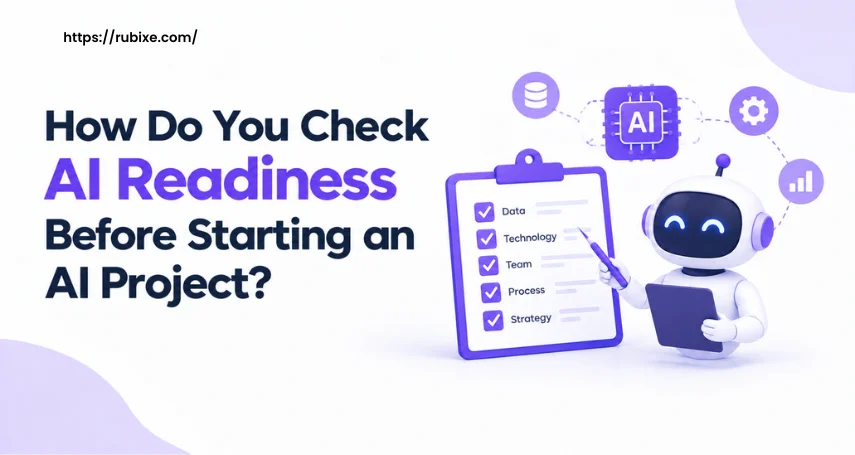
A practical AI readiness check can cover five areas. This is a simple working framework, not a universal industry standard.
AI readiness is not just a technology check. A capable system can still struggle if the data is unreliable, the team does not use it, or nobody is responsible for the outcome.
Which Mistakes Should You Avoid?
Many readiness problems start when a business moves too quickly. A few common mistakes are worth checking before development or implementation begins:
- Starting with the tool: Define the business problem first and then decide whether AI is suitable.
- Assuming the data is fine: Check data quality, availability, and ownership before building around it.
- Leaving business teams out: The people who will use the results should be involved early.
- Skipping governance: Set basic rules for data access, privacy, review, and accountability before launch.
- Treating readiness as a one-time check: Business needs, systems, and team capabilities can change, so review them again when the project grows.
For a deeper look at common problems, see Rubixe's article on common mistakes in AI readiness assessments.
How Can You Find Your Biggest Gap This Week?
You do not need a large assessment to find an obvious gap. Bring together a few people who understand different parts of the project, such as IT, data, a business team, and training or HR.
Ask each person one simple question:
"If we started an AI project next month, what is the biggest thing that could stop it?"
Write down the answers and group them by area.
This quick discussion will not replace a full assessment, but it can show where a business should investigate first.
How Can You Measure AI Readiness and Project Progress?
Start with a baseline before making changes. Then review a few relevant measures regularly instead of trying to track everything.
Once the project is running, add outcome measures that relate directly to the business goal. For example, a customer-support project might track response time, while a document-processing project might track processing time and error rates.
The right metrics depend on what the AI project is supposed to achieve.
FAQs
What does it mean to be ready for AI?
It means your goals, data, systems, people, and rules are in a position to support the AI project you plan to run.
Does a small business need a full AI readiness assessment?
Not always. A small experiment may only need a short checklist covering the problem, data, systems, people, and basic risks. A larger investment may require a more detailed review.
How long does an AI readiness review take?
It depends on the size of the business and the project. An initial discussion can be completed quickly, while a detailed assessment may require more time to review data, systems, people, and processes.
Who should take part in an AI readiness review?
IT, data, business teams, and people responsible for training or operations can provide different perspectives. Other teams should be included if the project involves areas such as security, legal requirements, or customer data.
Conclusion
AI projects need more than a promising tool or successful demo. Before moving ahead, check whether the business has a clear problem, usable data, suitable systems, people who can work with the results, and clear rules around the technology.
Start with one specific use case and identify the biggest gap before investing further. Set a baseline, address the most important issue, and review the same areas again after the first pilot. This gives the business a clearer picture of whether it is ready to move from an AI experiment to regular use.