Sign up with Google
 Sign in with Zoho
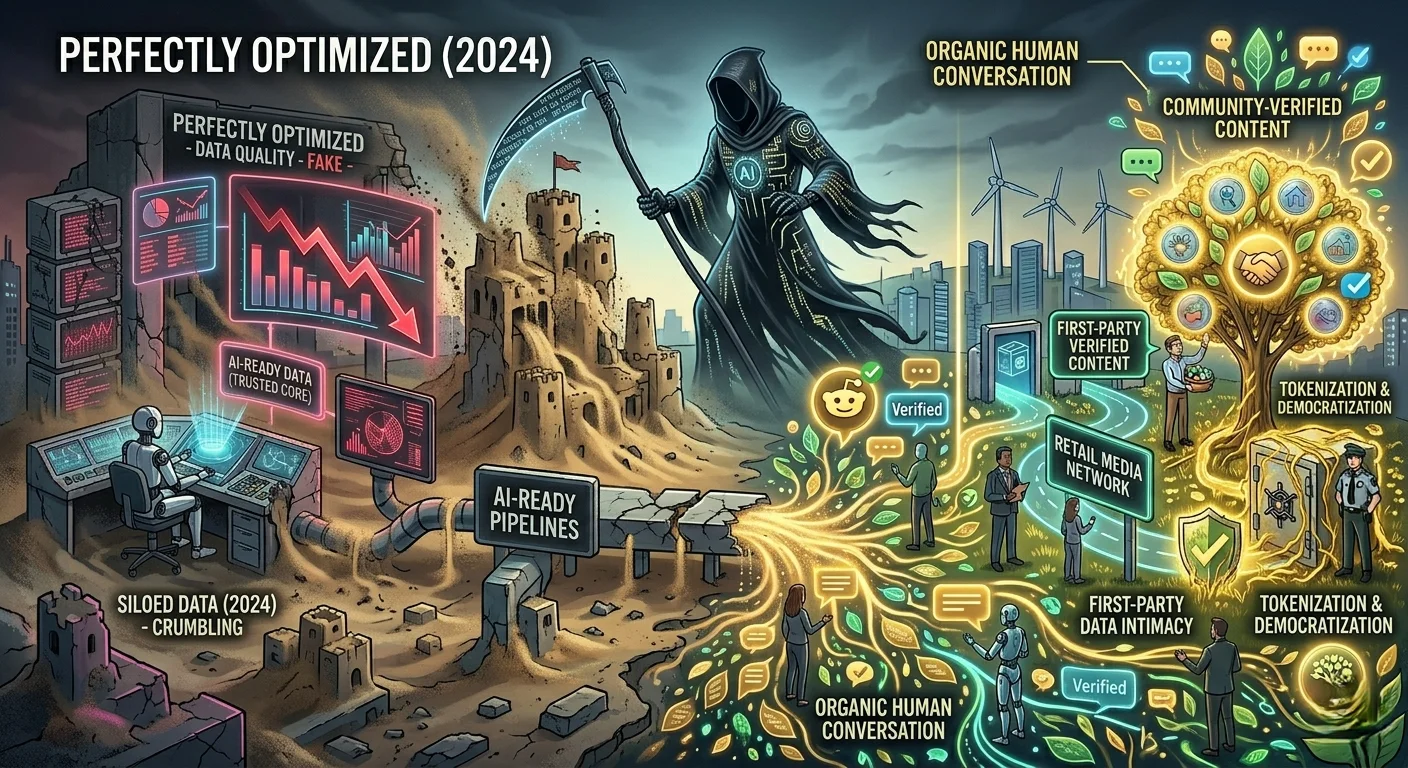

Building predictive models before fixing data quality is like installing a smart thermostat in a house with no insulation. It looks impressive but changes little.
This is the quiet trap so many CXOs fall into while racing to keep up with AI headlines. Analytics maturity models offer a way out. They map out your company's current situation, pinpoint the gaps that are truly preventing progress, and suggest investments that will have a real impact rather than merely look good on a board deck.
How Does a Maturity Model Turn Guesswork Into a Spending Roadmap for Enterprises?
Businesses typically struggle with ranking the data-investment ideas they already have, rather than a lack of them. At this point, a maturity model becomes a tool for budgeting rather than only a theoretical exercise.
Instead of turning that maturity number into a PowerPoint that is discussed in one meeting and then quietly put away, working with the proper data analytics services company may help transform that score into a roadmap that leadership genuinely believes in.
Here's how that translation actually plays out in practice:
- Mapping Every Initiative to a Maturity Gap, Not Just a Budget Line: Rather than assessing funding requests separately, mature organizations take into account which gaps each program actually addresses. A pitch for predictive modeling means little if diagnostic reporting still breaks weekly. Mapping every proposal against the current maturity stage forces a more honest conversation, one where investment follows readiness rather than ambition or internal politics.
- Spotting the Stage-Skipping Trap Before It Costs You: Plenty of enterprises try to leap from basic reporting straight to prescriptive AI, drawn in by an impressive vendor demo. One retailer nearly funded a dynamic pricing engine while still lacking clean diagnostic data. Before funds are committed to instruments the company isn't prepared to support, a maturity model reveals that gap.
- Calculating the Cost of Staying Put: Slow decision-making, missed signals, and manual rework that takes up analyst time are all consequences of staying too long at a basic reporting level. Instead of perceiving analytics investment as something that can always wait another quarter, maturity models can put a price on that burden, providing firms with a better financial case for moving forward.
- Aligning IT, Finance, and Business Units on the Same Scorecard: One quiet win of maturity modeling is shared language. IT stops talking infrastructure in isolation, finance stops talking budget in isolation, and business units stop talking outcomes in isolation. Everyone scores the same dimensions, often borrowed from frameworks a data analytics services company would use during an enterprise assessment, which makes cross-functional investment conversations noticeably shorter and far less defensive.
- Reexamining the Roadmap as Maturity Changes: A maturity model is not a one-time audit. The next set of priorities also changes when initiatives fill gaps. Businesses that review their maturity score every few quarters maintain an up-to-date expenditure plan rather than relying on a picture that silently ceases to represent the true state of the company.
How Are GenAI and Agentic AI Rewriting the Maturity Timeline?
According to McKinsey's 2025 State of AI survey, 23% of organizations are already scaling agentic AI while 39% are experimenting with it, prompting executives to rethink how quickly analytics maturity can be achieved.
For many years, switching from descriptive reporting to predictive or prescriptive analytics required years of incremental expenditure. That period is being compressed by GenAI and agentic AI, but not in the manner that most leadership decks imply.
Here's a closer look at how:
1. The Transition from Reporting to Reasoning
Each stage was handled as a distinct product in traditional maturity models: a report, a model, and a suggestion. Instead of waiting for each step to be constructed independently, agentic AI integrates everything into a single reasoning loop where the system detects a metric fall and provides a repair in a single action.
2. Compressing the Pilot-to-Scale Gap
Before scaling a predictive model, businesses used to take a year or longer to prove it. This is one of the clearest signs of genAI transforming data analytics, shrinking that gap by testing and refining its own logic within live workflows, turning what was once a slow, sequential rollout into something closer to continuous calibration.
3. From Single Prompts to Continuous Loops
Generative AI typically answers one question at a time. Since agentic AI integrates several reasoning processes, tool calls, and follow-up tasks without requiring a fresh prompt for each, it can operate at a level of maturity that traditional analytics could never attain without aid.
4. From Human-in-the-Loop to Human-on-the-Loop
Earlier maturity stages assumed a person reviewed every output before anything happened.
Agentic AI changes that function from approval to oversight, with humans keeping an eye on results rather than approving each step. This expedites the process but raises the governance stakes.
5. Redefining What "Mature" Even Means
For years, prescriptive analytics sat at the top of the maturity curve. With genAI transforming data analytics at this pace, agentic AI adds a layer above it, autonomous execution, which means some enterprises chasing yesterday's definition of maturity are unknowingly aiming for a target that's already moved.
Make Maturity Your Next Budget Conversation
One question to consider before accepting another AI pilot is, "Does this align with our current situation?" More wasteful spending is avoided by that one query, supported by a true maturity assessment, than by any vendor presentation deck.
By converting maturity scores into investment sequences that business, IT, and finance departments can all agree on, Straive assists companies in providing an honest response. With its data-driven approach to insights and analytics, it helps transform that clarity into a staged plan instead of another scattered wishlist of trials.
Remember, in 2026, what separates the enterprises pulling ahead isn't how fast they adopt AI; it's how deliberately they sequence it. Because maturity isn't the slow road. It's the only one that actually leads anywhere.