Sign up with Google
 Sign in with Zoho

A business decides to enter a new market. The team starts discussing a website, social media campaigns, email outreach and hiring a salesperson.
All of these may be needed. But there are a few decisions to make first. Who exactly are we trying to sell to? What do these customers need? Why would they consider us? What should we offer, and how much should we charge?
These questions form the starting point of a Go-to-Market strategy.
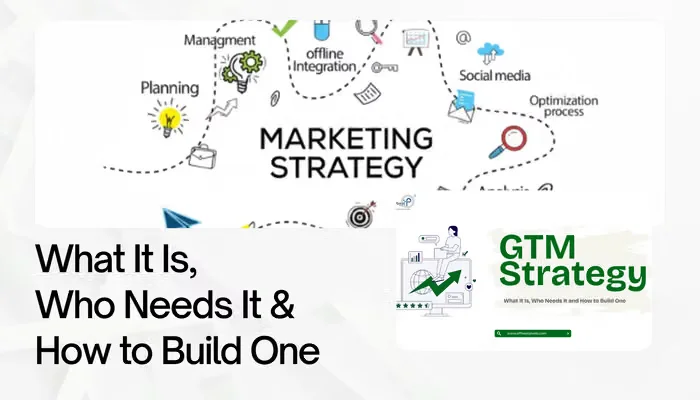
What is a GTM strategy?
GTM stands for Go-to-Market. It is the plan a business prepares before entering a new market, expanding into a new geography or launching a product or service.
The purpose is to work out how to reach the right customers, give them a reason to buy and deliver what we promise.
Let’s take a simple example.
Imagine a website development company in India planning to work with hospitality businesses in Australia. This is an illustrative example, but it shows the decisions involved.
The company knows how to build websites. It now needs to understand which businesses to approach.
- Should it focus on independent hotels, resorts or restaurant groups?
- Who makes the decision?
- What would make them consider replacing their existing website?
- It also needs to decide its pricing
- How it will show relevant work and how it will manage communication across time zones.
Working through these questions is part of building its GTM strategy. The plan begins before entering the market and develops as the business learns from customers.
Who needs a GTM strategy?
A startup needs one when it is preparing to find its first customers. An established business needs one when it changes what it sells, who it sells to or where it operates.
For example:
- A local business expanding into another city.
- A manufacturer introducing a new product.
- A consultancy entering another country.
- A software company moving from small businesses to enterprise customers.
- A company introducing a subscription alongside its existing services.
Even a business already running campaigns may need to revisit its GTM strategy if it keeps attracting enquiries that do not fit its offer.
Being able to deliver a service and knowing how to sell it in a new market are two separate things to work out.
Your website should reflect the GTM strategy
The website is where many of these decisions become visible to the customer. If our company approaches hotel owners with a specific website offer, the page they visit should continue that conversation.
They should be able to understand:
- Whether the service suits their type of business.
- What it includes and how the process works.
- What relevant work the company has completed.
- How the company will handle their questions and support needs.
- What they can do next.
A visitor still researching may want to explore examples. Someone with a clear requirement may want to discuss a project. The website should support both.
A good-looking website can still leave people unsure about what you offer or why they should contact you.
This is why I would settle the audience, offer and message before approving the layout. Those decisions tell the designer and developer what the website needs to achieve.
Readable mobile pages, accessible navigation and working forms support that experience. Useful content and sound technical SEO also support discovery, including Google's AI search features, without guaranteeing visibility.
Before investing more in promotion, I would ask one question internally:
Have we made it clear who we want to buy from us, why they should choose us and what happens when they do?
That is a useful place to begin a GTM strategy.
When you entered a new market, which assumption changed first: who would buy, what they would pay or how you needed to reach them?