 Sign up with Google
 Sign in with Zoho

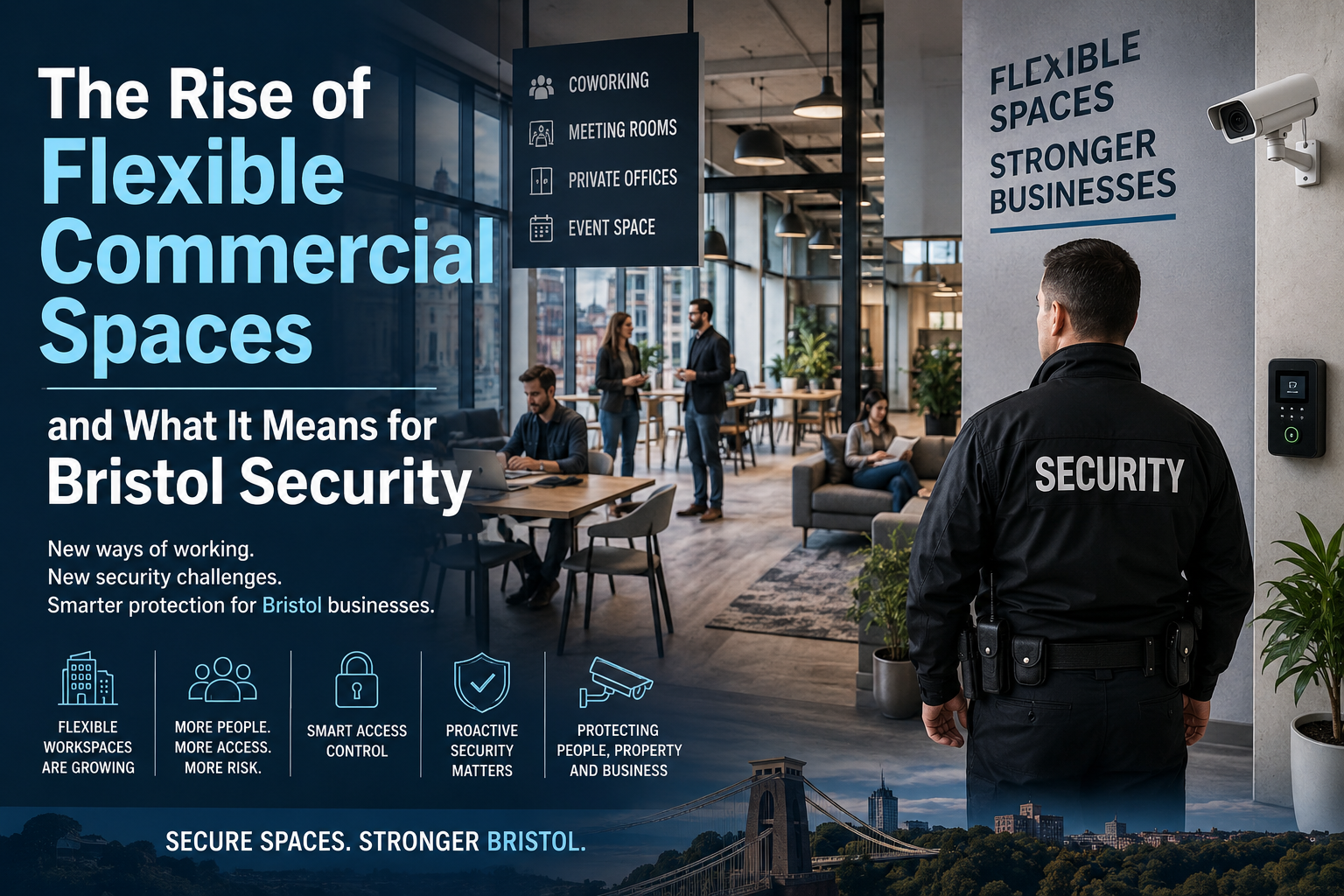
Bristol’s workspaces are changing. Not long ago, many firms used one office, one team, and fixed hours. Staff came in each morning, visitors were few, and reception teams knew who belonged in the building. That model is fading.
Across Bristol, more firms now use shared offices, serviced suites, coworking hubs, and short-term commercial lets. Start-ups like flexibility. Small firms like the lower cost. Hybrid teams like freedom. It works well for business. But it creates new security problems.
A building with one tenant is easier to protect than a building with ten. A space used by fixed staff is simpler than one with changing users, visitors, delivery teams, and contractors.
That is why commercial security in Bristol is becoming a bigger issue. Flexible space is good for growth. But security plans must change with it.
Why Flexible Commercial Spaces Are Growing in Bristol
Bristol has become one of the UK’s strongest regional business cities. It attracts start-ups, creative firms, tech businesses, consultants, and growing SMEs.
Not every business wants a long lease or a traditional office. Flexible space solves that.
Hybrid Working Changed Office Demand
Many firms no longer need staff at desks five days a week. Some teams split time between home and office. Others meet only on selected days. That makes large permanent offices less practical. Flexible workspace gives firms room without long-term cost.
Smaller Firms Need Lower Risk
Young businesses often avoid large commitments. Short-term office options help them scale without heavy contracts. That makes a shared workspace more attractive.
Bristol’s Business Growth Supports the Shift
Commercial districts across Bristol continue evolving. Demand for practical workspace remains strong, especially where firms want city access without major overheads.
This growth is changing how buildings operate. And changing how they must be secured.
When Too Many People Share One Building, Control Gets Harder
Flexible space looks simple on paper. In practice, it creates more moving parts. More users mean more uncertainty. This is where shared workspace security becomes critical.
Constant Visitor Movement
Traditional offices often have predictable movement. Shared commercial sites do not.
Visitors may include:
- clients
- interview candidates
- delivery drivers
- contractors
- temporary workers
- meeting guests
That creates heavy foot traffic. Busy movement makes it harder to spot unusual behaviour.
Access Control Becomes More Complex
One business can manage simple access rules. Shared buildings cannot.
Different tenants may need:
- different access hours
- restricted floor access
- contractor permissions
- temporary visitor passes
Weak control increases risk. Strong access control for commercial buildings is essential.
Tailgating and Unauthorised Entry
This is a common issue in shared buildings. Someone follows another person through secure doors. No questions asked. No checks made. This creates a clear security gap. Busy entrances make this harder to manage.
Asset Theft Risks Increase
Shared workspaces often contain:
- laptops
- phones
- confidential paperwork
- IT equipment
- personal belongings
High movement creates opportunity. Not every theft involves forced entry. Sometimes items disappear.
Traditional Office Security Was Built for a Different Time
Many office security systems were built for stable environments. That does not match flexible workspace reality.
Predictable Occupancy No Longer Exists
Traditional buildings often had clear routines. Staff arrived at similar times. Buildings emptied after work. That made monitoring easier. Now occupancy can change hour by hour.
Reception Alone Is Not Enough
A front desk helps. But one receptionist cannot monitor every floor, corridor, and entry point. Shared buildings need wider oversight.
Security Planning Must Be Dynamic
Static systems fail in changing spaces.
Security must adapt to:
- temporary users
- changing tenant needs
- extended operating hours
- weekend access
- contractor visits
That is why building security in Bristol requires a different approach today.
Smart Tech Helps, But It Cannot Watch Everything
Technology has improved building protection. But tools must be used properly.
Smart Access Systems
Modern access tools help control movement.
These include:
- key card systems
- app-based entry
- timed permissions
- audit tracking
This improves accountability.
CCTV Monitoring
Well-placed cameras help identify:
- unauthorised movement
- access breaches
- suspicious behaviour
- theft concerns
They improve awareness. But cameras do not stop incidents alone.
Visitor Management Tools
Digital sign-in systems create better records. This helps buildings track who entered and when. That matters during incidents. Technology helps. But it cannot replace people.
Why Human Security Still Matters
Buildings need real human judgement. That is where manned guarding remains valuable. Technology sees activity. People understand it.
Visitor Verification
Security staff can ask questions. They can challenge unknown visitors. They can confirm access rights. Technology cannot handle uncertainty the same way.
Fast Incident Response
If a conflict starts, a delayed response creates risk. On-site staff can act quickly. That speed matters.
Visible Deterrence
Visible security presence changes behaviour. People are less likely to test weak access when trained staff are nearby. This remains a key part of commercial security in Bristol planning.
Support During Emergencies
Security teams help manage:
- fire alarms
- evacuations
- access restrictions
- emergency services coordination
That human role remains critical. A trusted security company in Bristol supporting commercial sites can strengthen both daily operations and emergency readiness.
What Bristol Property Managers Should Rethink
Commercial property managers face new pressure. Security planning must match building reality.
Review Access Permissions
Old permissions often stay active too long. Former contractors or expired users should not retain access. Regular audits matter.
Improve Shared Responsibility
In flexible spaces, security responsibility can become unclear.
- Who manages visitors?
- Who handles incidents?
- Who approves access?
Clear answers prevent confusion.
Plan for After-Hours Risk
Flexible users often work outside standard hours. That creates fresh security demands. Buildings once empty at night may no longer be predictable.
Strengthen Contractor Control
Maintenance teams, delivery workers, cleaners, and engineers all need controlled access. Loose contractor management creates exposure.
Flexible Work Brings Security Opportunity Too
This shift is not all negative. Modern security planning can actually improve building standards.
Flexible sites often invest faster in:
- better access control
- smarter monitoring
- improved reporting
- stronger visitor systems
That creates safer environments when managed well. The key is planning.
Conclusion
Flexible workspace is not a passing trend in Bristol. For many firms, it is now the practical choice. It keeps costs manageable and gives businesses room to adapt.
But buildings that welcome different people every day come with a very different risk profile.
The challenge is not simply locking doors or installing cameras. It is knowing who should be in the building, when they should be there, and how quickly problems can be handled if something goes wrong.
That is where many property managers are having to rethink old assumptions.
Security planning now needs to match the reality of how people actually work.