Sign up with Google
 Sign in with Zoho

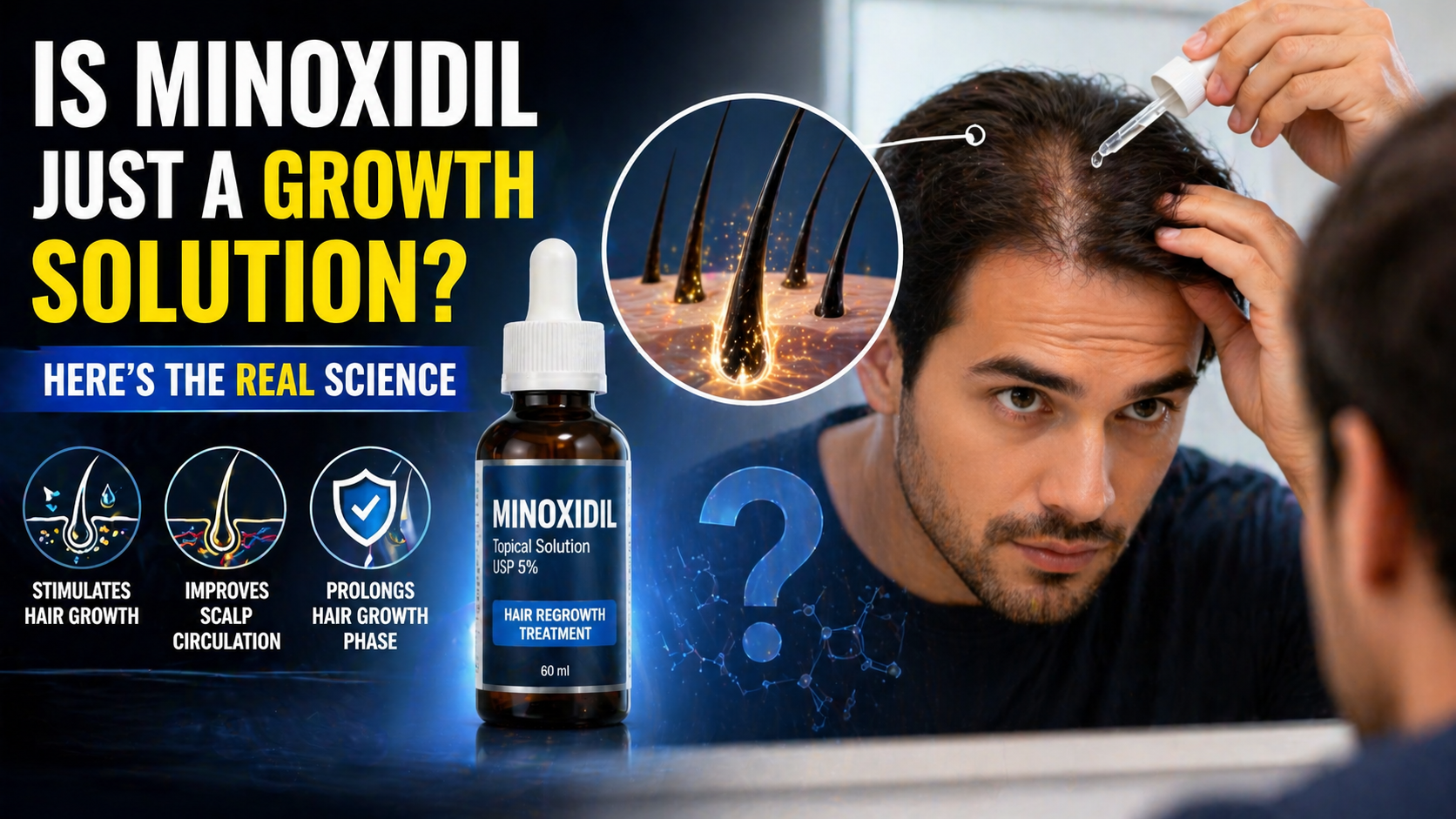
Many people ask a very logical question: If minoxidil is just a vasodilator (a medicine that widens blood vessels), then why don’t all vasodilators help with hair growth?
It’s a smart thought—and the answer reveals something powerful.
Minoxidil is not just a simple blood-flow booster. It works through multiple mechanisms (not one, but seven) that together create the perfect environment for hair regrowth. Let’s break it down in a simple and practical way.
1. Vasodilation – Boosting Blood Flow
Yes, this is the most well-known function.
Minoxidil widens blood vessels in the scalp, which increases blood flow. More blood flow means more oxygen and nutrients reach the hair follicles—helping them stay active and healthy.
2. Neovascularization – Creating New Blood Supply
Minoxidil doesn’t just improve existing circulation—it actually helps form new tiny blood vessels around hair follicles.
This process, called neovascularization, ensures long-term nourishment, which is essential for consistent hair growth.
3. Shifting Hair from Resting to Growth Phase
In hair loss conditions, many follicles stay stuck in the telogen (inactive) phase.
Minoxidil pushes these follicles back into the anagen (growth) phase, allowing new hair to start growing again. This is one of the key reasons people notice regrowth after consistent use.
4. Strengthening the Hair Shaft
Minoxidil works directly on the cells responsible for producing the hair shaft.
As a result:
- Hair becomes thicker
- Hair becomes stronger
- Breakage reduces significantly
This improves not just growth—but also overall hair quality.
5. Indirect Protection Against DHT
While minoxidil does not directly block DHT (the hormone responsible for genetic hair loss), it strengthens hair follicles so much that they become more resistant to its effects.
Stronger follicles = less damage from DHT.
6. Reducing Fibrosis Around Hair Follicles
In balding areas, the scalp often develops fibrosis—a tightening or hardening around hair follicles.
Minoxidil helps soften this area, making it easier for follicles to function properly and grow hair again.
7. Reducing Micro-Inflammation
Another hidden cause of hair loss is micro-inflammation around follicles.
Minoxidil helps reduce this inflammation, creating a healthier scalp environment where hair can grow naturally and consistently.
Why Minoxidil Is Not “Just Another Medicine”
Minoxidil is not simply a blood pressure drug being reused—it acts like a complete support system for your hair:
- Improves blood flow
- Builds new circulation
- Activates dormant follicles
- Strengthens hair structure
- Protects against damage
- Repairs scalp environment
That’s why it stands out from other vasodilators.
When Is Minoxidil Not Enough?
While minoxidil is highly effective in early to moderate hair loss, advanced stages may require additional solutions.
Many individuals eventually consider options like hair transplant in Ludhiana when the hairline has significantly receded and follicles are no longer active.
On the global level, procedures such as hair transplant in Tehran are also gaining attention for their advanced techniques and experienced specialists.
Final Thoughts
If you’re using minoxidil—or planning to start—understand this clearly:
It’s not magic. It’s science working in layers.
Consistency is key. Results take time, but when used correctly, minoxidil can slow down hair loss, improve density, and even bring back lost hair in early stages.
Frequently Asked Questions (FAQs)
1. How long does it take to see results with minoxidil?
Most people start noticing visible results within 3 to 6 months of consistent use.
2. Can I stop using minoxidil after hair regrowth?
No, stopping it may reverse the results, and hair loss can resume.
3. Does minoxidil work for everyone?
It works best in early to moderate hair loss. Advanced baldness may need additional treatments.
4. Are there any side effects?
Some users may experience mild scalp irritation or dryness, but it is generally safe when used properly.
5. Can minoxidil regrow a completely bald area?
It can help in early stages, but completely inactive follicles usually require treatments like hair transplant.