Sign up with Google
 Sign in with Zoho

Go stand in front of the egg case at any grocery store in Texas for five minutes and you'll walk away more confused than when you got there. Free-range, pasture-raised, cage-free, farm-fresh — somebody in a marketing department got very creative a few years back, and now shoppers are stuck squinting at cartons trying to figure out what any of it actually promises.
Two terms in particular get lumped together constantly: free-range and pasture-raised. People assume they're basically synonyms. They're not, and if you're looking for pasture raised chicken in Texas because you actually care how the animal lived (not just what the packaging implies), the difference is worth five minutes of your time.
Free-Range Sounds Nice. That's Kind of the Problem.
Legally, "free-range" doesn't require much. The USDA's standard just says the birds need access to the outdoors. That's the whole bar. Nothing in there about how much space, how long they're allowed out, or what that outdoor area is supposed to look like.
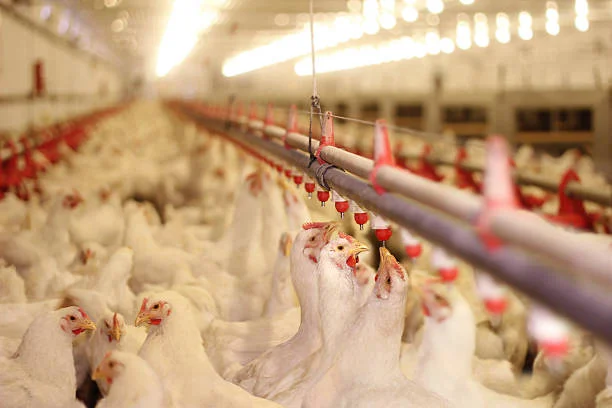
So here's what that can actually mean in practice: an industrial coop holding a few thousand birds, with one small door cracked open on the side for a couple hours a day, leading out to a patch of dirt about the size of a parking spot. Most of those chickens will never find that door in their entire lives — there are simply too many birds and not enough opening. Doesn't matter. Every one of them still qualifies as free-range under the law.
Kind of absurd when you actually think about it.
Pasture-Raised, When Farms Do It Right, Means Something Real
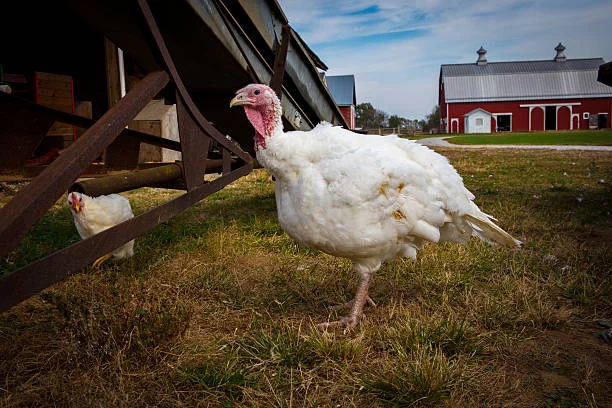
There isn't a strict federal definition for "pasture-raised" either, which is honestly part of the problem — but among farms that take it seriously, the term describes chickens that spend most of their lives outside on actual grass. Foraging. Scratching around for bugs. Doing what chickens evolved to do, instead of standing in a warehouse eating grain all day.
Most farms doing this correctly rotate their birds through different sections of pasture rather than leaving them on one patch indefinitely. There's a reason for that: keep birds crowded on the same ground too long and it turns into a parasite problem fast, plus the grass gets stripped bare and stops being pasture at all. Rotating keeps the land recovering and keeps the flock healthier too.
This isn't just a welfare talking point. A chicken that's actually foraging outdoors is eating a completely different diet — bugs, greens, more movement, more variety — compared to one eating grain indoors from birth. And that diet shows up later. Richer yolk color. Different texture in the meat. A flavor that's noticeably more pronounced in a lot of cases. Nobody's imagining that.
Why the Vague Labeling Actually Costs Shoppers
Here's where things get frustrating. Since "free-range" already sounds humane, and since "pasture-raised" has no hard USDA definition backing it up, some producers just print "pasture-raised" on the package without doing any real rotation whatsoever. Notice how the vaguest language always seems to cluster right where the regulation is thinnest? Not exactly a coincidence.
The word on the carton isn't what you should be trusting. The farm behind it is. If a producer is willing to tell you exactly how many acres they're using, how often birds get rotated, and what they're feeding beyond pasture forage — that's usually a farm actually doing the work. A carton with "pasture-raised" printed in bold green letters and nothing else to back it up? Worth a second look before you buy.
What Texas Shoppers Should Actually Do With This
Texas has enough open land that legitimate pasture operations aren't hard to come by, especially compared to more urban states where "pasture access" might mean a fenced-in gravel lot with some weeds growing through it. Still, being near a big city doesn't disqualify a farm, and being far from one doesn't automatically vouch for it either. A chicken farm in Houston could be doing everything right with genuine rotational pasture — or it could be relying on the exact same vague wording as every other producer on the shelf. The only way to know for sure is to ask: acreage, rotation schedule, what's supplementing the forage.
Buying local doesn't guarantee you're buying better. What it does give you is proximity, and proximity makes it a lot easier to actually verify a claim instead of just trusting a label that got shipped in from three states away.
Bottom Line
Free-range guarantees outdoor access in about the loosest way the law allows for. Pasture-raised, when it's done honestly, is a lot closer to what people actually picture when they hear "farm-raised" — grass, sunlight, room to forage, room to just be a chicken. The two terms sit next to each other on a shelf and look nearly identical. What's happening behind them isn't close to the same thing.
FAQs
Is pasture-raised chicken more expensive than free-range?
Usually, yes. Pasture-raised tends to run about $6–$9 per pound versus $3–$5 for standard free-range, mostly because of land use and lower flock density.
How can buyers verify a farm's pasture-raised claims?
Just ask about rotation frequency and acreage per bird. Farms with nothing to hide tend to answer that without any hesitation.
Does pasture-raised chicken taste different?
Plenty of people notice a richer flavor and firmer texture — largely a result of the varied diet of foraged bugs and greens instead of grain-only feed.
Are pasture-raised eggs worth the price difference?
If yolk color, flavor, or animal welfare matter to you, most people would say yes. Pasture-raised eggs typically run $6–$8 a dozen compared to $3–$4 for free-range.