Sign up with Google
 Sign in with Zoho

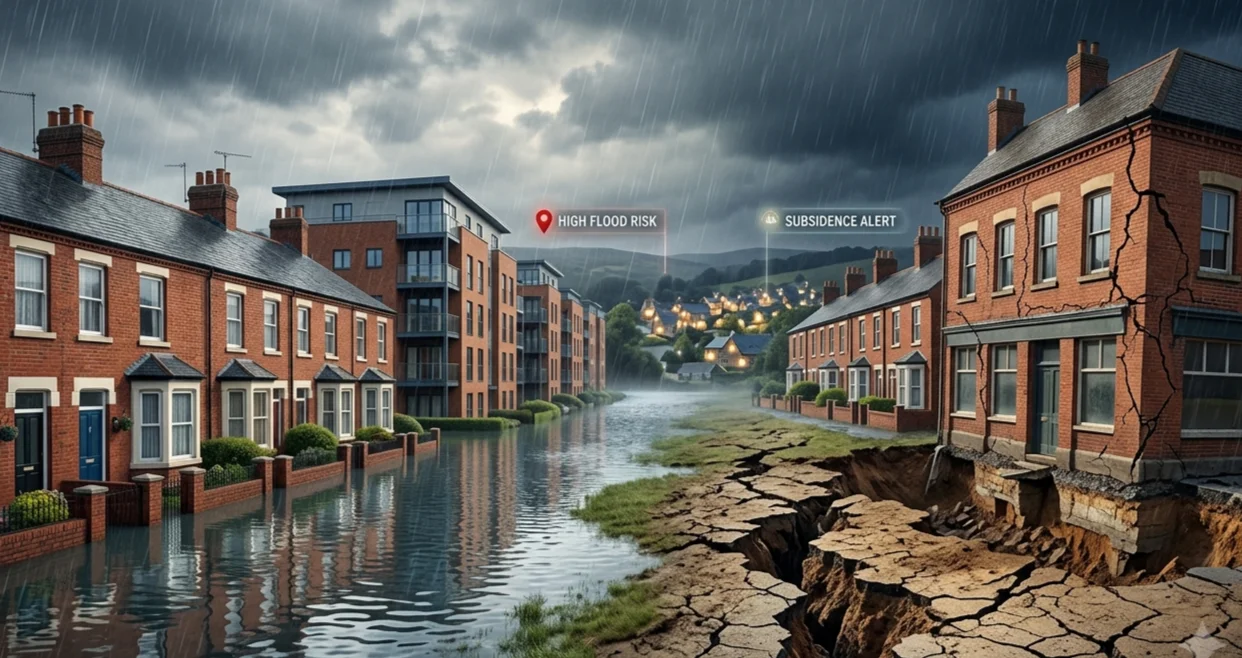
Owning a property portfolio has long been a foundational pillar of UK wealth building. Yet, the metrics of a "good investment" are fundamentally changing. Historically, landlords and commercial investors focused primarily on yields, tenant demographics, and transport links. Today, a new, quieter variable is dictating portfolio values and loan approvals: climate risk. With extreme weather events escalating, standard insurance markets are rapidly tightening their criteria. Navigating this shifting landscape requires a nuanced understanding of environmental exposures and the advocacy of a specialist Business Insurance Broker in UK to ensure your assets don't become uninsurable liabilities.
The Trillion-Pound Reality: UK Property and Climate Exposure
The financial impact of climate change is no longer a hypothetical projection for the 2050s it is actively disrupting the insurance market right now. UK property insurance claims hit a staggering, record-breaking £6.1 billion in recent months, heavily driven by a 38% spike in domestic flood claims and an all-time high of £307 million in subsidence payouts.
As a result, major data analyses show that properties sitting in high-risk flood zones are trading at an average 6% discount compared to low-risk properties in the exact same region. For property investors, the message is clear: environmental risk is being explicitly priced into local market values, and insurers are reacting accordingly.
The Dual Threat: Surface Water and Shifting Foundations
When considering environmental risk, investors often look at coastal erosion or proximity to major rivers. However, modern portfolio threats are far more insidious.
1. Flash Flooding and the 2009 Boundary
Pluvial (surface water) flooding occurs when intense rainfall overwhelms local drainage systems, completely independent of rivers or coastlines. This risk is highly exacerbated for newer developments. Approximately one in nine new homes built in England between 2022 and 2024 sit within medium-to-high risk flood zones.
For residential portfolio holders, there is a critical regulatory trap: the government-backed Flood Re reinsurance scheme designed to keep flood cover affordable explicitly excludes commercial premises, blocks of flats containing more than three units, and any property built after 1 January 2009. If your portfolio includes newer builds or commercial units in these zones, you are entirely reliant on the volatile private commercial market.
2. The Subsidence Surge
Subsidence where the ground beneath a property sinks, pulling the foundations down with it is no longer just a concern for historic period properties. The UK's increasingly volatile weather cycle of exceptionally wet winters followed by prolonged, baking summer heatwaves creates an intense "shrink-swell" effect in clay-rich soils. This shifting ground deforms foundations, fractures brickwork, and costs tens of thousands of pounds per property to remediate via underpinning.
The Rebuild Cost Paradox: A major vulnerability facing high-risk properties is underinsurance. Due to steep inflation in construction materials and labor, more than half of the highest-risk flood properties sold recently feature rebuild costs that actually exceed their total market value. If a policy is not meticulously structured, a major environmental event could trigger a partial claim settlement, leaving the landlord with a massive out-of-pocket shortfall.
How Specialist Markets View "Difficult" Postcodes
To the untrained eye, two properties on opposite sides of a UK high street look identical. To an insurance underwriter using modern geospatial modeling, they represent entirely different risk profiles.
Insurers no longer look at broad town or city data; they leverage hyper-local climate scoring systems that evaluate risks at an individual postcode or specific property coordinate level. Areas like Hull (where over 90% of transactions involve high-flood-risk ratings), parts of London, Essex, and the East Midlands are heavily flagged by automated underwriting algorithms.
When a postcode is flagged as "difficult," standard insurers usually react in three ways:
- Declining to quote entirely.
- Imposing catastrophic, five-figure excesses for flood or subsidence claims.
- Excluding environmental damage altogether, which instantly breaches commercial mortgage conditions.
To secure viable coverage in these sectors, properties must be presented to specialist, non-standard Lloyd's syndicates and wholesale underwriting markets.
The Portfolio Mitigation Strategy
Protecting a portfolio in high-risk zones requires moving away from generic policies and adopting a structured risk-mitigation approach:
Ultimately, a property portfolio is an interconnected business entity. Safeguarding it against today's climate realities demands forward-thinking risk architecture. By aligning your business with a knowledgeable Business Insurance Broker in UK, you can bypass automated algorithms, present documented property-level resilience measures directly to human underwriters, and secure the comprehensive protection your investments require.