 Sign up with Google
 Sign in with Zoho

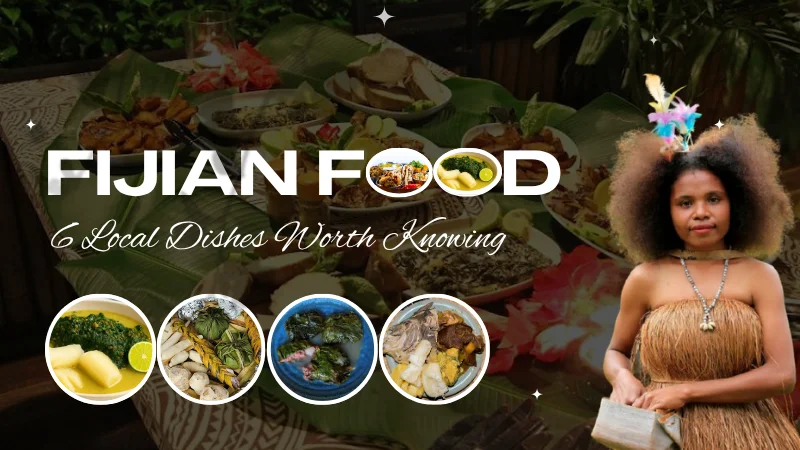
If you walk into a Fijian kitchen on Sunday then you'll probably smell smoke, coconut and curry leaf, sometimes all at once. Fish is cured in lime juice, taro leaves are put into pots of coconut milk, and the biggest meals of the week come out of a pit in the ground. Indo-Fijian cooking has curries, roti and dhal, so even just in a single street you can taste different food from one place to another.
If you're planning a trip, sort out the practical side early. Check your entry requirements through Fiji eVisa, then leave yourself enough time to eat your way around the islands.
1. Kokoda: Fish with Lime and Coconut
Kokoda is the dish most people mention first.Firm white fish, such as walu or mahi-mahi, is cut into small pieces and soaked in lime juice. The acid in the juice changes the fish's colour, turning it from translucent to white. Coconut cream was added in the end, along with diced tomato, cucumber, onion and chilli, though every cook has a slightly different ratio.
It tastes sharp, cool and creamy at once, with a little crunch from the vegetables. You'll often get it chilled as a starter, sometimes served in a coconut half. The fish is cured rather than cooked, so if you don't eat raw seafood, order a grilled or fried fish dish instead.
2. Lovo: Food Cooked Underground
A lovo is a traditional Fijian earth oven used to prepare food for family gatherings, village celebrations and special occasions. Stones are heated in a fire inside a pit. Once the stones are hot, food wrapped in banana leaves is placed on top. The pit is then covered with leaves and soil, allowing the food to cook slowly in the trapped heat.
Chicken, pork, fish, dalo and cassava are common choices for a lovo. The food develops a smoky flavour and becomes tender as it cooks. Preparing and uncovering the oven is often a shared activity, with family and community members helping to arrange the food and serve the meal. Some hotels organise lovo nights, giving visitors a chance to taste this traditional cooking without attending a village celebration.
3. Palusami: Taro Leaves and Coconut Cream
Palusami is a small parcel of young taro leaves wrapped around coconut cream and onion, then baked or tucked into the lovo. As it cooks, the leaves go silky and soak up the cream, so each bite is rich and savoury with a faint saltiness.
Some cooks add corned beef, which is popular across the Pacific, so vegetarians should ask before ordering.
4. Rourou: A Simple Leaf Dish
Rourou is the plainer cousin of palusami. Instead of a filled parcel, the taro leaves are simmered until tender, usually in coconut milk, until they turn into something close to a creamy green stew. It tends to turn up as a side next to fish, meat or root vegetables, and locals often treat it as the dish that makes the rest of the plate work.
The leaves have to be cooked thoroughly. Raw or undercooked taro leaves can cause an itchy, scratchy feeling in the mouth and throat, which is why it's worth sticking to places that cook it properly.
5. Cassava and Dalo: Everyday Root Vegetables
Cassava and dalo (taro) are common staples in Fijian meals. They are boiled, roasted or cooked in a lovo and served alongside fish, meat and vegetable dishes. Cassava has a firm texture and a mild, starchy taste, while cooked dalo is softer and has a gentle, earthy flavour. Both pair well with coconut cream and the juices from cooked meat or fish.
Breadfruit is another local favourite. Its flesh becomes soft when cooked, and it can be boiled, roasted or fried. Depending on how it is prepared, breadfruit makes a filling side dish or a simple snack.
6. Indo-Fijian Curry and Roti
Indo-Fijians have been part of the country's story for generations, and their cooking is everywhere, from market stalls in Suva to small cafes in Lautoka. Curries come with chicken, goat, fish, vegetables or potatoes, built on garlic, ginger, onion and spices. Dhal brings warmth and comfort, and soft roti is there for scooping up whatever's left on the plate.
Heat levels range from gentle to eye-watering depending on the kitchen. Asking about the chilli before you order is the easiest way to avoid a surprise.
Where Can You Try These Foods?
Start at a local market. Suva's municipal market and the stalls in Nadi are good places to see cassava, taro, leafy greens and tropical fruit stacked up, and you can ask vendors how they'd cook what you're looking at. Restaurants serving traditional Fijian food often list kokoda, rourou or palusami, and a Sunday Lovo is usually your best bet for a full spread.
Indo-Fijian restaurants and curry houses give you the other half of the picture. Try both styles within a few days of each other and the contrast says a lot about how the country eats.
A Taste of Fiji Beyond the Resorts
Fijian food goes well beyond seafood and coconut. Earth ovens, root vegetables, leaf dishes and Indo-Fijian spice all share the same menus, and recipes shift from household to household, so the kokoda you eat in one village may taste different a few islands away.
Learn a few of these names before you go. It is easier to read the Menus, and people tend to light up when a visitor asks for Rourou instead of pointing at the nearest burger.