Sign up with Google
 Sign in with Zoho

If you have been curious about Artificial Intelligence but do not know where to begin, you have likely come across the Elements of AI course. It is one of the most widely recognized free introductions to AI in the world, and for good reason.
The Elements of AI course was created by the University of Helsinki and Reaktor, a Finnish technology company. Since its launch, millions of people across the globe have enrolled in it from curious students to busy working professionals looking to understand how AI is reshaping their industries.
In this review, we break down exactly what the course covers, what you will learn, who it is best suited for, and how it compares to other learning options. Whether you are a student, a career changer, or simply a lifelong learner, this guide will help you decide if this course is the right starting point for your AI journey in 2026.
What Are the Elements of an AI Course?
The Elements of AI is a free online course that introduces you to the world of Artificial Intelligence without requiring a background in mathematics or programming. It was designed to make AI education accessible to everyone, regardless of their technical level.
Think of it as a guided conversation about AI. Instead of jumping into complex code or dense equations, the course explains concepts like machine learning, neural networks, and probability using plain language and everyday examples.
The course is self-paced, which means you can study at your own schedule. It is delivered through a web-based platform and includes reading materials, exercises, and quizzes to test your understanding along the way.
Key Facts at a Glance
- Creator: University of Helsinki and Reaktor
- Format: Online, self-paced
- Cost: Free to audit (certificate available)
- Duration: Approximately 6 weeks (a few hours per week)
- Language: Available in dozens of languages
- Prerequisites: None no coding or math background required
Why Learning AI Fundamentals Matters in 2026?
Artificial Intelligence is no longer a topic reserved for computer scientists. In 2026, AI touches almost every field healthcare, finance, education, retail, agriculture, and beyond.
Employers across industries are looking for people who at least understand what AI is and how it works. You do not need to be a developer to benefit from that knowledge. A marketing manager who understands AI-driven analytics, a nurse who understands AI-assisted diagnostics, or a teacher who understands AI learning tools all of these professionals are more valuable in today's job market.
Learning AI concepts and applications also helps you become a more informed citizen. From understanding how recommendation algorithms work on streaming platforms to recognising the ethical questions around automated decision-making, AI literacy is fast becoming a life skill.
The bottom line: The sooner you build a foundational understanding of AI, the better prepared you will be for the changes already underway across every profession.
What You Will Learn: Course Structure and Learning Outcomes?
The Elements of AI course is divided into six chapters. Each chapter introduces a new layer of understanding, building on the previous one.
Here is what to expect:
Chapter 1: What Is AI?
This chapter lays the groundwork. You will learn what AI actually is (and what it is not), how it differs from human intelligence, and why it has become such a powerful force in today's world.
Real-world example: The course uses examples like spam email filters which use AI to decide what goes to your inbox versus your junk folder to explain how machines learn to classify information.
Chapter 2: AI Problem Solving
Here, you explore how AI systems are designed to solve problems. You will be introduced to concepts like search algorithms (how AI finds the best path or solution) through examples like game-playing programs and navigation apps.
Chapter 3: Real-World AI Applications
This chapter connects theory to practice. You will see how AI is used in healthcare, self-driving vehicles, image recognition, and language translation. It is one of the most engaging sections for learners who want to understand AI concepts and applications beyond the classroom.
Chapter 4: Machine Learning
Machine learning is at the heart of most modern AI systems. In plain terms, it means teaching a computer to learn from data rather than giving it fixed instructions. This chapter introduces machine learning fundamentals, including supervised and unsupervised learning, using intuitive visual examples.
Think of it like this: instead of programming a computer with rules for spotting a cat in a photo, you show it thousands of cat photos and let it figure out the patterns on its own. That is machine learning.
Chapter 5: Neural Networks and Deep Learning
Neural networks are inspired by how the human brain works. This chapter walks you through the basics of neural networks and deep learning in a surprisingly accessible way using diagrams and step-by-step walkthroughs rather than complex formulas.
You will not become a deep learning engineer after this chapter, but you will understand what makes these systems so powerful and why they are used in everything from voice assistants to medical imaging tools.
Chapter 6: The Future of AI and Ethics
The final chapter zooms out to explore the broader implications of AI. This includes discussions on AI bias, fairness, privacy, and what the future might look like for intelligent systems.
This is an especially important section because understanding AI is not just about the technology it is also about the values and decisions we embed into it.
Key Features of the Elements of AI Course
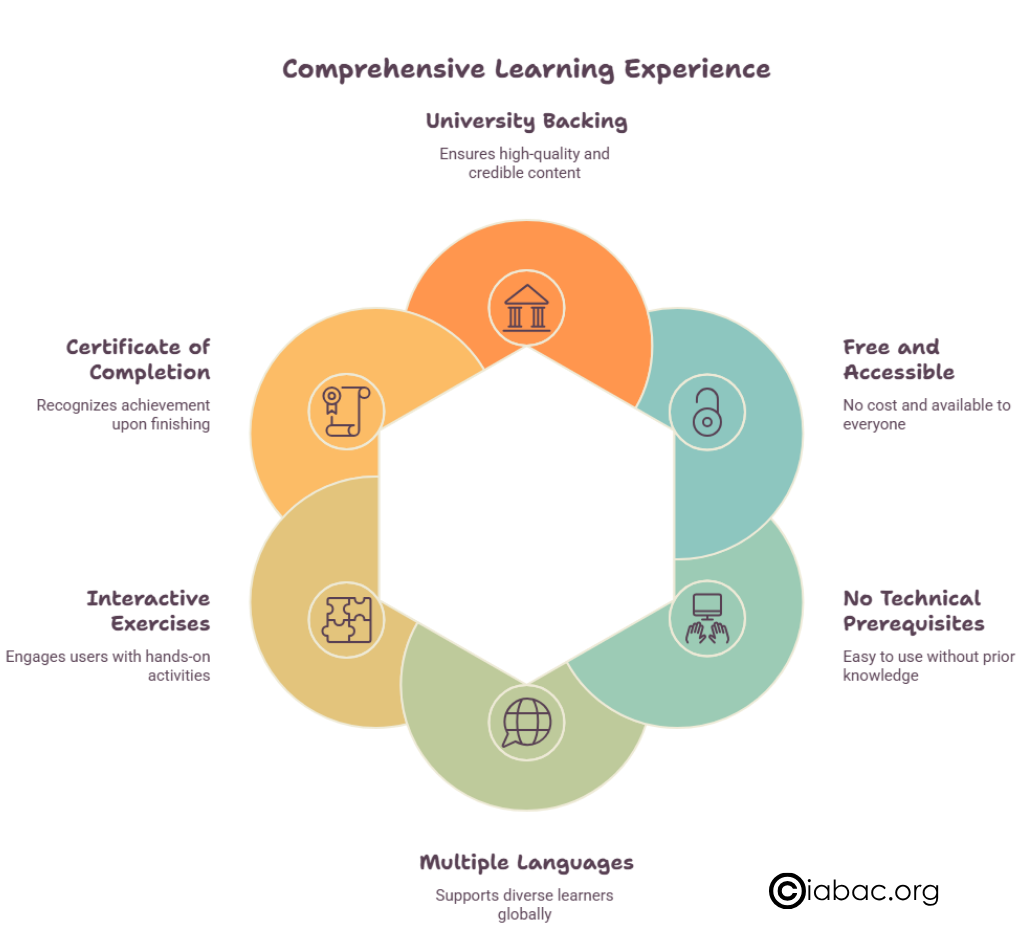
1) Completely Free and Accessible
The course is free to take, and you do not need any special software or subscriptions. Anyone with internet access can start immediately. This makes it one of the most inclusive AI fundamentals for beginners available today.
2) No Technical Prerequisites
Most AI courses assume you already know how to code in Python or understand calculus. Elements of AI does not. It is genuinely designed for non-technical learners, which sets it apart from most other introductory AI programs.
3) Available in Multiple Languages
The course has been translated into dozens of languages, making it accessible to learners worldwide. This reflects its goal of making AI education a global public good.
4) Interactive Exercises
Rather than just reading text, you will complete exercises that challenge you to apply what you have learned. This active learning approach reinforces understanding and makes the material stick.
5) Certificate of Completion
Upon finishing the course, you can receive a certificate. While it is a foundational credential, it demonstrates initiative and a basic understanding of AI useful when combined with more advanced certifications.
6) Backed by a Leading University
Being developed by the University of Helsinki gives the course strong academic credibility. The content is well-researched, accurate, and regularly updated to reflect the evolving field of AI.
Who Should Take the Elements of an AI Course? Is It Right for You?
This course is not for everyone and that is perfectly fine. Here is a simple breakdown to help you decide:
This course is ideal for you if...
- You are new to AI and want to understand what all the buzz is about
- You are a professional in a non-technical field (HR, marketing, healthcare, finance, education) and want to understand how AI affects your work
- You are a student exploring AI as a potential career direction
- You are a lifelong learner who wants to stay informed about technology
- You are a career switcher who wants a low-risk, free introduction before investing in paid courses
- You are an educator looking for a structured way to introduce AI to your students
This course may not be enough if...
- You already have a background in computer science or data science
- You want hands-on coding experience with Python, TensorFlow, or PyTorch
- You are preparing for a technical AI or data science role and need advanced skills
- You need an industry-recognised certification for career advancement
Advantages and Limitations: An Honest Review
Advantages:
- Completely free no hidden fees or paywalls
- Ideal for absolute beginners with zero technical background
- Well-structured, logical progression from basic to advanced concepts
- Engaging writing style reads more like a story than a textbook
- Covers both technical concepts and ethical dimensions of AI
- Widely recognized and trusted used in schools and workplaces globally
Limitations:
- Does not teach coding or practical implementation
- The certificate holds limited weight in competitive technical job markets
- Not suitable as a standalone credential for AI career development
- Lacks hands-on projects or portfolio-building opportunities
- Some learners may want more depth in areas like machine learning fundamentals or deep learning
The honest takeaway: Elements of AI is an outstanding starting point. But to truly leverage AI in a professional context, you will need to build on this foundation with structured, industry-recognized learning.
Step-by-Step Learning Roadmap: From Beginner to AI-Ready
If you are serious about building AI knowledge that matters professionally, here is a roadmap that starts with Elements of AI and takes you further:
1) Start with Elements of AI (Weeks 1–6): Complete the free course to build conceptual clarity. Focus especially on the machine learning and neural networks chapters.
2) Explore Python Basics (Weeks 7–10): Python is the most widely used language for AI. Free resources like Google Colab and beginner Python tutorials will help you get hands-on.
3) Try Beginner Machine Learning Tools (Weeks 11–14): Platforms like Scikit-learn (a beginner-friendly machine learning toolkit) let you run your first models without needing deep expertise.
4) Take a Structured AI Certification Programme (Months 4–6): This is where you formalise your learning. Look for industry-recognised certifications that validate practical AI skills.
5) Build a Portfolio Project (Month 6+): Apply your skills to a real problem: a simple chatbot, a recommendation system, or a data analysis project. This is what employers want to see.
6) Stay Current (Ongoing): AI evolves rapidly. Follow trusted sources, join AI communities, and continue learning as the field develops.
Certifications to Build On Your Elements of AI Foundation
The Elements of AI course gives you a strong conceptual base, but the job market rewards those who go further. Certifications demonstrate that you have not just learned theory, you have validated your skills through structured assessment.
Here is a side-by-side comparison of leading AI certification options to help you choose the right next step:
Why IABAC Is the Top Recommended Option?
Among the options above, the International Association of Business Analytics Certifications (IABAC) stands out as the most well-rounded choice for learners who have completed foundational courses like Elements of AI and want a structured, industry-aligned next step.
IABAC certifications cover AI fundamentals, data science, machine learning, and emerging technologies making them directly relevant to the knowledge you build in introductory courses. They are designed for professionals at all levels, including those transitioning from non-technical backgrounds.
Unlike vendor-specific certifications (which are tied to a particular company's tools), IABAC credentials are broadly recognised across industries and geographies, making them a versatile investment in your professional growth.
Explore AI certification programmes from IABAC at: https://iabac.org
Career Opportunities After Learning AI Fundamentals
Building a foundation in AI fundamentals opens doors across many sectors. Here are some of the roles where AI knowledge even at a basic level gives you a competitive edge:
For Non-Technical Professionals:
- AI Product Manager: Bridges the gap between technical AI teams and business stakeholders
- Data Analyst: Uses AI-powered tools to extract insights from data
- Digital Marketing Specialist: Leverages AI tools for campaign automation and personalisation
- Healthcare Administrator: Understands and advocates for AI-assisted clinical tools
- HR Technology Specialist: Manages AI-driven recruitment and workforce platforms
For Those Pursuing Technical Roles:
- Machine Learning Engineer: Builds and deploys machine learning models
- Data Scientist: Combines statistics, programming, and AI to solve complex problems
- AI Research Analyst: Conducts research on AI applications in specific domains
- Natural Language Processing (NLP) Specialist: Works with text and language AI systems
- Robotics and Automation Engineer: Develops intelligent systems for manufacturing and logistics
Summary of Key Learning Outcomes from Elements of AI
By the end of the Elements of AI course, you will be able to:
- Explain what Artificial Intelligence is and how it differs from human intelligence
- Describe how machine learning works using everyday examples
- Understand the basics of neural networks and why they are powerful
- Identify real-world applications of AI across different industries
- Discuss the ethical questions and societal implications of AI
- Speak confidently about AI concepts and applications in a professional setting
Conclusion: Is the Elements of AI Course Worth It?
The Elements of AI course is genuinely one of the best free resources available for anyone who wants to understand Artificial Intelligence without being overwhelmed by technical jargon. It is thoughtfully designed, well-paced, and covers both the technical and ethical dimensions of AI in a way that is accessible to everyone.
If you are new to AI, there is almost no reason not to take it is free, self-paced, and available in multiple languages. It will give you the vocabulary, context, and confidence to engage with AI conversations in any professional setting.
However, the Elements of AI Course is a beginning, not a destination. To truly advance in this field whether you want to change careers, earn a promotion, or simply stay ahead in your current role you will need structured, industry-recognised learning that goes beyond the basics.
That is where investing in a recognised certification becomes valuable. Programmes from the International Association of Business Analytics Certifications offer a clear, structured pathway from foundational knowledge to practical, career-ready AI skills.
Reference Links
- Python – https://www.python.org – Commonly used language for learning AI concepts and practical applications
- GDPR – https://gdpr.eu – Important for understanding AI ethics and data privacy principles
- IABAC – https://iabac.org – AI and emerging technology certification programmes.